
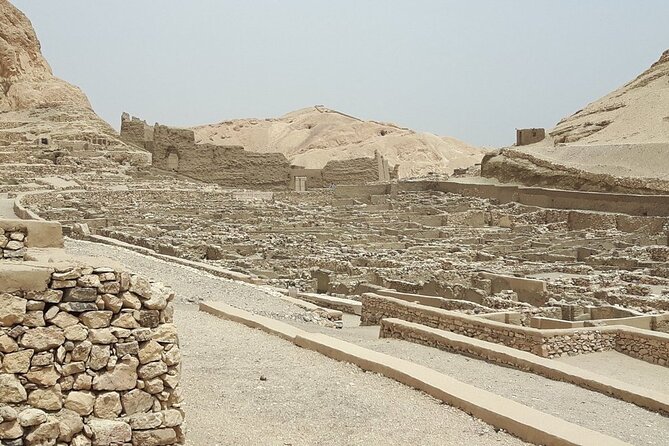
Reviewed · HATSHEPSUT TEMPLE
Nefertari and King Tut’s Tombs, Hatshepsut and More in Luxor
Luxor’s West Bank is already a jaw-dropper, but this half-day style tour is interesting because it stacks rare tomb access with the big-name sites on one efficient schedule. I especially like the chance to see King Tutankhamun’s tomb in person and spend real time in multiple Valley of the Kings burials, not just pass by the entrances. One thing to consider: entrance fees are not included, and limited-access tombs (especially Nefertari) can be a moving target.
What I like most in practice is the structure. You get hotel pickup and air-conditioned transport, which matters in Luxor heat, and the stops are spaced so you get more than a token glance. If you’re expecting a guide to be included with full storytelling at every step, you’ll want to confirm that in advance since the guide is listed as optional.
Key highlights to know before you go
- Nefertari in the Valley of the Queens (limited access): A chance to visit one of Egypt’s most celebrated queen tombs when it is open.
- King Tutankhamun’s tomb: A rare look at Tutankhamun’s original resting place, not just a museum display.
- Multiple Valley of the Kings tombs: You can see several decorated royal burials in one day instead of repeating the same corridor.
- Ramses III, KV2 (described here as Ramses IV), and Merenptah: Each stop focuses on a different theme and style of wall art.
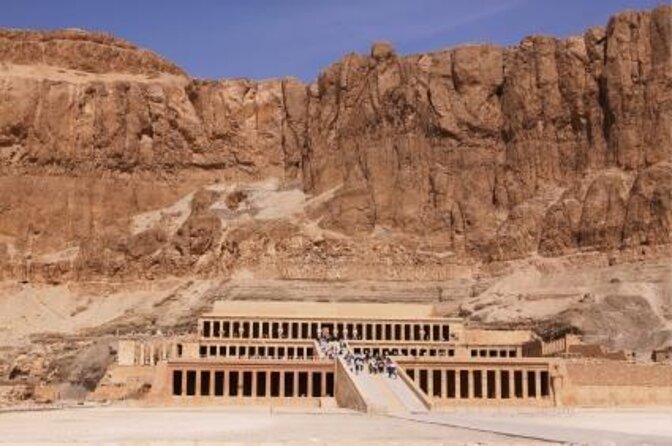
- Deir el Bahari and Hatshepsut’s temple: Big architecture and a dramatic setting with limestone cliffs as your backdrop.
- Colossi of Memnon plus the Howard Carter House: You end with both monumental remains and the story of discovery.
Price and logistics: what $50 per person really means
At $50 per person, the main value here is transportation, timing, and the itinerary design. The tour includes hotel pickup and drop-off, an air-conditioned vehicle, and bottled water during the tour, which sounds basic until you’ve sat in Luxor traffic in full sun.
What is not included is just as important for your planning. Entrance fees are optional and not included in the price, so your total cost will depend on which tombs are open and which tickets you purchase. Also, a guide is optional, so you should check whether you’ll have an on-site Egyptologist or interpreter for the tombs, or if you’ll rely on the driver and your own reading.
The schedule runs about 6 to 7 hours, and the visit lengths suggest a pace built for efficiency: many stops are around 20 minutes each, with longer time at the Valley of the Kings and Deir el Bahari. That can be perfect if you want to see a lot without feeling exhausted, but it also means you should focus your attention. Pick a couple of scenes or wall areas you want to study per tomb, rather than trying to read everything.
More trips to Hatshepsut's temple:
- Luxor: Valley of the Kings and Hatshepsut Temple Day Tour
★ 4.4 · 1,404 reviews - Hurghada: Valley of Kings Hatshepsut & Karnak Luxor Day Trip
★ 4.5 · 375 reviews - Shared Day Tour to Valley of the Kings, Hatshepsut ,Memnon &lunch
★ 5.0 · 275 reviews
The West Bank strategy: rare access plus classic monuments
This tour is designed around one central idea: don’t choose between the famous Valley of the Kings and the less-crowded, limited-access Queen sites. Starting on the West Bank helps you hit the tomb circuit when you can still manage the day comfortably.
The best part of this setup for you is variety. You’re not only chasing one celebrity burial. You’ll move from the Valley of the Queens to the Valley of the Kings, then transition into the mortuary temple of Hatshepsut at Deir el Bahari, and finally finish at the monumental Colossi of Memnon plus the Howard Carter House.
That said, the West Bank day is only great if you handle the reality of tomb travel. You’ll be inside tombs where space is tight, lighting can be dim, and the clock matters because the tour’s stop windows are limited. If you like slow museum-style wandering, this may feel rushed. If you like guided highlights and photos that actually end up happening, it’s a strong fit.
Tomb of Queen Nefertari: why this stop is the big question mark
Nefertari’s tomb in the Valley of the Queens is one of the main draws of Luxor West Bank. Nefertari was the wife of Ramses the Great, and this stop is framed as a “top decoration” kind of tomb, with art that reflects royal status and devotion.
Here’s the practical consideration you should take seriously: this is a limited-access site. When it is open, it’s a standout for anyone who wants to go beyond the usual King Tut storyline. When it is closed, you need to be ready for your plan to change.
Some bookings have been affected when Nefertari was not available, including situations where the schedule shifted to another shopping or factory-style stop instead of a tomb visit. So here’s my advice: before you confirm or pay the entrance fees, ask the operator a plain question. Is Nefertari’s tomb actually on the day’s schedule right now, and if not, what is the replacement stop?
If Nefertari is open for you, take advantage of the fact that you start this portion first in the day. It usually feels better to see the hardest-to-get site while you still have energy, instead of hoping the day stays on track.
King Tutankhamun’s tomb: seeing the royal mummy in place
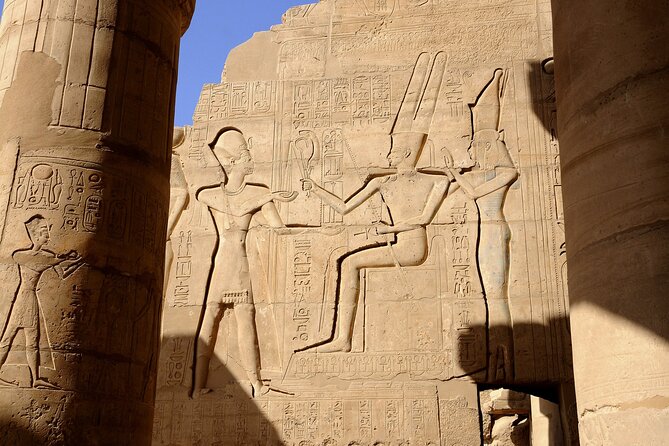
Next comes the famous one: King Tutankhamun’s tomb in the Valley of the Kings. Tut’s story is famous because of how the tomb was found, and the experience here is about that rare combination of history and place.
You’ll get the chance to see Tutankhamun’s royal mummy in its original resting place. The tour framing also points out that the golden mask is displayed at the Egyptian Museum in Cairo, which helps you understand what you’re seeing in Luxor versus what you’ll see elsewhere.
The stop is listed at around 20 minutes, so treat that window like a sprint, not a lecture. Go in with a plan. Look for the walls and the burial setting that made this discovery so important. If you have time, step back and take in the layout before you focus on specific carvings.
If you care about photography, be ready for practical limits inside tomb spaces. Also bring the mindset of a visitor in a working archaeological environment: keep your movements calm and your camera use respectful to the flow of other visitors.
A different kind of day out of Luxor:
- Hurghada: Luxor Valley of the Kings & Tutankhamun Tomb Trip
★ 4.7 · 13,208 reviews - Luxor Day Trip from Hurghada Small Group & Tutankhamun Tomb
★ 4.8 · 5,366 reviews - Hot Air Balloon Ride in Luxor Egypt with Transfers Included
★ 5.0 · 4,319 reviews - Luxor: Shared Full-Day Tour to Luxor West and East Banks
★ 4.5 · 1,812 reviews
Valley of the Kings tomb-hopping: more art, less waiting
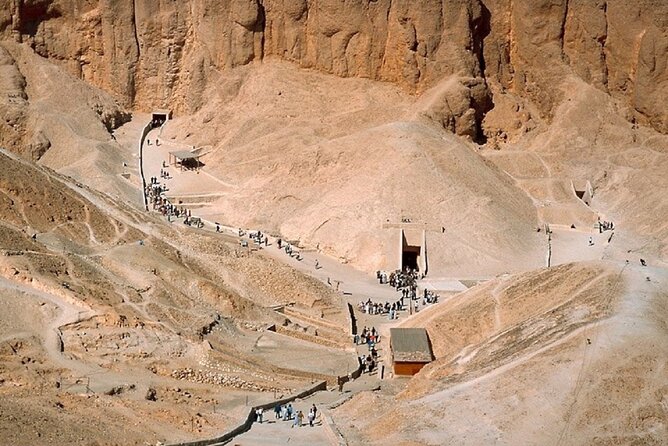
After the Tut stop, you’ll head into the Valley of the Kings, which the tour describes as the Necropolis of Thebes and the classic burial ground on Luxor’s West Bank. The big value here is that you’re not limited to one tomb. The schedule is set up so you can explore multiple royal tombs with decorated scenes.
You’re given about 2 hours for this chunk, which is the right length for a “see several” approach. The tombs referenced in the plan include Ramses, Horemheb, Merenptah, and King Tutankhamun. In other words, you’re sampling different rulers and different wall programs, rather than repeating the same theme.
Why this matters to you: many Luxor days get stuck on a single highlight, then everything else turns into a long walk and a photo. Here, the structure helps you keep momentum while still getting real time in multiple interiors.
The drawback is intensity. Even if each tomb stop is short, you’re stacking several interiors back-to-back. If you get heat fatigue or you don’t enjoy tight spaces, take it slower with your body, hydrate when you can, and focus on a couple of wall scenes per tomb.
Ramses III: sunken reliefs and ritual text energy
One of the listed tomb visits is Tomb of Ramses III, with a description that highlights its complex system and lively decorations. The focus inside is on sunken reliefs featuring ritual texts alongside secular scenes.
This is a good stop for you if you like the way Egyptian art mixes sacred duties with the sense of daily life around royal rule. The reliefs feel different from flat wall paintings because you get a sense of depth and shadow as you move.
The time window is around 20 minutes, so don’t try to “read” every line. Instead, look at how the scenes are arranged and what themes appear in the same space. That pattern recognition is often where the art starts to click.
KV2 described here as Ramses IV: blue-white walls and the Litany of Ra
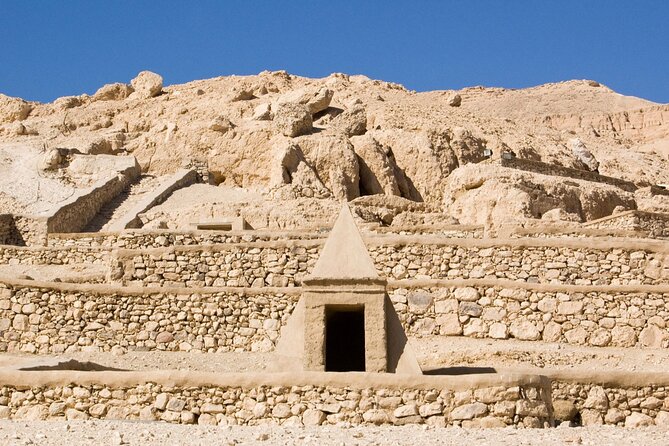
Another major tomb stop is described as Ramses VI, but the content description points to KV2 and calls it Ramses IV. So treat this as a tomb experience framed by the subject matter in the description, not the label alone.
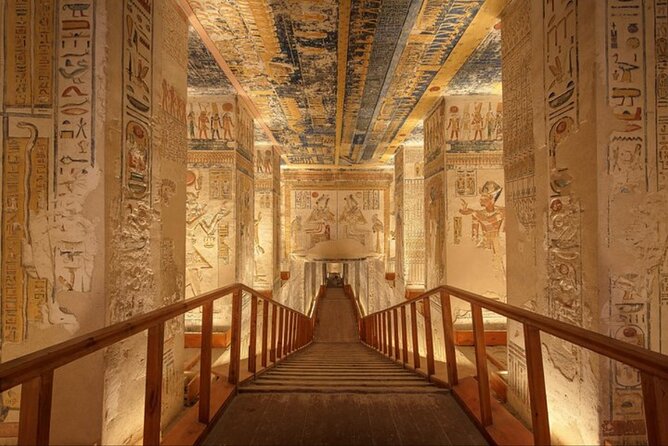
What you’re expected to see is a chamber packed with scenes tied to funerary literature and the afterlife. The plan specifically mentions texts such as Litany of Ra plus references to Book of the Dead, Book of Caverns, Book of the Heavens, Book of Amduat, and Book of the Night. You’ll also be looking for the famous visual contrast: blue and white colors on the inside walls.
The description adds a striking detail about the sarcophagus, noting a rose-colored granite, and a ceiling scene of the goddess Nut swallowing the sun. Even with some deterioration, this is still framed as one of the most decorated and awe-inspiring tombs in the Valley of the Kings.
For you, the best strategy is to slow down for a moment in this chamber. Short stop times make you want to rush, but the artwork themes are thick here. Spend your minutes watching how symbols repeat and how the afterlife ideas are presented like a map.
Merenptah: foreign tribute scenes and boats in the myth mix
The tour also includes a stop at the Tomb of Merenptah, identified as the burial place of Pharaoh Merneptah, a son of Ramses II. The description emphasizes intricate carvings and detailed depictions of ancient Egyptian mythology.
What stands out in the plan is the mix of themes you’ll see: sunken reliefs with traditional ritual texts, depictions of foreign tributes, and scenes related to the royal armory and boats. That means you’re not only looking at “funeral decoration.” You’re seeing how power, myth, and state identity get expressed on the walls.
Again, the visit length is around 20 minutes, so go for comprehension over completeness. Look for the boat scenes if they’re of interest to you, and notice how the “tribute” theme contrasts with the purely religious sections.
Hatshepsut at Deir el Bahari: terraces, cliffs, and a powerful female pharaoh
After the tomb circuit, you move to the Temple of Hatshepsut at Deir el Bahari. This is the mortuary temple of Queen Hatshepsut, described as the only woman to rule Egypt as pharaoh.
The experience here is different from tomb interiors. The plan gives about 2 hours, which is a sign you’re meant to take in the architecture and the setting. The temple sits against limestone cliffs, so you get dramatic sightlines and a sense of scale that works well after smaller spaces.
This stop is ideal for you if you like “context” more than only close-up details. In tombs, you feel like you’re inside the story. At Deir el Bahari, you feel like you’re watching the story unfold in public-facing stone design.
If you’re sensitive to heat, this is where your pacing matters most. Take breaks in shaded areas when you can, and don’t feel obligated to sprint across the terraces. Two hours is enough time to move steadily, take photos, and still read a few key elements.
Colossi of Memnon and Howard Carter House: monuments plus the story of discovery
Your final stretch covers both ancient remains and the archaeology behind the finds.
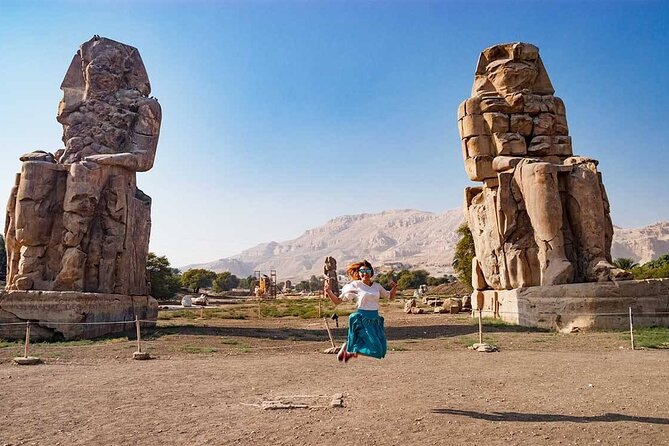
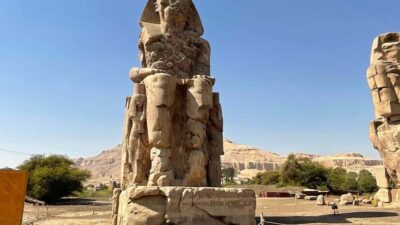
First are the Colossi of Memnon, described as the colossal statues of Amenhotep III. The plan calls the statues the last remnants of a once-magnificent mortuary temple, and the stop is around 30 minutes. This part is listed as free, which is a nice bonus because it gives you value without adding to ticket cost.
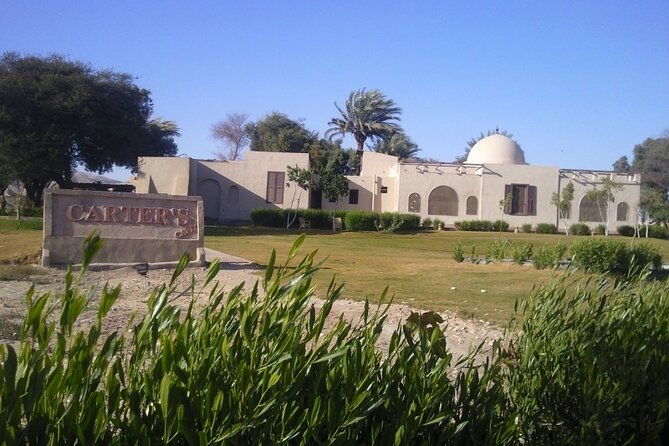
Then you’ll visit the Howard Carter House, tied to the British archaeologist Howard Carter, who discovered Tutankhamun’s tomb in 1922. The house is described as Carter’s home on the West Bank, where you can see preserved personal artifacts, tools, and a glimpse into the excavation process.
This pairing works well because it closes the loop. You see Tut’s burial place in the tomb, then you end with the human story of how the world learned about it. Even if you’re not an archaeology nerd, you’ll likely come away with a better sense of why the finds mattered and how careful excavation had to be.
Time, pace, and comfort tips for a 6 to 7 hour West Bank day
Because many stops are around 20 minutes, your enjoyment depends on how you manage attention. I recommend you decide up front what you want from the day.
If your top priority is tomb interiors, use a simple focus list:
- In each tomb, pick one visual theme to remember.
- Take one photo, then look with your eyes instead of constantly through a lens.
- Don’t wait for the last minutes to start paying attention.
If your top priority is comfort, prioritize hydration and shade. The tour includes water, but you still need to drink it steadily. Wear breathable clothing and keep a hat ready. Tombs can also feel cooler than outdoors, so don’t be surprised if you cycle between temperatures.
For solo travelers, there’s a practical advantage to a private pickup and a controlled schedule. The experience is built for “one group, your driver, your day,” which can feel simpler than trying to stitch together multiple ticket lines on your own.
Should you book this Luxor West Bank tomb tour?
Book it if you want a high-coverage West Bank day and your priority is real tomb time, especially the chance to visit King Tutankhamun’s tomb and see additional decorated burials in the Valley of the Kings. The structure makes it much easier to enjoy multiple interiors without feeling like you’re constantly rushing between distant sites.
Think twice or ask extra questions before paying if you care most about the Tomb of Queen Nefertari. Limited access can mean schedule changes, and you want clarity on what you will do if Nefertari is closed that day. Also confirm whether a guide is actually included with your booking, since tomb expectations go way up when you have a good explainer in the room.
If you do your homework on those two points, this is a very solid way to spend a Luxor day on the West Bank, from famous royals to the story of how they were found.
Reviewed most recently around Luxor
- Camel or Horse ride on west bank★ 5.0 · 20 reviews
- Private Day Tour of Luxor★ 5.0 · 20 reviews
- Private Transfer from Luxor to Marsa Alam or vice versa★ 5.0 · 20 reviews
- Private Transfer Luxor to Aswan★ 5.0 · 20 reviews
- 5 Days Nile Cruise from Luxor to Aswan with Hot Air Balloon★ 5.0 · 20 reviews
- Private Full Day Tour: Dendera & Abydos Temples from Luxor★ 5.0 · 20 reviews
- Full Day Luxor East and West Banks Tour With Lunch★ 5.0 · 20 reviews
- Private 8-hour full day Luxor East & west Banks with Lunch★ 5.0 · 21 reviews
Hatshepsut Temple, compared.
Valley of the Kings and Hatshepsut Temple Day Tour
Read our review →
Valley of Kings Hatshepsut & Karnak Luxor Day Trip
Read our review →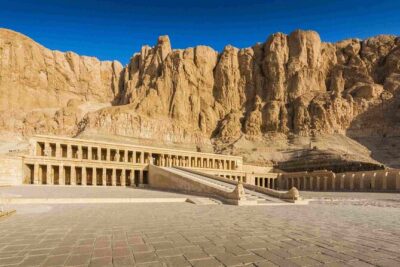
Shared Day Tour to Valley of the Kings, Hatshepsut ,Memnon &lunch
Read our review →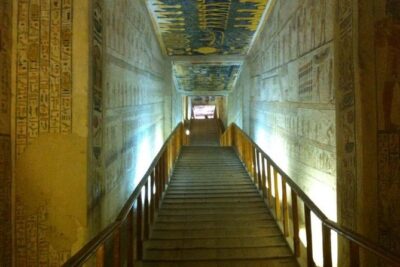
Private Half Day West Bank Tour to Valley of the Kings Queen Hatshepsut Temple and Colossi of Memnon
Read our review →
Luxor Day Tour: Explore Valley of Kings, Queens, Hatshepsut& More
Read our review →
Valley of the Kings and Hatshepsut Temple w/Nile Boat
Read our review →
Hot Air Balloon Ride Over Temple of Hatshepsut
Read our review →
VIP Luxor 4-Hours Private Valley Kings, Hatshepsut Temple & Lunch
Read our review →Browse the lists this tour appears in