
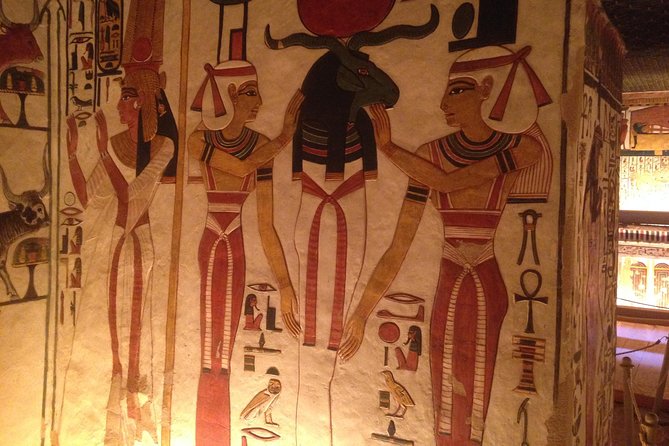
Reviewed · VALLEY OF THE KINGS
Private King Tut’s Tomb, Valley of the Kings & Queens, Hatshepsut
Luxor on the West Bank is interesting because it is not one stop, it is a whole world of tomb art, temple sculpture, and afterlife ideas packed into a single day. I especially love the chance to see Tutankhamun’s mummy in his Valley of the Kings tomb, and I also love that you get a private Egyptologist guide who can translate what you’re looking at. One possible drawback: entry tickets for the big tombs are extra and can add noticeably to the base price.
The flow is practical too. You start early with hotel pickup, you move through key royal sites, and you get plenty of time standing close enough to actually read the walls and not just speed past them. The main consideration is that not every tomb visit is equally comfortable, since some interiors are dark, tight, and governed by conservation rules.
Key things I’d bank on before you go
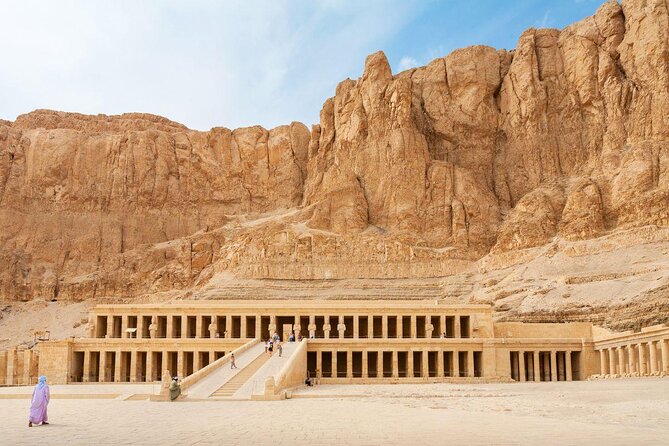
- Face-to-face King Tut moment in the Valley of the Kings
- Valley of the Queens focus on Nefertari, plus more than the quick photo stop
- A guide who actually explains scenes and texts instead of rattling dates
- A smart mix of tombs and temples (KV11, KV8, KV2 plus Deir el-Bahari)
- Private pace and hotel pickup to avoid wasting time finding your way
A King Tut day that goes beyond the usual checklist
This is the kind of Luxor West Bank day that feels made for people who want more than the standard, rush-to-everything tour. The big draw is that you get access connected to King Tutankhamun, not just the name. You also see other royal tombs across different dynasties, then switch gears to Hatshepsut at Deir el-Bahari, which is a temple visit with its own drama and architecture.
What makes the day work is the balance between moments that are famous and moments that are just as important but less expected. In practice, you get the wow factor of Tutankhamun, then the deeper payoff comes from seeing how the afterlife was imagined again and again across tombs. Add the Valley of the Queens portion, and your day stops feeling one-note.
More trips to Hatshepsut's temple:
- Luxor: Valley of the Kings and Hatshepsut Temple Day Tour
★ 4.4 · 1,404 reviews - Hurghada: Valley of Kings Hatshepsut & Karnak Luxor Day Trip
★ 4.5 · 375 reviews - Shared Day Tour to Valley of the Kings, Hatshepsut ,Memnon &lunch
★ 5.0 · 275 reviews
Price and logistics: what you’re really paying for
The tour price is listed at $55 per person, and it includes the Egyptologist guide, plus hotel pickup and drop-off. That is a strong starting point for a private day in Luxor, because the real variable is usually the entrance tickets. Plan on extra spending once you arrive, since admission is not included.
Duration is about 5 hours 10 minutes. With hotel pickup, tomb security, and walking time, that is enough for several meaningful stops, but it still means you should be ready to move. If you want slow and super detailed, tell your guide early so they can pace you.
One more logistics note that matters: the tour is private for your party, so you are not stuck with a group rhythm. That is a big deal at these sites, where crowds can turn a careful look into a sprint.
Hotel pickup and how to start the day without wasting daylight
Meeting time is 8:00 am, and pickup is offered at centrally located hotels. Getting an early start helps you beat the worst heat and keeps your tomb time calmer. It also gives you a better chance to focus, because you are not arriving half-dead with dust in your throat.
Bring the basics that make tomb time easier: a hat, water, and something light to cover your shoulders if you like to stay comfortable at temples. In the Valley of the Kings, darkness inside tombs can slow your eyes, so it helps to wait for the guide to explain what you’re about to see before you try to read the walls yourself.
Tutankhamun’s tomb: the close-up mummy moment
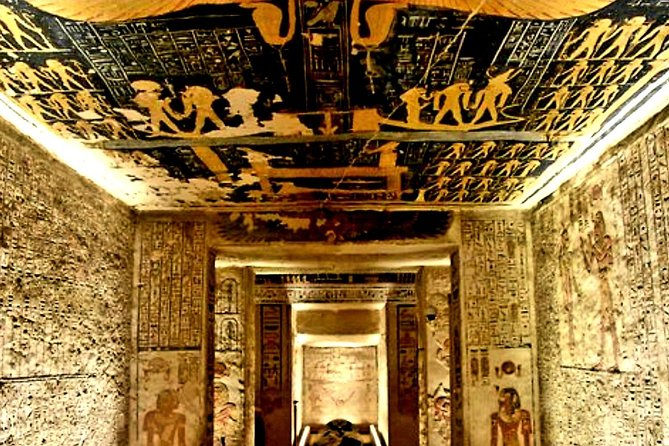
King Tutankhamun is the most famous pharaoh for a reason. He became king at about age 10 and died at 19, and his tomb’s discovery in 1922 by Howard Carter is one of the best-known archaeology stories in the world. What you’re doing here is not only looking at objects, you’re seeing his body’s resting place in the Valley of the Kings.
The tour stop emphasizes a rare feeling: to be close enough to see the young king’s mummy in his original tomb. You’ll likely spend around 20 minutes there. That doesn’t sound long until you remember how the tomb environment works. The real goal is to let the guide orient your eyes: where to look first, how to connect the scenes to the afterlife idea, and what details matter most.
Practical consideration: some Egyptology rules mean your guide may not physically go into every interior space with you. That can feel odd if you expect a guide beside you the whole time, but it is tied to safety and preservation requirements. The upside is that a good guide can still explain what you’re seeing while you’re inside or immediately before and after.
More Valley of the Queens trips:
- Luxor Day Tour: Valley of Kings & Queens & Hatchepsut Temples
★ 5.0 · 1,496 reviews - Luxor: Valley of the Kings and Queens Guided Tour with Lunch
★ 4.5 · 337 reviews - Luxor: West Bank Kings and Queens All-Inclusive Tour & Lunch
★ 4.5 · 298 reviews - Luxor Day Tour: Explore Valley of Kings, Queens, Hatshepsut& More
★ 5.0 · 251 reviews
KV11, KV8, and the wall text you’ll actually understand
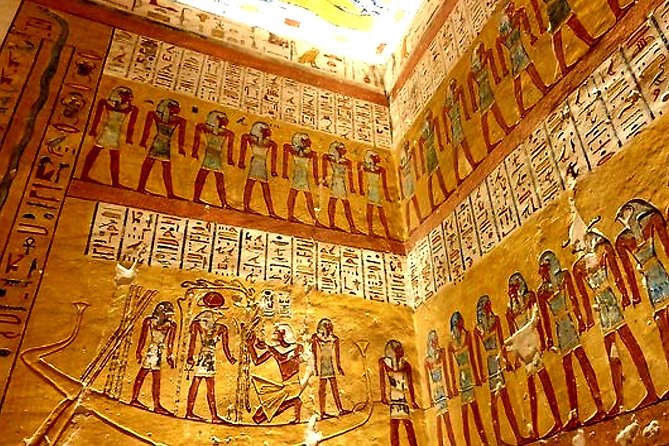
This day doesn’t treat the Valley of the Kings as a photo line. You get tomb stops that have recognizable systems of decoration and meaning, and the guide helps you connect the scenes to specific funerary texts.
Ramses III, KV11, and the afterlife as both sacred and political
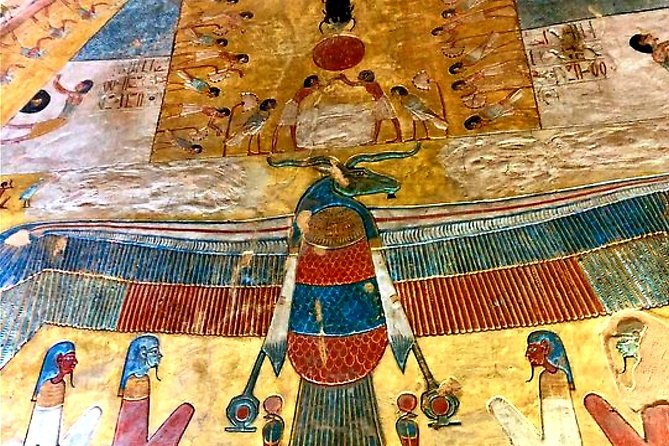
In KV11, also called the Tomb of Ramses III, you’ll see painted sunken reliefs tied to funerary knowledge, including things like the Litany of Ra and the Book of Gates. Your eyes also get pulled toward the power scenes, where Ramses stands before the gods.
What I like about this tomb conceptually is that it gives you more than religious symbolism. The side areas include secular imagery, including foreign tributes. One of the standout ideas here is how those visuals make the afterlife feel connected to real-world power and diplomacy.
Expect around 25 minutes for KV11. The room time is best spent slowly, not scanning. Ask your guide what the key scenes are and then match them to the wall layout as you move.
Merneptah, KV8, and why craftsmen and builders matter
The tour also includes KV8, the Tomb of Merneptah. This tomb is linked to Ptah, a creator god associated with craftsmen and architects, so the whole afterlife journey has a “made by skilled hands” flavor.
You’ll be able to see what makes KV8 important: it is not just a burial chamber, it is an afterlife instruction space. The tour description also notes Howard Carter’s 1903 discovery of this tomb, which gives the site a clear archaeology timeline when you hear it paired with what the walls are doing.
Another practical tip: inside tombs, your eyes adjust slowly. Spend your first minute letting the guide tell you what to look for, then the rest of the time becomes much more rewarding.
Hatshepsut at Deir el-Bahari: temple drama in stone
Then you shift from tomb interiors to one of Egypt’s most striking temple landscapes: Deir el-Bahari and the mortuary temple of Queen Hatshepsut. This is a rare chance to see a royal female ruler’s legacy made monumental.
Hatshepsut matters in a way that goes beyond the name. She ruled as Pharaoh and the tour frames her reign as a period of peace, prosperity, and massive building. Her temple’s terraces and colonnades create a sense of movement even when you’re standing still. The reliefs tell stories of divine birth and achievements, so you’re not only looking at architecture, you’re reading propaganda in stone.
You’ll have about 1 hour here. Use it. This stop is where you can stand back and get the full geometry of the terraces. Then you can look closer for scenes that explain who she was and how the state wanted her to be remembered.
Colossi of Memnon: when the day gets big and cinematic
After more tomb time, you get a breather at the Colossi of Memnon, the two colossal statues that are over 18 meters tall. They date to the reign of Amenhotep III, and they once guarded the entrance to his mortuary temple, most of which is now lost.
This stop is simple but important. It resets your perspective after tight tomb corridors. The statues also connect back to King Tut’s family line, since Amenhotep III is identified as Tut’s grandfather in the tour material. When a day ties names together like that, the whole West Bank starts to feel like one connected story.
Time here is about 15 minutes, and that is about right. Look up, take a few photos, then keep walking.
Ramses IV, KV2, and why the colors can feel unreal
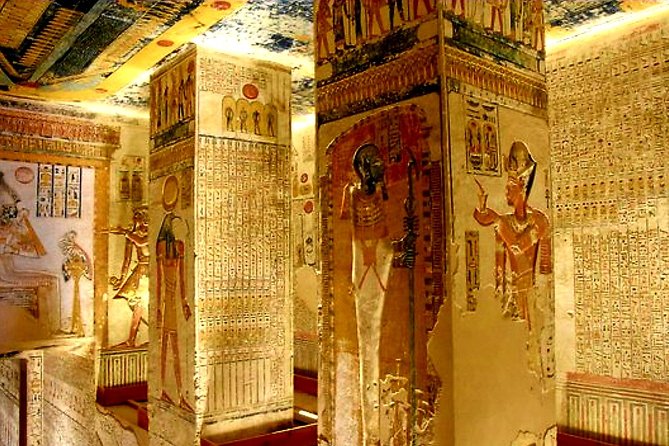
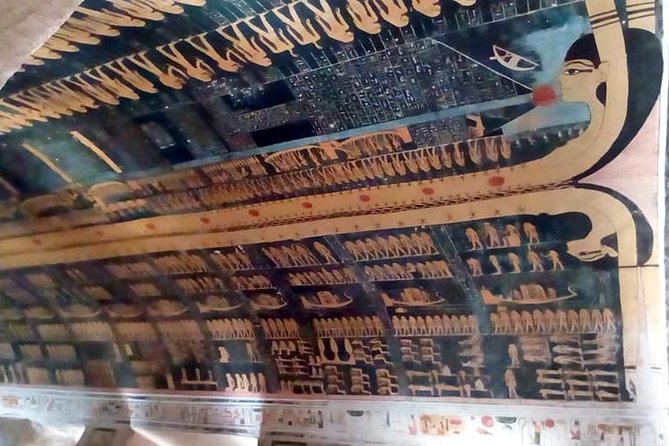
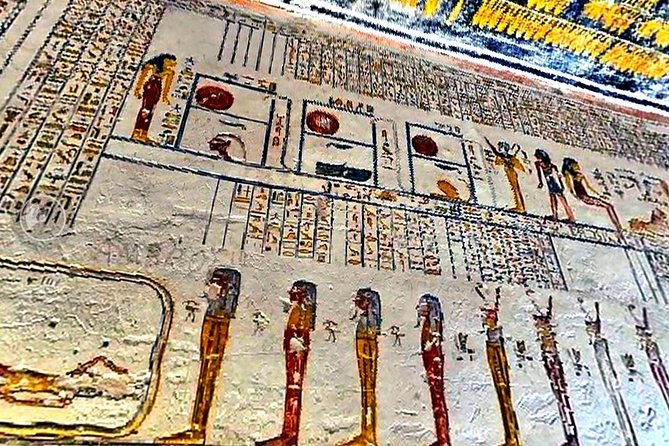
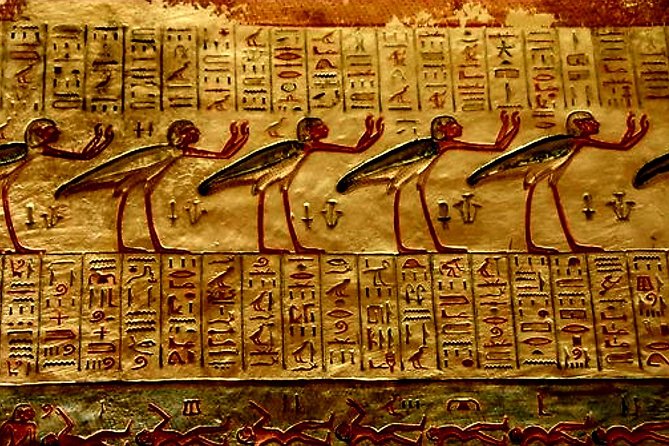
Next comes another big Valley of the Kings highlight: Ramses IV, KV2. This tomb is described as spectacular for its funerary scenes and the painted text coverage on the walls. You’ll hear about major funerary compositions such as the Litany of Ra, the Book of the Dead, Book of Caverns, Book of the Heavens, Book of Amduat, and the Book of the Night.
The sensory hook is the color scheme described for KV2. Walls are shown as blue and white, and the tomb chamber frames a rose-colored granite sarcophagus. Even if you’re not a hieroglyph reader, your eyes will still notice contrast and intention, especially once the guide points out what the ceiling or major zones represent.
You’ll have around 25 minutes for this stop. If you tend to get overwhelmed in tombs, this is one you should go into with a small plan: ask your guide which two scenes are the most important, then let the rest be bonus details.
Valley of the Kings: more tombs, more afterlife logic
You’ll also spend time in the larger Valley of the Kings area and see multiple royal tombs as part of the day’s scope. The description frames King Tut’s tomb as the key discovery made nearly intact in 1922, then builds out from there with additional tombs linked to other pharaohs.
In the tour’s featured set, you connect the dots across different rulers and different tomb choices. That is how the Valley of the Kings stops being a list and starts feeling like a system: the same afterlife goal, expressed with different emphases and artistic styles.
As a sanity check, manage your energy. Tomb hopping can become repetitive if you rush. If you want the “understand it” part, slow down for one tomb, then carry that context into the next.
Valley of the Queens and Nefertari: the emotional payoff
The Valley of the Queens is where the day turns from pure pharaoh focus to the royal family world. You’ll visit the Valley of the Queens, where queens, princes, princesses, and other high-ranking officials were buried. The tour notes the site’s ancient name and meaning, tied to beauty and royal children.
Here’s what makes this section special: Nefertari’s tomb is singled out as a major reason to book. That matters because the Valley of the Queens is often less congested than the Valley of the Kings, and the result is better viewing conditions for art detail.
You’ll spend time with the queens’ necropolis and you may also see the Tomb of Queen Titi, which is described as smaller but intriguing because the tomb’s queen identity is still a mystery. Even if the tomb is not as famous as Nefertari’s, the “what do we know and what don’t we know” angle makes it feel like real archaeology rather than just tourism.
Practical consideration: interior access can change due to conservation rules. If Nefertari’s interior is your must-do, confirm on the day and keep a flexible attitude. When you have a private guide, you’re more likely to get a helpful plan B.
The guide matters: what the best versions of this day feel like
The tour experience is heavily influenced by the Egyptologist guide. In the feedback that stands out, names like Roshdy, Hassan, Ragab, and Abdul come up for strong storytelling, clean English, and patience.
What you should look for in a guide style like this:
- Clear explanations of what you’re seeing, especially funerary scenes and temple reliefs
- Tips that help you spot meaningful details on your own, not just facts you’ll forget
- A pace that respects your interests, like letting you spend longer where you care most
One of the most positive patterns in the guide praise is that the experience feels fun, not stiff. That matters in tombs, where a dry lecture can make you space out. A guide who uses humor and keeps things moving can turn dark rooms into something you actually remember.
On the other side, if things ever go wrong, the biggest risk is conflict that cuts the day short. That’s not the norm, but I’d still advise you to set your priorities early, including whether you want more time inside tombs versus outside explanations.
Entrance tickets and budgeting for real value
Entrance tickets are not included. That is the headline cost you should plan for, especially for the most in-demand tombs connected to King Tutankhamun and Queen Nefertari.
Here’s how to think about value. The base price gives you the private structure, the Egyptologist guide, and the hotel pickup. The tickets are what make the day possible at the actual tomb interiors. So the best value comes when you fully use those paid-for interiors and ask questions on what each tomb is trying to communicate.
Also, don’t underestimate how often the “expensive part” is the main reason you’re booking in the first place. If Tut and Nefertari are truly your priorities, the ticket costs usually feel justified because they are the core emotional and visual highlights.
Who should book this private King Tut, Queens, and Hatshepsut tour
This is a great fit if:
- You want a private West Bank day rather than a bus circuit
- You care about learning what the art means, not only where the tomb is
- You want both famous names (Tutankhamun, Nefertari, Hatshepsut) and a fuller set of tombs in one go
It may not be the best fit if:
- You want a purely flexible day with zero fixed stops
- You dislike paying additional entrance fees after booking
- You want a very slow pace and long stays in only one location
FAQ
FAQ
What is the tour duration?
The tour is about 5 hours 10 minutes.
What time does the tour start?
The start time is 8:00 am.
Does the tour include hotel pickup and drop-off?
Yes. Hotel pickup and drop-off are included, with transportation in an air-conditioned vehicle.
Is this tour private?
Yes. It is a private tour for your group only.
Are entrance tickets included?
No. Entrance tickets are not included.
Which major sites are included?
This tour includes stops at the Valley of the Kings and Valley of the Queens, plus the Temple of Hatshepsut at Deir el-Bahari and tombs connected to Tutankhamun, Ramses III, Merneptah, Ramses IV, and others.
Can I see Tutankhamun’s mummy in his tomb?
The tour description says you will have a rare opportunity to stand face to face with King Tutankhamun’s mummy in his original tomb.
Is there an optional hot air balloon ride?
The information says you have the option to experience a hot air balloon ride before the tour, but it is not included in the tour price.
Can I cancel and get a full refund?
Yes. Free cancellation is available up to 24 hours in advance for a full refund.
Should you book this private West Bank tomb and temple day?
If your wish list includes King Tutankhamun plus a serious stop at Queen Nefertari and also time at Hatshepsut, I’d book this. The private format and hotel pickup reduce the most annoying parts of a Luxor day, and the Egyptologist guide factor is what turns tombs from scary corridors into understandable afterlife programs.
Just budget for entrance tickets, and set expectations that interior viewing rules can affect how explanations happen inside tombs. If you do those two things, you’ll end up with the kind of West Bank day that feels like more than a checklist.
More Valley of the Kings trips
- Hurghada: Luxor Valley of the Kings & Tutankhamun Tomb Trip
★ 4.7 · 13,208 reviews - Hurghada: Luxor Tour with Valley of Kings, Karnak & Tut Tomb
★ 4.6 · 1,082 reviews - Luxor: Valley of Kings, Hatchepsut Temple ,Karnak & Luxor-DayTour
★ 5.0 · 735 reviews - Private Half Day West Bank Tour to Valley of the Kings Queen Hatshepsut Temple and Colossi of Memnon
★ 5.0 · 268 reviews
Reviewed most recently around Luxor
- Private Full Day Tour of Luxor West and East Bank Tombs & Temples★ 5.0 · 45 reviews
- Luxor Private Transfer To Hurghada With visit Dendera Temple★ 4.5 · 45 reviews
- FULL Day Tour:Valley of the Kings &Queens &Hatshepsut Temple&more★ 5.0 · 46 reviews
- Private Sailing Traditional Egyptian Boat in Luxor★ 5.0 · 46 reviews
- Dendara and Abydos Temples Day Tour from Luxor★ 5.0 · 46 reviews
- Private Full-Day Luxor Tour to East and West Banks★ 5.0 · 47 reviews
- Private Full-Day Tour to West and East Banks of Luxor★ 5.0 · 48 reviews
- Private Tour: Luxor East and West Banks Full Day Tour★ 5.0 · 49 reviews
Valley of the Kings, compared.
Luxor Valley of the Kings & Tutankhamun Tomb Trip
Read our review →
Small group Hurghada to Luxor, Valley of the Kings by Van
Read our review →
Luxor Day Tour: Valley of Kings & Queens & Hatchepsut Temples
Read our review →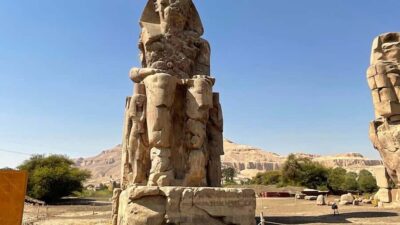
Valley of the Kings and Hatshepsut Temple Day Tour
Read our review →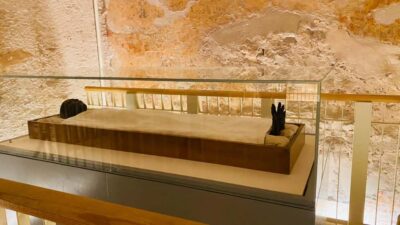
Luxor Tour with Valley of Kings, Karnak & Tut Tomb
Read our review →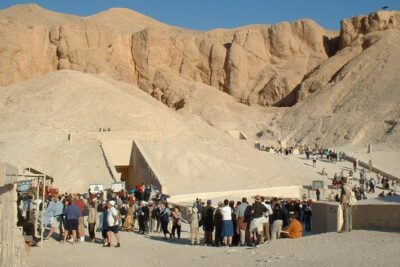
Valley of Kings, Hatchepsut Temple ,Karnak & Luxor-DayTour
Read our review →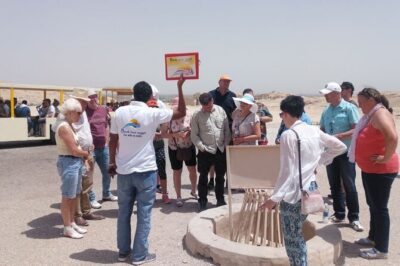
Small Group Excursion to Luxor Valley of the Kings from Hurghada
Read our review →
Valley of Kings Hatshepsut & Karnak Luxor Day Trip
Read our review →Browse the lists this tour appears in