
Reviewed · 2-DAY EXPERIENCES
Private Luxor Highlights in Two Days
This is a smart way to see Luxor without feeling rushed, because you get both the West Bank tombs and the East Bank temples in just two days. It is also a good fit if you want context as you walk, not just photos and names on stone.
What I like most is how the day is built around an Egyptologist who can point out what to look for inside the tombs, especially the painted details and symbolism. I also like the convenience of private, air-conditioned pickup so you spend less time figuring logistics and more time looking up at monuments.
One thing to consider: the itinerary lists many timed stops inside tombs and temples, but tickets and entrance fees are not included in the standard pricing. Double-check what you need to pay on arrival so your day does not turn into a last-minute budgeting puzzle.
Key highlights to look for
- Private East and West Bank routing so you cover Luxor’s must-sees in two days
- Egyptologist commentary focused on what matters in each tomb or temple
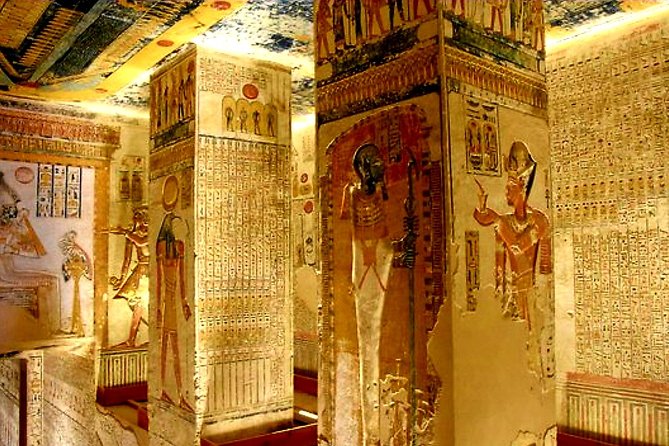
- Valley of the Kings tomb variety, including Ramses III and Tutankhamun
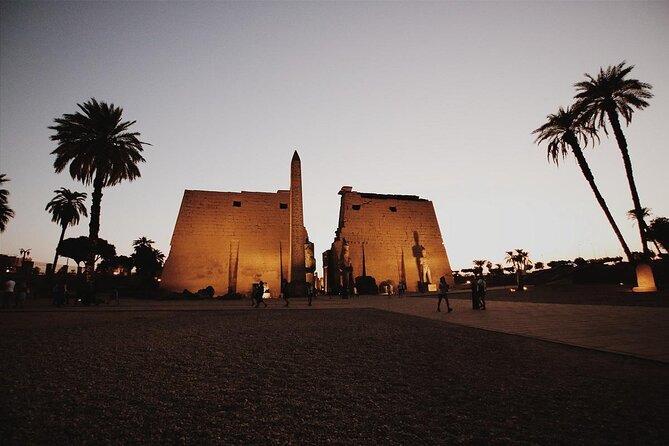
- Karnak Temple highlights like the Hypostyle Hall and the Avenue of Sphinxes
- Flex time for top tomb picks, since your guide can recommend which ones to prioritize
- Optional hot-air balloon upgrade over the Valley of the Kings
East and West Bank in Two Days, With Egyptologist Guidance
Luxor is big in a way that surprises first-timers. The West Bank feels like a mountain museum of tombs. The East Bank feels like a sacred city of halls, towers, and courtyards. This tour strings them together into two long, structured days, so you get the main hits without hopping around on your own.
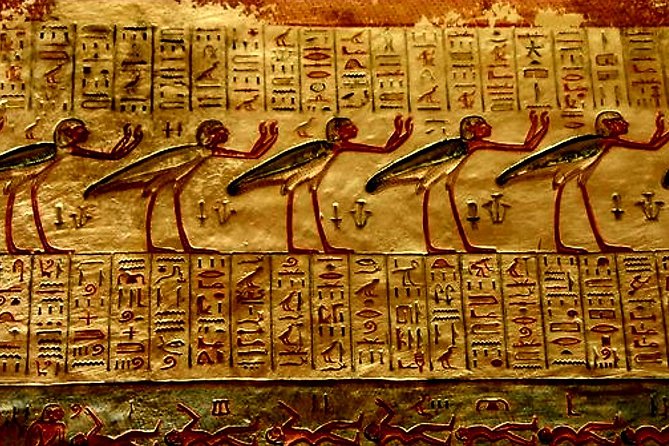
The big value here is the Egyptologist-led walking. When you are inside a tomb, small things matter: the relief style, the layout, the spells painted into corridors, and the way scenes shift from religious ritual to more unusual, personal details. A good guide helps you slow down and actually read what you are looking at, instead of treating each chamber like a dark box.
From the operator’s reviews, the guide experience seems consistently strong. Names that come up include Ragab Elmotgalye, Ameen, Hassan, and Khalid, with praise for clear English and patient explanations. You also get a professional driver like Ahmed, which matters when your days are long and you want smooth transfers between sites.
If you want a high-quality, private version of the Luxor highlights circuit, this is a solid format: private vehicle, hotel pickup and drop-off, and a guide who stays with you through the main sites.
Other Luxor days people put in the same week:
- Hurghada: Luxor Valley of the Kings & Tutankhamun Tomb Trip
★ 4.7 · 13,208 reviews - Luxor Day Trip from Hurghada Small Group & Tutankhamun Tomb
★ 4.8 · 5,366 reviews - Hot Air Balloon Ride in Luxor Egypt with Transfers Included
★ 5.0 · 4,319 reviews
Day 1 West Bank: Valley of the Kings and the Tomb-to-Tomb Contrast
Day one is all about the Necropolis of Thebes on the West Bank, starting at the Valley of the Kings. Your pickup is from central Luxor hotels or the harbor area, and the drive time can make the whole morning feel like a true half-day excursion before you even reach the first tomb entrance.
How the Valley of the Kings portion works
Instead of one tomb and done, you are guided through multiple royal tombs. The itinerary includes tombs such as:
- Tomb of Ramses III (KV 11)
- Tomb of Ramesses IX
- Tomb of Merenptah
- Tomb of Tutankhamun
- and an additional stop listing Tomb of Ramses VI (some routes may pass by nearby points rather than enter every tomb)
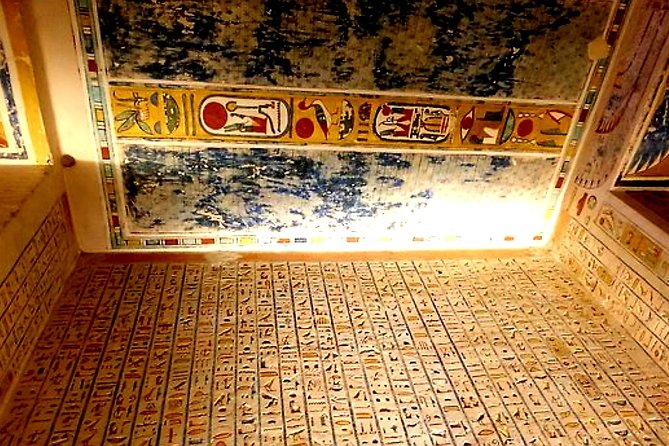
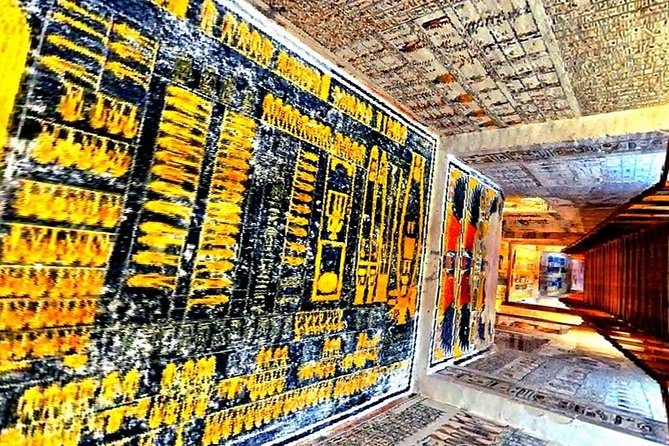
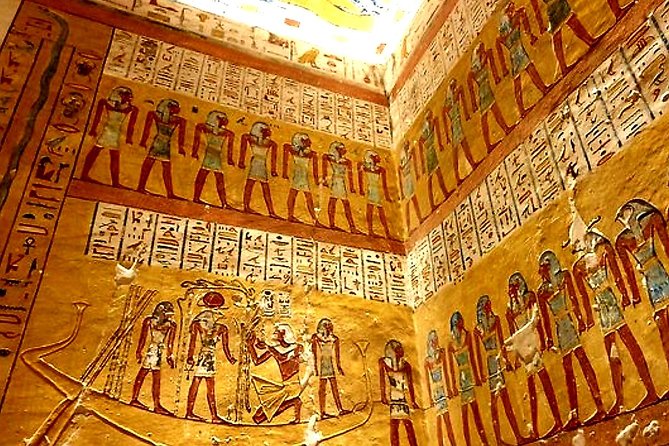
The standout for me is Ramses III. The tomb is known for painted, colorful sunk reliefs with ritual texts like the Litany of Ra and the Book of Gates. You also see scenes that feel more human and surprising, including foreign tributes, such as detailed pottery imported from the Aegean, plus royal armor, boats, and blind harpists, which connects to the tomb’s alternative nickname as the Tomb of the Harpers.
Then the tour moves you from one pharaoh’s tomb mindset to another. That is the point. Each reign has its own way of presenting the afterlife. Even when you are seeing similar themes, you are noticing different choices in decoration, layout, and emphasis.
Ramesses IX and the ceiling you do not expect
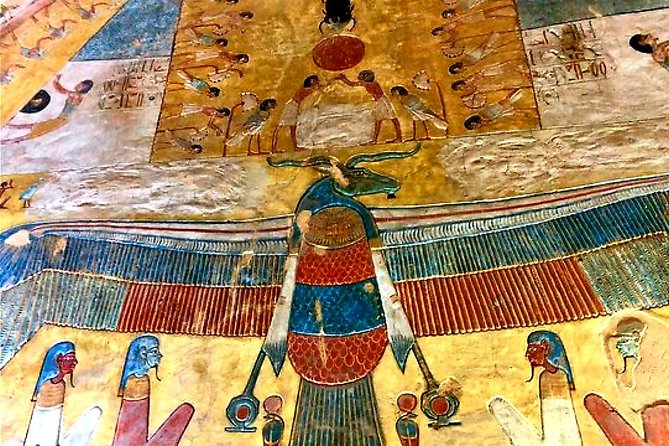
For Ramesses IX, the tour description focuses on the family and succession story: he was Ramesses III’s fifth son, and appointed crown prince when his elder brothers had died earlier. When you get inside, you are meant to notice the level of color and detail, including the ceiling above the sarcophagi with the goddess Nut stretching across the space. Even if some paintings have deteriorated, it is still one of the more decorated tombs in the valley.
A different kind of day out of Luxor:
- Luxor: Shared Full-Day Tour to Luxor West and East Banks
★ 4.5 · 1,812 reviews - Luxor: Hot Air Balloon Ride over Luxor Relics
★ 4.8 · 1,681 reviews - Luxor Day Tour: Valley of Kings & Queens & Hatchepsut Temples
★ 5.0 · 1,496 reviews - Full Day Tour to East and West Banks of Luxor
★ 5.0 · 1,449 reviews
Merenptah: later style and the shift in design
Merenptah’s tomb is described as a model for royal tomb design, and the framing emphasizes how the number of lateral rooms decreases while the corridors and rooms get higher. The goal is to help you notice the architectural logic, not only the paintings. If you like architecture and spatial design, this is a good stop because it is easier to compare the “feel” of the spaces once you have already walked a couple of chambers.
Tutankhamun: the famous name, handled properly
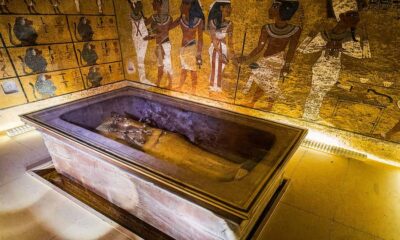
Tutankhamun’s tomb is the one everyone knows. The trick is making it more than a selfie stop. This tour gives you time to be face to face with his royal mummy in the tomb, which is emotionally heavy and visually striking. If you are the type who enjoys the feeling of seeing something you have studied, you will likely appreciate having a guide explain why the tomb matters beyond the headline name.
A quick reality check: walking pace and heat
Valley of the Kings days are physical. You are walking in heat, timing your tomb entrances, and moving between chambers where you may spend a short amount of time. If you have mobility limits, you will want to tell the operator ahead of time so your guide can plan a realistic route. For most people, the pace is fine if you are ready for a long day and you bring water and sun protection.
Deir el Bahari and the Colossi of Memnon: Hatshepsut’s Temple in Context
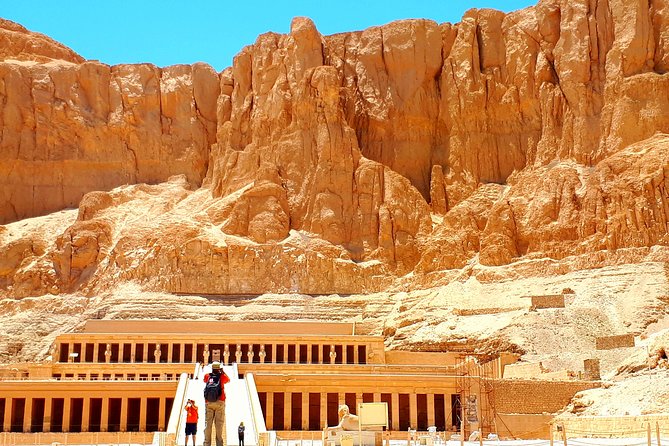
After the valley tombs, you shift to Deir el Bahari, the temple of Queen Hatshepsut. This is one of those places where the setting and architecture feel designed for spectacle, and the guide context helps you connect it to the dynasty timeline and to later rulers.
Hatshepsut is not just a random female pharaoh mention here. The tour frames her as the only woman to reign over Egypt as pharaoh and also notes she was an ancestor of Tutankhamun, tying your West Bank day into the East Bank names you will see later.
Then you move to the Colossi of Memnon, two enormous ancient statues dating back to Amenhotep III. The time at the colossi is short, but it is worth it because it resets your brain. After hours of underground tomb corridors, you look up at huge stone figures and you remember this civilization built both for stone longevity and for monumental scale.
Day 2 Karnak Temple: Hypostyle Hall Scale and the Sacred Layout
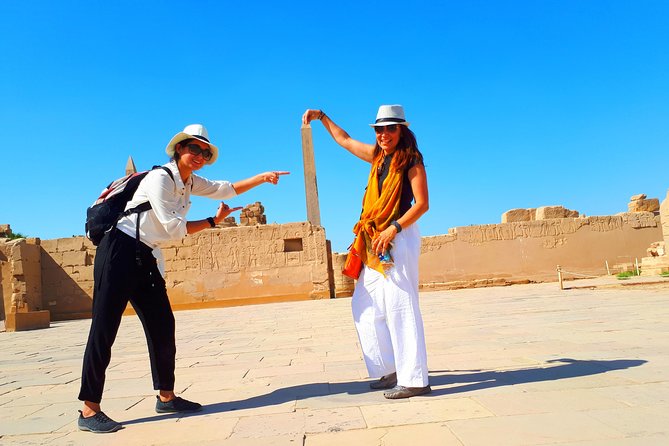
Day two starts on the East Bank with Karnak Temple, the large complex many people consider one of Egypt’s architectural showpieces. Your guide’s job here is especially important because Karnak can feel like a maze if you do not know what you are looking for.
You are guided through major features, including:
- the Avenue of Sphinxes
- the Hypostyle Hall with 134 gigantic columns
- obelisks connected to rulers such as Queen Hatshepsut and Thutmoses I
- the Temple of Amon, decorated with lotus and papyrus motifs
- and the Sacred Lake
Karnak’s power is scale plus repetition. You keep stepping into new sizes of space, and the carvings and symbols keep changing. Even when you are tired, you get a sense that the builders were working with a long-term plan, adding and updating parts across reigns.
What to watch for in the Hypostyle Hall
Inside the Hypostyle Hall, the columns can overwhelm your sense of measurement. This is where a guide helps you keep track. Ask your guide to point out where the layout changes, because that is often where you notice the logic: sacred movement, sight lines, and how spaces were meant to be experienced.
Obelisks and the Thutmoses I and Hatshepsut pairing
The itinerary also lists time at obelisks, including the Obelisk of Thutmoses I and one tied to Queen Hatshepsut. Even if you think of obelisks as “tall rocks,” they are actually key markers of power and commemoration. If you are curious about how Egypt made monument building into politics, this portion gives you the visual proof.
Luxor Temple and the Avenue of Sphinxes: Finishing the East Bank Loop
After Karnak, you get Luxor Temple, dedicated to the Theban Triad of Amun-Ra, Mut, and Khonsu. The tour description points out granite statues of Ramses the Great. Luxor Temple feels calmer than Karnak in terms of human scale, but it still keeps the sacred feel.
Then you end with the Avenue of Sphinxes, described as running from Luxor to Karnak. Today you might only see a shorter section, but the idea is clear: this was once a longer ceremonial route connecting temple spaces. Even if you are not a “sphinx person,” this stop helps you understand how Egyptians choreographed movement across the city.
If you want a final photo, this is a good place to take it. It is easier than trying to frame a shot while you are stepping out of a tomb chamber in mid-day light.
Price and Logistics: Does $130 Feel Like Good Value?
At $130 per person for two days, the key value question is what is included and what is extra. The package includes:
- qualified Egyptologist guide
- hotel pickup and drop-off
- private tour
- transport in a private air-conditioned vehicle
But the “Not included” section states tickets and entrance fees are not included. The highlights section also claims entrance fees are included, so you should treat that as an inconsistency and confirm with your booking message. Practically, assume you will pay for tomb and temple entries on top of the tour price, then adjust if it turns out otherwise.
Still, $130 can be fair value because you are not just buying admission. You are buying private pacing, private transfers, and guided interpretation for a lot of major sites in a short window.
The other price lever is the hot-air balloon upgrade. It is listed as available, and it is the kind of add-on that changes how you remember the valley. If you are the type who wants a once-in-a-while view from above, it is worth asking about.
Timing matters
The tour starts at 8:00 am, which is early enough to beat the worst heat. It also matches how tomb visits work, because you want enough daylight and enough energy left in the afternoon to keep moving.
If you are doing multiple tours in Egypt, this two-day Luxor plan is also a good building block. It is focused, and it targets the names you actually want to see.
Optional Hot-Air Balloon Over the Valley of the Kings
The upgrade option is a hot air balloon ride over the Valley of the Kings. If you add it, you get a different angle on the same places you visit on foot. Instead of thinking of the tombs as entrances in the mountains, you start thinking of them as a mapped out zone, carved into a landscape of temples, valleys, and time.
I like balloon upgrades most when they help you remember what is otherwise easy to forget. You will walk through multiple tombs and the details can blur. A sky view can lock in the geography so the story stays organized.
Because balloon schedules depend on weather and sunrise timing, I recommend planning your other day elements loosely around it and following your guide’s instructions closely on timing.
Who This Private Tour Fits Best
This is a strong match for:
- first-timers who want the main Luxor monuments without DIY stress
- history-minded visitors who appreciate an Egyptologist explaining what you are seeing
- couples or small groups who prefer a private vehicle and a tailored pace
- anyone who loves the contrast between West Bank tombs and East Bank temple complexes
If you want a vacation where you choose the highlights and let a guide handle routing and pacing, this setup is exactly that. If you hate long days, you might feel the schedule. But if you can handle heat and walking, you will come away with a clear map of Luxor in your head.
Should You Book This Luxor Highlights in Two Days Tour?
I would book this if you want a private two-day Luxor circuit that focuses on Valley of the Kings, Karnak, and the core temple loop on the East Bank, with a guide who can explain the symbolism inside the tombs. The repeated praise for guides like Ragab Elmotgalye, Ameen, Hassan, and Khalid suggests the explanation quality is not random. It is consistent.
I would hesitate only if you prefer fully included pricing with no payment surprises for tomb and temple entries. Since the data lists tickets and entrance fees as not included, message ahead and confirm totals. If you are good with that, you are likely to feel like your money went into getting the story right, not just checking boxes.
If you are debating the balloon upgrade, ask. If it fits your priorities, it is one of the few add-ons that can make Luxor feel totally different from the ground.
FAQ
What time does the tour start?
The start time listed is 8:00 am.
Will I be picked up from my hotel or the airport?
Yes. Hotel pickup and drop-off are included, and pickup can also be from Luxor airport or your hotel or port in Luxor.
Which major sites are included over the two days?
You visit key West Bank sites like the Valley of the Kings and the Temple of Hatshepsut at Deir el Bahari, plus East Bank highlights like Karnak Temple and Luxor Temple, along with additional Karnak-area stops.
Are tickets and entrance fees included in the price?
The not-included information states that tickets and entrance fees are not included, so you should plan to pay for them separately.
Is this tour private?
Yes. It is described as a private tour/activity, with only your group participating.
Can I upgrade with a hot-air balloon ride?
Yes. There is an upgrade option that adds a hot-air balloon ride over the Valley of the Kings.
Reviewed most recently around Luxor
- Private Full Day Tour of Luxor West and East Bank Tombs & Temples★ 5.0 · 45 reviews
- Luxor Private Transfer To Hurghada With visit Dendera Temple★ 4.5 · 45 reviews
- FULL Day Tour:Valley of the Kings &Queens &Hatshepsut Temple&more★ 5.0 · 46 reviews
- Private Sailing Traditional Egyptian Boat in Luxor★ 5.0 · 46 reviews
- Dendara and Abydos Temples Day Tour from Luxor★ 5.0 · 46 reviews
- Private Full-Day Luxor Tour to East and West Banks★ 5.0 · 47 reviews
- Private Full-Day Tour to West and East Banks of Luxor★ 5.0 · 48 reviews
- Private Tour: Luxor East and West Banks Full Day Tour★ 5.0 · 49 reviews
2-Day Experiences, compared.
2-Day Luxor Tour with Hotel, Balloon, & Boat Ride
Read our review →
White & Black Desert tour 2 Days 1 night camping from Cairo.
Read our review →

White & Black desert camping tour 2 Days 1 night From Cairo
Read our review →
2 days cairo and giza attractions plus Gem, private tour
Read our review →
All Inclusive 2-Day Private Tour to All Pyramids and Cairo and 2 evenings
Read our review →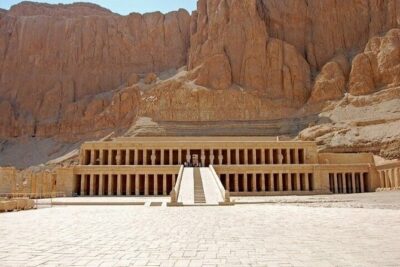
2-Day Top Attractions and Adventures Package in Luxor with Accommodation
Read our review →
2-Day Bahariya & White Desert Private Camp Adventure
Read our review →Browse the lists this tour appears in