
Reviewed · HORSE RIDING
First impression of Luxor-Explore secrets of Luxor by horse carriage
Horse carriage tours in Luxor can feel like a movie scene, but the real value here is the Egyptologist guide who helps you make sense of what you are actually looking at while you move along the Nile. You skip the stress of figuring out routes on your own, and you avoid the usual back-and-forth that can come with hiring a driver.
I especially like the way this tour pairs the two major temple giants, Karnak Temple and Luxor Temple, so you see the East Bank story in one half-day. I also like the “bonus” stops, the Avenue of Sphinxes and the Abu Haggag Mosque, which gives you both archaeological context and a living religious site tucked into ancient stone.
One consideration: the tour depends on horse carriage transport. If animal welfare is a deal-breaker for you, pay close attention to what you see on the day. There is also potential confusion around exactly when the horse carriage starts, since the meeting point is at Luxor Museum before you begin moving between sights.
Key things to know before you go
- Meeting at Luxor Museum with a guide holding a red flag, then carriage to the next stops
- Egyptologist-led context so Karnak and Luxor Temple do not feel like random walls and columns
- Karnak and Luxor Temple are timed on foot, with entrances extra at your cost
- Avenue of Sphinxes has a modern reopening story, including government-led ceremony in 2021
- Abu Haggag Mosque is integrated into Luxor Temple, and it is still in use
- Group size can be up to 50, so expect a lively, shared pace
Luxor Museum meeting point, then a Nile-side ride to your first temple stop
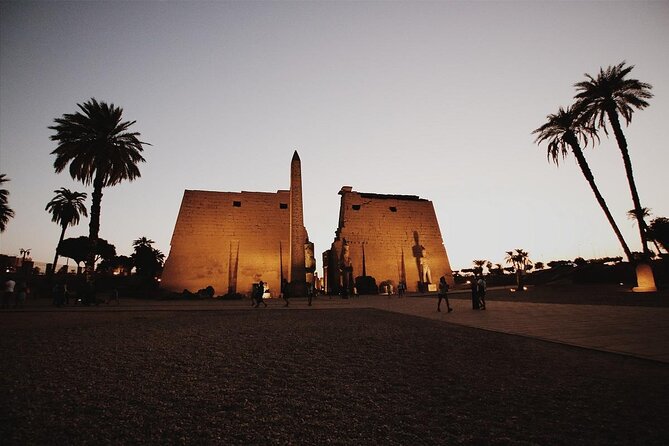
This is a true “first impression” style tour: it starts right on the Nile area at the Luxor Museum on Kornish Al Nile. You will meet your leader in front of the museum, and the easiest visual cue is that red flag.
A nice touch is that you do get a short museum stop before temple time starts in earnest. Even if you do not plan to go deep inside, it helps you orient fast in a city where everything feels ancient and close together. From there, you move by horse carriage to reach Karnak Temple first.
Practical tip: dress for heat and sun. The tour duration is about 4 hours, and you will be outside on foot for temple exploring. Bring sun protection and plan for a little walking that feels longer than you expect once you are inside large temple grounds.
More riding in Luxor:
- Private Horse Riding Tour in Luxor West Bank
★ 5.0 · 91 reviews - Luxor: Scenic Camel or Horse Ride
★ 3.9 · 24 reviews - Hurghada: Red Sea & Desert Horse Riding Tour with Swimming
★ 4.8 · 2,198 reviews
Karnak Temple on foot, and why Amun-Ra and Seti I matter
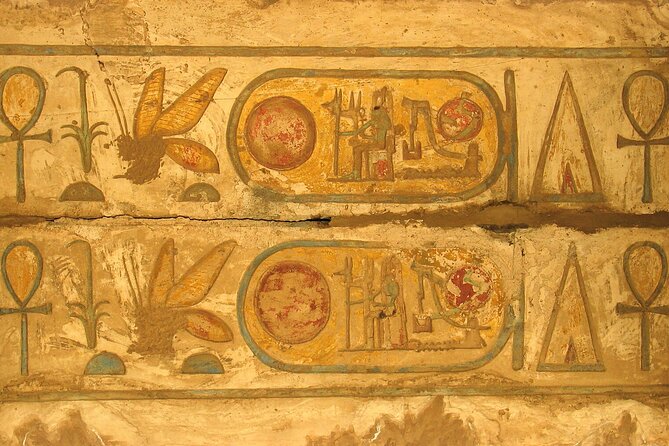
Karnak is the big one. This is where construction began around 4,000 years ago and kept expanding for centuries, long after individual rulers died. Your guide helps you connect the dots, including the idea that Karnak was the largest and most important religious complex in ancient Egypt for a long stretch of time.
When you are inside, focus on the main logic of the site: each pharaoh left architectural fingerprints, so it is not one single building. It is more like layers of royal ambition stacked into a single sacred space. One standout reference your guide will likely highlight is the Temple of Amun-Ra, which is closely tied to the famous Hypostyle Hall built during the reign of Seti I.
You get about one hour for Karnak. Entrance tickets are not included, so budget extra if you want to go in. If you want the best experience, arrive ready to look slowly. Karnak rewards a calm pace, and your Egyptologist guide’s explanations can turn “wow, columns” into “oh, that’s what they were doing here.”
Photo tip: early shade is rare at Karnak, so if you care about photos, prioritize wide-angle views from spots where the light is kinder. And yes, the scale can be so big that you end up with the same postcard framing again and again. Let your guide point out alternative angles, and your photos will feel more personal.
Luxor Temple and the Great Colonnade Hall, built across multiple pharaohs
After Karnak, you head to Luxor Temple, the other heavy hitter on the East Bank. Luxor Temple was constructed over hundreds of years, associated with leaders like Amenhotep III, Ramses II, and Tutankhamun.
What makes Luxor Temple easier to “get” than Karnak is that it feels more unified. You still have huge parts that were later damaged or removed for building materials, but the complex reads like a planned ceremonial space rather than a forever-expanding maze.
Your guide will help you connect Luxor Temple to the concept of the “First Occasion,” tied to Amun’s rebirth symbolism during an annual coronation-style ceremony in ancient times. Even if you only catch the gist, it gives meaning to the walls rather than just giving you dates.
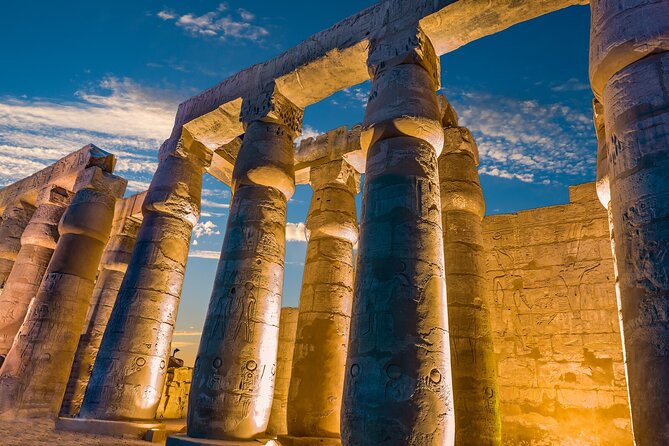
Then there is the headline feature: the Great Colonnade Hall, about 61 meters long with 28 columns. Tutankhamun’s work is part of the decoration story, and it is one of those places where your brain starts comparing what you see with what you have read in books.
You also get around one hour here, with entrances paid separately. If you want to maximize value, do not waste time at the entrance. Start walking with purpose. Luxor Temple’s best moments come when you are close enough to read textures and notice how the space was designed for processions and ceremonies.
Avenue of Sphinxes: a sand-buried corridor that still has a show-stopping comeback

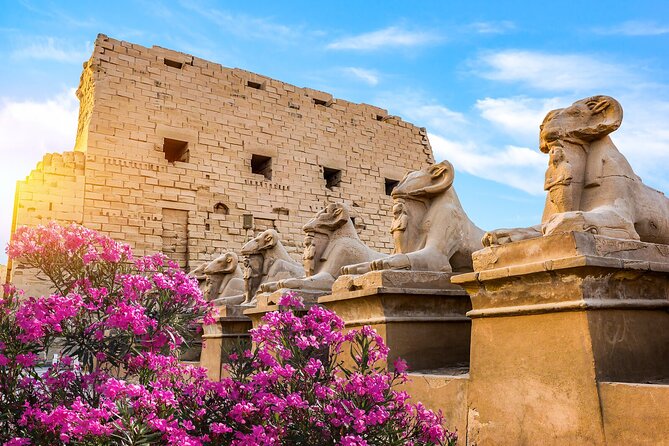
Between the two major temples, you have a stop at the Avenue of Sphinxes. This avenue is New Kingdom-era in origin, but its later completion is linked to Nectanebo I in the 30th Dynasty. Over centuries, it got buried under layers of sand, which is exactly why rediscoveries matter so much here.
What makes this stop genuinely interesting is that the avenue is not just ancient. It has a modern story too. Egypt’s government reopened it with a grand ceremony on 25 November 2021, which adds a sense of “this is still happening” to your visit.
Your guide’s context helps you understand how archaeologists found the traces: in 1949, eight statues were discovered, then more were uncovered in later years within a defined area around the Luxor Temple area. Even if you are not an archaeology nerd, this helps you see the avenue as evidence, not just decoration.
You get about 30 minutes. That is enough time for a quick wander, a few photos, and then you move on without losing the tour rhythm.
A different kind of day out of Luxor:
- Hurghada: Luxor Valley of the Kings & Tutankhamun Tomb Trip
★ 4.7 · 13,208 reviews - Luxor Day Trip from Hurghada Small Group & Tutankhamun Tomb
★ 4.8 · 5,366 reviews - Hot Air Balloon Ride in Luxor Egypt with Transfers Included
★ 5.0 · 4,319 reviews - Luxor: Shared Full-Day Tour to Luxor West and East Banks
★ 4.5 · 1,812 reviews
Abu Haggag Mosque inside Luxor Temple, and why continuity is the point
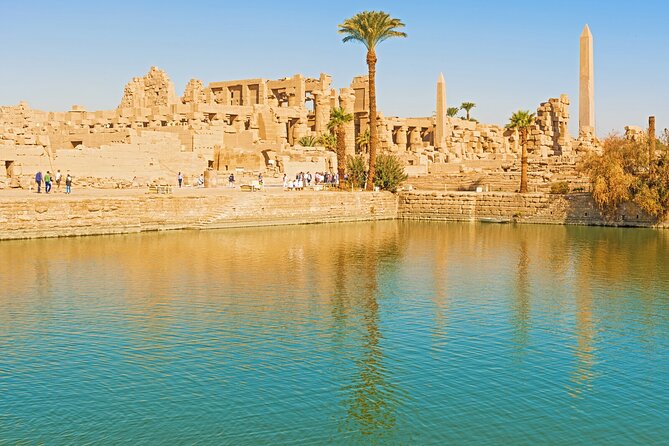
The last stop is the Abu Haggag Mosque, built into the structure of Luxor Temple. This is a rare setup: an ancient Egyptian worship space that continues to function within later religious use.
It dates back to the reign of Pharaoh Amenhotep III in the 14th century BC, and it is known for being one of the oldest continuously used temples in the world. Your visit here is short, around 10 minutes, so do not treat it like a full stop for slow sightseeing.
Instead, treat it like a snapshot of continuity. You will see how religious space evolves, and you get a different kind of awe than you get from giant stone columns. It is more human. Less museum label. More still-in-use.
Photo tip: take wide shots when you can, but also look for details where ancient and later layers meet. If you love architecture, this is the moment where you start noticing “how they built on top of what was already there.”
Egyptologist guidance, and why the guide name can matter
This tour is led by an Egyptologist guide, and in practice that is the difference between a walking tour and a “why do I care” tour. When the guide can explain who ruled, what the temple meant, and what you should look for, you remember the visit more clearly after you leave.
There is also at least one host name that stands out in positive feedback, Ababoub. The praise is for warm hosting and making the day feel enjoyable, not rushed. Even without the name, look for that guide energy: clear pacing, willingness to answer questions, and quick explanations that fit the space you are standing in.
If you want the best experience, ask one question early, like what feature to prioritize at Karnak. A good guide will tailor the rest of the walk around your interest.
Price and tickets: how the $30 per person value really works
The price is $30.00 per person, and the tour runs about 4 hours. That half-day length is a key part of the value, because Luxor can swallow entire days if you do not plan.
This is also a small-group style experience, with a maximum of 50 travelers, and it includes group discounts and a mobile ticket. All of that helps keep the process simple.
But here is the main math: Karnak and Luxor Temple entrance tickets are not included. You should expect to pay about 200 EGP, or 12 USD total for those entrances.
So is it worth it? For me, it is best when you value two things:
1) You want a guide to make sense of what you are seeing.
2) You are okay paying a separate temple entry fee and sticking to a tight time plan.
If you already have temple tickets and just want transportation plus a loose plan, you might find cheaper options. If you want historical interpretation while riding and walking efficiently, this price can feel fair.
Horse carriage transport: a fun way to move, with one serious reality check
Horse carriage is part of the appeal. It gives you a slower rhythm than buses and taxis, and it can make the Nile-adjacent route feel more local.
That said, the carriage part is exactly where you should stay alert. One unhappy incident has been associated with an emaciated horse and even a situation where the animal fell and could not get up on its own. That is the kind of event that goes beyond “not ideal,” it is a safety and welfare issue.
My practical advice:
- If you arrive and the horses look unwell, say something right away to your guide.
- If the weather is extreme, expect the experience to be harder on everyone, especially the animals.
- If this is a deal-breaker for you, you might consider temple-focused tours that rely on walking and drivers instead of animal-powered transport.
Also, be aware that the tour title can create expectations. The meeting point is Luxor Museum, so you may not be literally on the carriage the second you show up. You should expect carriage use as part of the route between stops.
What your day will feel like, stop by stop
This tour is basically a sequence of “big ancient sites, plus one working mosque” with short travel legs.
You start at Luxor Museum. Then you move to Karnak Temple for about an hour of guided exploring. After that, you continue to Luxor Temple for another hour, and you will see signature features like the Great Colonnade Hall. You then pause at the Avenue of Sphinxes for a shorter photo and walking stretch. Finally, you finish at Abu Haggag Mosque and wrap back where you started.
If you like structured touring, this format works well. If you hate groups, you might find the pace a bit social, since up to 50 people can make any temple visit feel a little like sharing space at peak time.
Still, the short stops at the Avenue and the mosque help keep the day from dragging. You get variety without losing the main temple focus.
Who should book Luxor-Explore secrets of Luxor by horse carriage
This is a solid fit if you:
- Are doing Luxor for the first time and want the East Bank highlights in one half-day
- Like guided explanations that make temples readable, not just visitable
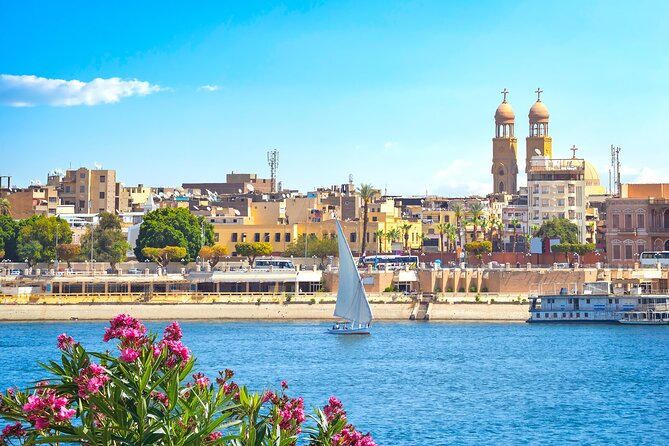
- Enjoy the photo opportunities created by the Nile-side route and classic carriage travel
- Want an experience that is easy to join, with mobile tickets and an organized meeting
It may not be ideal if you:
- Have strong concerns about animal welfare and would rather avoid horse-powered transport
- Want long, slow time inside every temple hall, since the time blocks are about an hour for Karnak and Luxor Temple
- Are the type who needs the carriage at the exact moment you meet, not after a short prelude at the meeting point
One more note: people often say this kind of tour is memorable for the right reasons when the guide runs the day well. If your guide is like Ababoub in the positive feedback, you are likely to feel cared for rather than herded.
Should you book this Luxor horse carriage tour?
If you are excited by Karnak and Luxor Temple, and you want an Egyptologist guide to steer your attention, I think this tour can be a strong value at $30 for a half-day. The separate temple entry fee is normal for Luxor and does not ruin the deal.
But do not ignore the horse carriage factor. If animal welfare is a must for you, make your decision based on what you see when you arrive and how the carriage operation looks in real time. If anything seems off, speak up immediately.
If you want flexibility, remember that cancellation is free up to 24 hours in advance, which gives you a little buffer if your Luxor plans shift due to heat, crowds, or your energy level.
FAQ
FAQ
How long is the horse carriage tour in Luxor?
The tour lasts about 4 hours.
What does the tour cost per person?
The price is $30.00 per person.
What is included in the price?
You get an Egyptologist tour guide and transportation by horse carriage.
Are Karnak Temple and Luxor Temple entrance tickets included?
No. Entrance tickets are not included, and the total listed cost is 200 EGP or 12 USD for both.
Where do we meet for the tour?
You meet in front of Luxor Museum on Kornish Al Nile. The tour leader will be holding a red flag.
How many people are in a group?
The maximum group size is 50 travelers.
Reviewed most recently around Luxor
- Private Full Day Tour of Luxor West and East Bank Tombs & Temples★ 5.0 · 45 reviews
- Luxor Private Transfer To Hurghada With visit Dendera Temple★ 4.5 · 45 reviews
- FULL Day Tour:Valley of the Kings &Queens &Hatshepsut Temple&more★ 5.0 · 46 reviews
- Private Sailing Traditional Egyptian Boat in Luxor★ 5.0 · 46 reviews
- Dendara and Abydos Temples Day Tour from Luxor★ 5.0 · 46 reviews
- Private Full-Day Luxor Tour to East and West Banks★ 5.0 · 47 reviews
- Private Full-Day Tour to West and East Banks of Luxor★ 5.0 · 48 reviews
- Private Tour: Luxor East and West Banks Full Day Tour★ 5.0 · 49 reviews
Horse Riding, compared.

Red Sea & Desert Horse Riding Tour with Swimming
Read our review →
Sea & Desert Horse Riding tour/w Swimming&Transfer
Read our review →

Sharm El Shiekh: Beach and City Desert Horse Riding Tour
Read our review →

Horse Riding Tour 2 Hours on Sea And Desert & Transfer -Hurghada
Read our review →
Desert and Sea Horseback Riding Tour with Transfer
Read our review →
Browse the lists this tour appears in