
Reviewed · VALLEY OF THE KINGS
From Hurghada Individual excursion to Luxor & the Valley of the Kings
This Hurghada-to-Luxor day is interesting because it stacks the key East and West Bank Thebes highlights into one long day, starting around 5 a.m. I love the small group of up to 8 with an Egyptologist at your side, so questions do not get lost.
I also like that the tour includes lunch and the big entrance fees, and guides such as Marian and Naschaat are praised for making the history click. The trade-off is the early start and the total 14-hour duration, which can feel like a lot if you prefer slow travel.
Key highlights at a glance
- Up to 8 people on a private-style day keeps things relaxed and easier to manage
- Egyptologist guide in German means you get real explanations, not just a route
- Entrance fees included for Karnak, Valley of the Kings chambers, Colossi of Memnon, and Hatshepsut
- Three Valley of the Kings burial chambers plus the Colossi and Hatshepsut in one itinerary
- Long day timing with about 4 hours driving each way, so plan for an early pickup
Hurghada to Luxor in one day, starting around 5 a.m.
This is the kind of tour that works if you want maximum payoff for your time in Egypt. You’re picked up from your Hurghada hotel early, around 5:00 a.m., then you drive roughly 4 hours to Luxor. The upside of this schedule is that you arrive with the day still feeling fresh, and you get to see a different side of the Nile Valley from the road.
The big consideration is stamina. The full experience runs about 14 hours from pickup to drop-off, and that includes time at each site plus the transfer back to your hotel around 4:00 p.m. For some people, that is exactly right. For others, it can be an all-day commitment that leaves less room for wandering on your own.
Because the group is limited to max 8, I like that you are not stuck in a giant crowd with a rushed guide trying to keep track of everyone. In practice, this makes it easier to hear explanations and to ask follow-up questions, especially with a German-speaking Egyptologist guiding the day.
If you’re traveling with limited time, this one-day format can be a smart way to “hit the essentials” in Luxor without needing an overnight stay. And if Luxor is the anchor of your trip, it’s also the easiest way to keep your schedule tight.
More Valley of the Kings trips:
- Small group Hurghada to Luxor, Valley of the Kings by Van
★ 4.5 · 2,470 reviews - Small Group Excursion to Luxor Valley of the Kings from Hurghada
★ 5.0 · 637 reviews - Luxor: Valley of the Kings and Hatshepsut Temple w/Nile Boat
★ 5.0 · 230 reviews
Karnak Temple on the East Bank, with real context
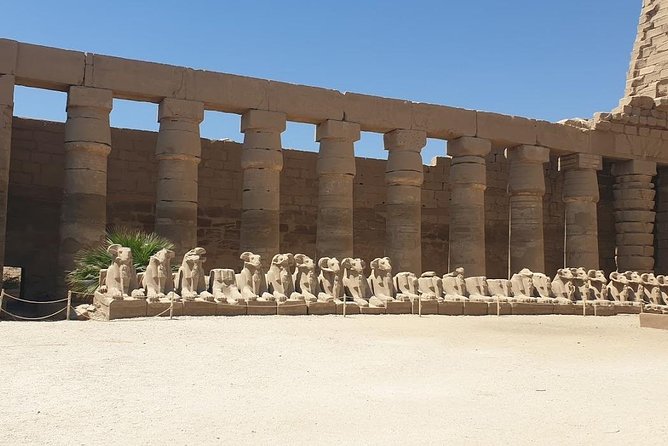
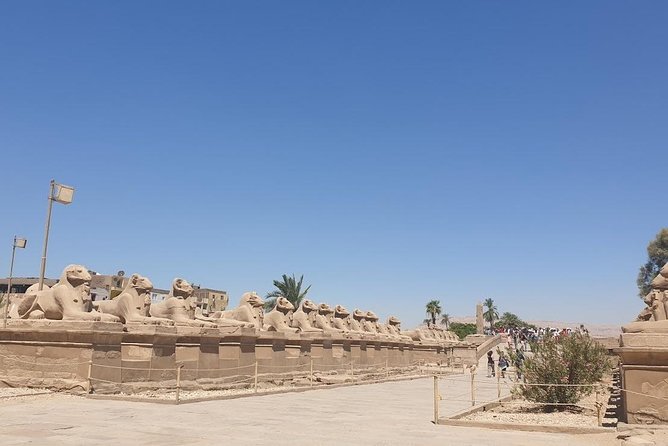
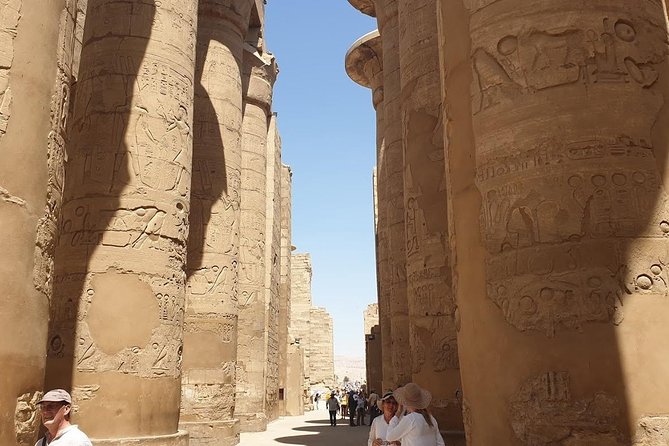
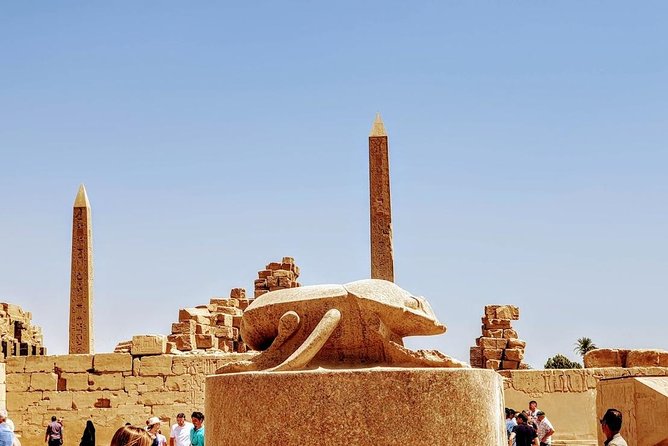
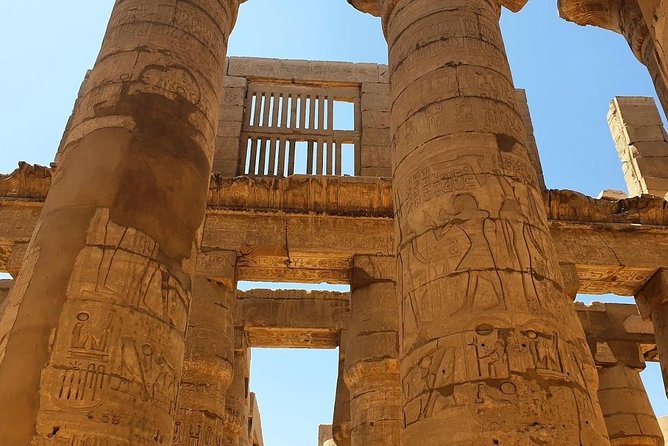
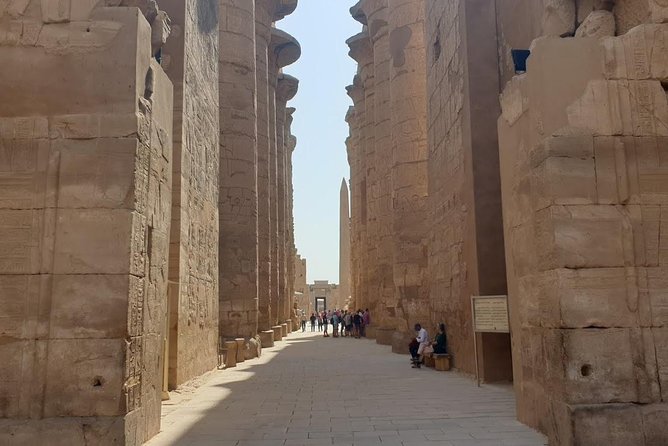
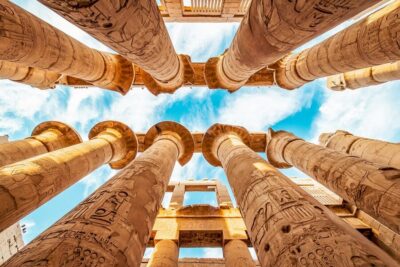
Your first real stop is Karnak Temple, on the East Bank of the Nile, and it’s billed as Egypt’s largest temple complex. In this itinerary you spend about 2 hours there, with admission included. That’s a good amount of time for seeing the big structures and getting your bearings, without turning the visit into a sprint.
What makes Karnak worth doing with an Egyptologist is simple: you learn what you’re actually looking at. This isn’t just walking through stone. The guide is there to explain the meaning behind the temple’s role in Thebes and to connect what you see to the broader story of ancient Egypt.
Another practical plus is that your guide stays with you throughout the day, so you can keep the same thread of context from Karnak into the rest of the sites. That continuity matters. If you bounce from place to place with no explanation, Luxor can feel like a set of impressive backdrops. With an Egyptologist, it becomes a sequence.
One note to keep in mind: your visit happens after a long drive from Hurghada. Karnak is a major site, so if you get easily fatigued early in the day, you’ll want to mentally pace yourself during the first stop. The time is built in for you to slow down a bit, and the smaller group helps.
Valley of the Kings: three burial chambers and the big names
After lunch, the tour heads to the Valley of the Kings, about 5 kilometers northwest of Luxor. This valley is known in ancient times as the Sechet-aat large field, and it contains over 70 graves carved into rock. In this stop, you spend about 2 hours, including admission, and you get the chance to visit three burial chambers.
This is the section of the day where the tour earns its reputation. The Valley of the Kings is not only famous because of one tomb. It is famous because of how many rulers were buried here and what it reveals about the New Empire period. The tour places the focus on the rulers of the new empire, roughly 1550 to 1069 BC, and mentions that the tombs span about 18 to 20 dynasties.
What you learn also adds a layer that makes the site feel more human. The itinerary explains that tombs were later changed for protection reasons, and that in the 22nd dynasty the mummies were removed and hidden in other tombs. Then the story pivots to modern discovery, including the 1922 discovery of Tutankhamun’s tomb, described as largely intact.
Here’s why I think the chamber count matters. Visiting three burial chambers in a limited time can give you variety in what the space feels like, without leaving you exhausted. And it helps you compare details you might otherwise miss if you only saw one tomb.
A practical tip: this stop is the one where you can feel the timing most. You have a set block of time in the valley, so plan to take it slowly once inside the chambers. The best moments are often the quiet ones, when you look longer than you think you need to.
Also, this is where the small group can make a real difference. A maximum group size of 8 helps prevent long bottlenecks and keeps the visit from turning into a chase.
Colossi of Memnon: a quick stop that gives you scale
After Karnak, the itinerary includes a short visit to the Colossi of Memnon. These are two adjacent statues from the 14th century, associated with King Amenophis III, who is shown sitting on a throne and looking toward the Nile.
Even though this stop is only about 10 minutes, it’s a worthwhile break. Why? It gives you scale. You’re moving from complex temple spaces into a view of two massive monuments that still stand roughly 18 meters high including the base. It’s the kind of moment that lets you picture ancient Egypt’s ambition in a different way.
The tour also notes the Arabic names the statues are known by, el-Colossat or es-Salomat. That kind of small detail helps you connect today’s place names to the ancient story the guide is telling.
If you’re the type who likes to take photos and you also like to listen, this stop is perfect for doing both quickly. Just don’t treat it like the main event. Use it as a breather and a mental reset before Deir el Bahari.
A different kind of day out of Hurghada:
- From Hurghada: Cairo and Giza Highlights Full-Day Tour
★ 4.5 · 6,014 reviews - Hurghada: Luxury Cruise Trip to Orange Bay with Lunch
★ 4.9 · 5,451 reviews - Hurghada: Orange Bay Island Boat Trip w/ Breakfast and Lunch
★ 4.9 · 5,345 reviews - Hurghada: Royal Seascope Submarine Cruise with Snorkel Stop
★ 4.4 · 4,637 reviews
Hatshepsut at Deir el Bahari: one of the best preserved West Bank stops
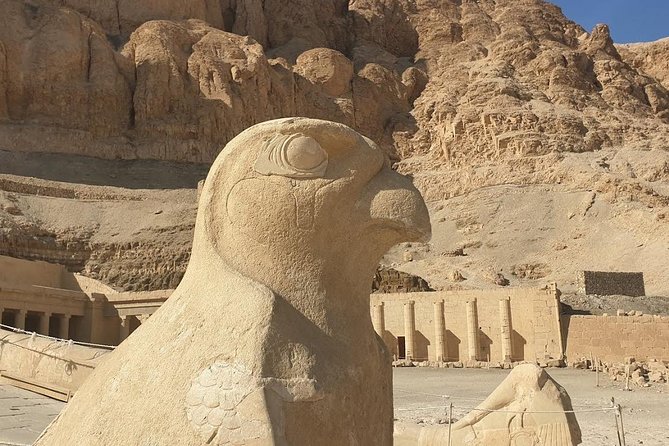
The day ends on the West Bank with the terrace temple complex of Hatshepsut, also known as the mortuary temple of Hatshepsut at Deir el Bahari. Your visit is about 1 hour, with admission included.
This is one of those stops where the guide’s explanation changes everything. The tour provides the key facts you need: Hatshepsut is assigned to the 18th dynasty, with dates recorded from 1479 to 1458 BC. Her spouse is listed as Thutmoses II. And the name Hatshepsut means The first of the noble women who embraced Amun.
The site is described as being made of limestone and as the best preserved temple on the West Bank in Thebes. That matters for how you experience it. When a temple survives well, you can actually read the shape of the terraces and structures, rather than feeling like you’re only seeing fragments.
Timing-wise, this late-day stop is a smart finish. You’re already “warmed up” with Karnak and the Valley of the Kings, so you have context for why a mortuary temple would be so central to the story of power and belief. And then you leave the day with a location that looks good even at the end of a long schedule.
One small drawback to consider: with only about an hour, you’ll need to choose between slowing down for photos and staying focused on what your guide is pointing out. The best strategy is to listen first, then take your pictures once you know what you’re looking for.
Lunch, entrance fees, and what you might pay extra
This tour is priced at $221 per person, and it includes a lot that can quietly add up on your own. Here’s what you get included: lunch, private transportation, and a tour guide by an Egyptologist. You also get entrance fees for Karnak, the Valley of the Kings burial chamber visits, Colossi of Memnon, and Hatshepsut.
I like this value setup because it reduces decision fatigue. You are not dealing with separate ticket lines for every stop, and you’re not budgeting for surprises that show up once you arrive.
What is not included is clearly stated: drinks in the restaurant and any additions not mentioned in the program. Personal expenses are also on you. So the one predictable extra is beverages during lunch. If you want to keep costs controlled, plan to have water or a drink purchased on site without making it a big spending moment.
Given the distance and the fact that you’re covering multiple major monuments plus an Egyptologist guide, this price can make sense if Luxor is your priority. If you’re only curious about one site, a multi-stop day might feel too dense. But if you want a structured overview of Thebes in one go, the inclusion list helps justify the cost.
Also, note that it’s generally booked around 19 days in advance on average, so if your dates are fixed, don’t wait too long.
Your driver and guide experience: why the day feels smooth
The driving part matters on a day like this. You’re traveling about 4 hours from Hurghada to Luxor, then returning at the end of the day. This tour is set up with pickup offered and air-conditioned small bus style transportation, and you travel in a small group (max 8).
The reviews you’ll likely see in the wild often mention punctual drivers and smooth coordination. People specifically call out drivers like Carlos, Helal, and Mina, and they praise guides such as Gerges, Obi, Ismail, and Naschaat. The common theme is that the day is organized without pointless detours.
That last detail is not small. When a day trip includes major sites, you want every hour to serve a purpose. Some guests also note that there were no unnecessary stop types that derail time. In other words, the schedule stays focused on monuments, not shopping traps.
Another point worth knowing: you get a private-style tour, meaning it’s designed for your group only rather than being shuffled into a mixed group. That’s the best scenario for hearing explanations and moving at a pace that feels human.
If you want to reduce the stress of doing Luxor on your own, this is the cleanest version of a curated day: transport handled, tickets handled, and interpretation handled by an Egyptologist.
Should you book this Hurghada to Luxor day tour?
Book it if you want a structured Luxor day with a small group, an Egyptologist guide, and key East and West Bank sites covered in one shot. It’s a strong choice if Luxor is a must-do and your schedule in Hurghada is limited.
Pass or consider an alternate plan if you know you struggle with early mornings and a long 14-hour day. Also, if you prefer very slow sightseeing with lots of free time between stops, this kind of itinerary may feel too scheduled.
If you do book it, your best move is to treat the day like one experience, not four separate stops. Listen closely at Karnak, keep the Valley of the Kings context in mind while you visit the chambers, then finish with Hatshepsut so you leave with a clear sense of how the sites connect across time and geography.
FAQ
What time is pickup from Hurghada?
Pickup is scheduled for around 5:00 a.m.
How long is the Luxor and Valley of the Kings excursion?
The tour duration is about 14 hours.
Is lunch included?
Yes, lunch is included in the tour.
Are entrance fees included?
Yes. Entrance fees are included for Karnak Temple, the Valley of the Kings burial chamber visits, Colossi of Memnon, and the Temple of Queen Hatshepsut.
How many burial chambers do we visit in the Valley of the Kings?
The tour includes visits to 3 burial chambers in the Valley of the Kings.
What is the cancellation policy?
You can cancel for a full refund up to 24 hours before the experience starts. If the tour is canceled due to poor weather, you are offered a different date or a full refund. It can also be canceled if a minimum number of travelers is not met, with the same options.
Reviewed most recently around Hurghada
- Hula Hula Island Sea Trip With Water Sports And Lunch – Hurghada★ 4.0 · 45 reviews
- Dining in The Desert★ 5.0 · 45 reviews
- Day Tour to Cairo from Hurghada By Bus★ 4.0 · 46 reviews
- Panorama semi submarine snorkelling sea trip in Hurghada★ 4.5 · 46 reviews
- Full-Day Trip from Hurghada to Luxor and the Valley of the Kings★ 4.5 · 46 reviews
- Paradise Island With Water Sports and Lunch Sea Trip, Parasailing – hurghada★ 4.5 · 47 reviews
- Private Day to cairo – all fees included – new museum & pyramid★ 5.0 · 47 reviews
- Orange Bay sea trip VIP★ 5.0 · 47 reviews
Valley of the Kings, compared.
Luxor Valley of the Kings & Tutankhamun Tomb Trip
Read our review →
Small group Hurghada to Luxor, Valley of the Kings by Van
Read our review →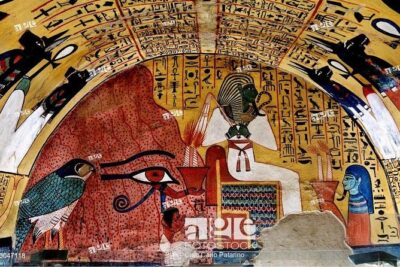
Luxor Day Tour: Valley of Kings & Queens & Hatchepsut Temples
Read our review →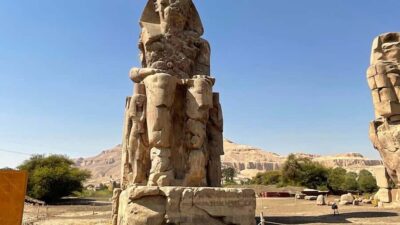
Valley of the Kings and Hatshepsut Temple Day Tour
Read our review →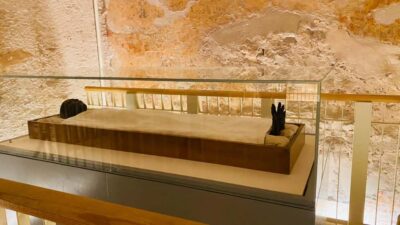
Luxor Tour with Valley of Kings, Karnak & Tut Tomb
Read our review →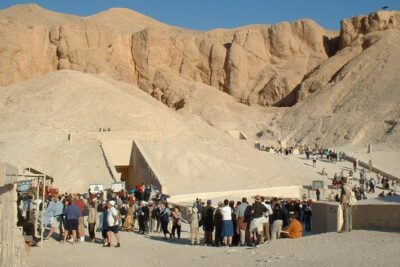
Valley of Kings, Hatchepsut Temple ,Karnak & Luxor-DayTour
Read our review →
Small Group Excursion to Luxor Valley of the Kings from Hurghada
Read our review →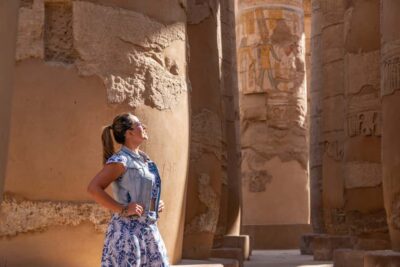
Valley of Kings Hatshepsut & Karnak Luxor Day Trip
Read our review →Browse the lists this tour appears in