
Reviewed · VALLEY OF THE KINGS
Luxor Day Tour: Kings Valley & Karnak & Luxor & Hatshepsut Temple
Luxor in one day can sound like a lot, but this route makes sense because it stitches together the big names on both banks: royal burials on the West Bank, then the Amun power centers on the East. You get a smooth circuit through Valley of the Kings, Hatshepsut at Deir el Bahari, Karnak, and Luxor Temple without having to plan transit yourself.
I especially like the balance here: you spend real time in the tomb valley (not just a quick look), then you hit two East Bank giants in sequence. I also like that pickup is handled for you from your hotel or Nile cruise, with private A/C vehicle comfort that matters when Luxor is hot and bright.
One consideration: the day packs in a lot, so you will want sunscreen, water, and a “pace yourself” mindset. Also, entry into the Tomb of Tutankhamun interior is not included, so you may pay extra if you want to go inside.
Key highlights worth knowing before you go
- West Bank royal burials plus East Bank temple worship, all in one long day
- Hatshepsut’s Deir el Bahari temple, famous for its dramatic cliffside layout
- Karnak and Luxor Temples on the East Bank, two different styles of grandeur
- Optional Tomb of Tutankhamun interior, with a separate ticket needed
- Bottled water on board, and some departures include complimentary soft drinks
- Time stays flexible enough for a quick Tomb of Tut stop if you choose it
Why this West-and-East Luxor route works so well
This tour works because it follows the logic of ancient Thebes. The West Bank is where the living prepared for eternity, so it’s natural to start with the Valley of the Kings and then walk into Queen Hatshepsut’s mortuary complex. The East Bank, meanwhile, is where the temples lived and breathed day-to-day, so ending with Karnak and Luxor Temple feels like moving from tomb silence to religious spectacle.
I like that the stops aren’t random. You get the scale of a burial landscape first, then a single monument that’s architecturally clever, then iconic statues, and finally two temple complexes that explain how power was displayed in stone. It’s a satisfying arc for first-timers because you can feel the difference between burial art, royal memorial design, and temple worship.
If you’re short on time, this is also a practical way to cover the headline sites. Luxor isn’t only about one perfect photo. It’s about seeing multiple layers of meaning in the same day, with transportation handled and a guide to translate what you’re looking at.
More trips to Hatshepsut's temple:
- Luxor: Valley of the Kings and Hatshepsut Temple Day Tour
★ 4.4 · 1,404 reviews - Hurghada: Valley of Kings Hatshepsut & Karnak Luxor Day Trip
★ 4.5 · 375 reviews - Shared Day Tour to Valley of the Kings, Hatshepsut ,Memnon &lunch
★ 5.0 · 275 reviews
Pickup, private transport, and how to stay comfortable
The day begins with pickup from your hotel or Nile cruise in Luxor, and it can even start from Luxor airport depending on your situation. You then transfer by private A/C vehicle to the West Bank. For many visitors, this is the difference between enjoying the day and spending your energy fighting traffic, heat, and timing.
You also get bottled water, and some departures include complimentary soft drinks during the journey. That sounds small until you realize Luxor days can feel long, especially once you’re walking from one monumental site to another.
Timing runs about 7 to 9 hours total. That means you should plan to be “outside ready” for most of the day. Bring sunglasses, wear a hat if you like one, and keep your pace steady, especially on the West Bank where the sun can feel relentless. A hat and water do more than you think.
Valley of the Kings: royal tomb country in a compact area
The Valley of the Kings is one of those places where the setting does half the storytelling. It’s a royal burial ground with decorated tombs cut into the rock, and only a handful are open to the public. You’ll spend about two hours here, which is enough to slow down, look at tomb entrances, and soak in the idea that these are Pharaohs’ final homes.
The names you’ll recognize help you anchor what you’re seeing. The valley includes tombs for Tutmosis I, Tutmosis III, Tutankhamun (KV62), Ramses VI, Merenptah, and Amenhotep II. Even if you don’t go into every tomb, the knowledge makes the landscape feel less like “a valley full of doors” and more like a carefully planned royal city.
One practical note: the tour includes a stop that mentions the Tomb of Tutankhamun as an optional add-on. If you’re hoping to see KV62, plan that decision early. The optional time is short, about 20 minutes, and the interior visit requires an additional ticket on the spot.
Hatshepsut at Deir el Bahari: a mortuary temple with theater in stone
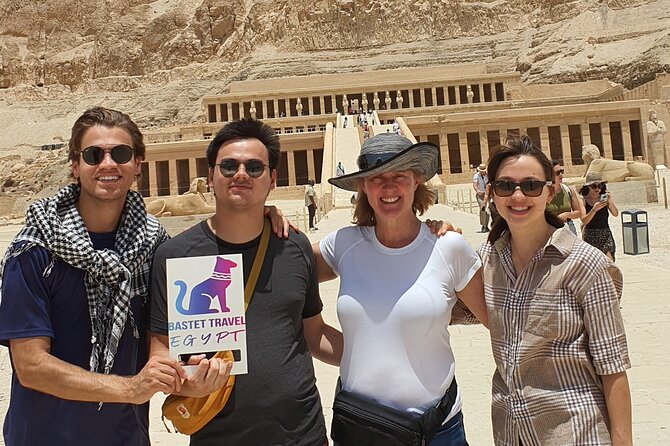
Next comes the Temple of Queen Hatshepsut at Deir el Bahari, also known as El Dir el Bahari. This is built as a memorial temple honoring Hatshepsut, one of the few pharaonic women who ruled Egypt. It takes about two hours, and you can really feel how the architecture was designed to control your view as you move through the complex.
Hatshepsut’s temple is tied to Senenmut, her steward and architect. What you’re looking at isn’t only “beautiful ruins.” It’s a structured experience carved into a half circle of cliffs on the West Bank. The layout is often described as echoing classical Greek architectural ideas, but in practical terms it means you get strong symmetry, repeating terraces, and a visual rhythm that makes you pause even when the schedule is moving.
If you’re into symbolism, this temple delivers. It honors a ruler, yes, but it also shows how Egypt could put royal legitimacy into the built environment. And because the valley and this temple are on the same bank, the emotional shift from burial place to royal memorial feels coherent.
More Karnak visits:
- Hurghada: Luxor Tour with Valley of Kings, Karnak & Tut Tomb
★ 4.6 · 1,082 reviews - Luxor: Valley of Kings, Hatchepsut Temple ,Karnak & Luxor-DayTour
★ 5.0 · 735 reviews - Luxor: Karnak Temple and Luxor Temple Tour with Lunch
★ 4.4 · 658 reviews - Marsa Alam: Valley of the Kings & Karnak Temples Luxor Tour
★ 4.6 · 177 reviews
Tutankhamun option at KV62: worth it, but only if you plan for the extra ticket
The tour includes a stop connected to the Tomb of King Tutankhamun (KV62). You’ll have time here for about 20 minutes, but here’s the key point: entry inside the tomb requires an additional ticket, which you buy on the spot.
Why you might care: KV62 is famous, and the layout you’ll see (four chambers plus an entrance corridor and staircase) gives you a clearer feel for how this tomb was adapted for Tutankhamun after his premature death. The description also notes it’s smaller and less extensively decorated than other royal tombs from the same period, which actually can make the visit feel more focused and easier to process.
The drawback is time. If you’re deciding last minute, you could end up feeling rushed or skipping the interior visit entirely. If seeing inside matters to you, plan to go in when the moment arrives and keep expectations realistic about space and viewing time inside.
Colossi of Memnon: two huge reminders, quick stop done right
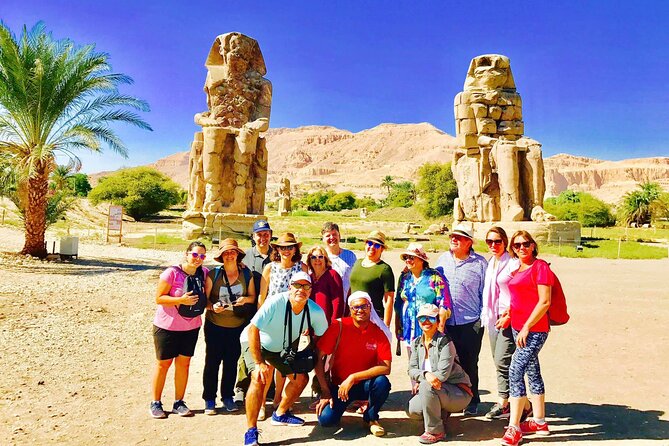
The Colossi of Memnon are monumental statues of Amenhotep III. You’ll visit them for around 30 minutes, and it’s a quick stop compared with the temples. But it’s not a filler. These statues are enormous, about 60 feet high (around 18 meters), and they were carved from single blocks of sandstone.
They sit facing east, toward the Nile, and they represent Amenhotep III seated on a throne with imagery tied to his mother, his wife, and the god Hapy. Standing there, you get a sense of how rulers wanted to project power across generations and how stone could do the work of a living presence.
Because this is a time-light stop, it helps break up the day. If you’re tired from walking, you’ll appreciate the “look, take it in, move on” tempo. Just make sure you still look slowly enough to register the details, since the statues reward attention.
Karnak Temple: the biggest temple complex that also needs patience
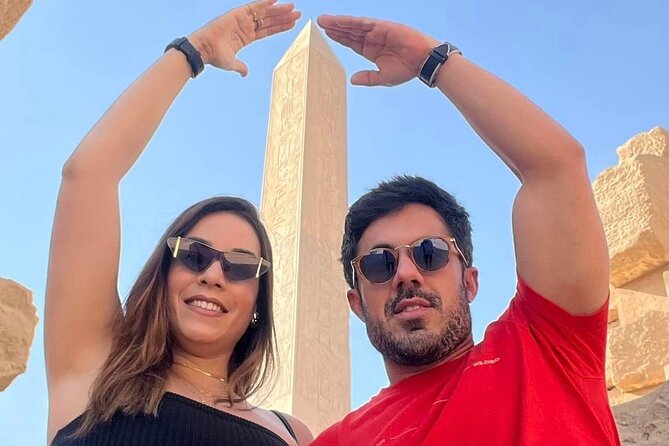
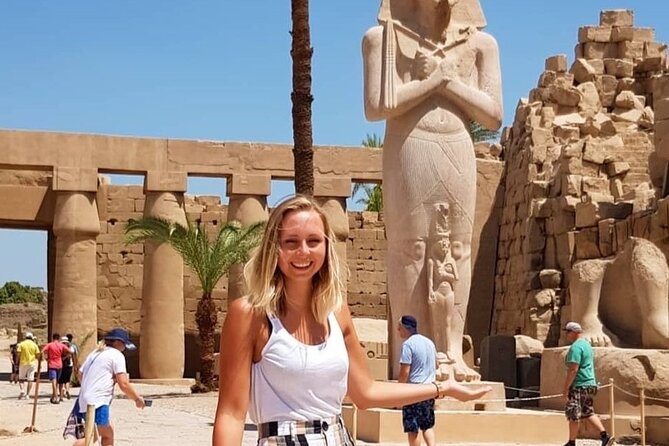
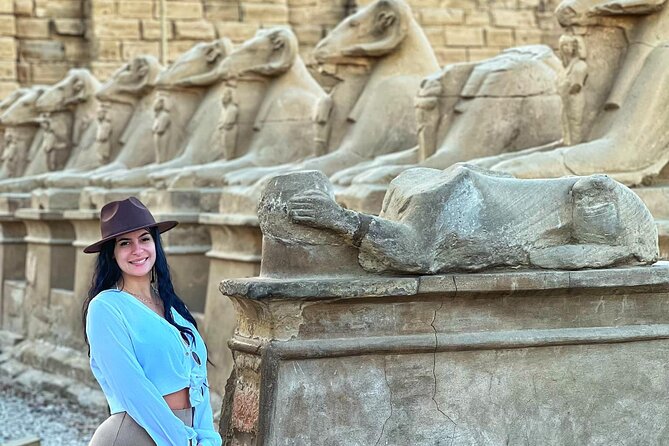
Then you head to Karnak Temple on the East Bank, with about two hours here. Karnak is described as the greatest example of worship in history, dedicated to Amun, Mut, and Khonsu. The complex is a large mix of temples, pylons, chapels, and other buildings, and construction began during Senusret I in the Middle Kingdom and continued into later eras.
Construction history matters here because it explains why Karnak feels layered. You’re not looking at one single “moment in time.” You’re seeing a long-running holy project that evolved over centuries. For you, that means your guide helps a lot. Without interpretation, it can be easy to get overwhelmed by scale and repeat features.
The most helpful way to approach it is to pick a few anchors. Think of Karnak as the ancient Ipet-isut, the main place of worship for the Theban Triad with Amun at the center. Once you have that framing, walking through the courtyards and halls becomes less like wandering and more like following a system.
Luxor Temple: finishing with New Kingdom and Ramses II layers
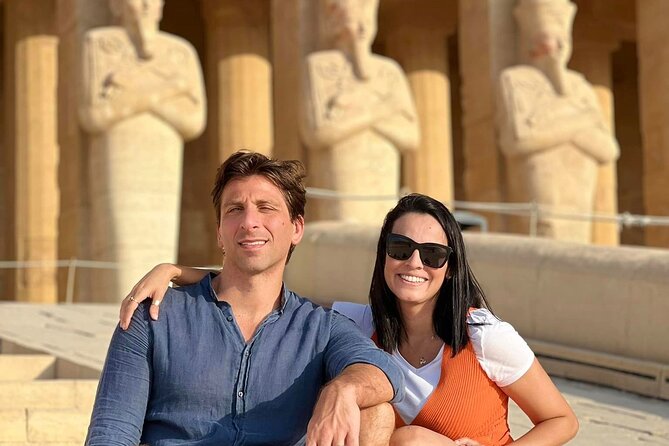
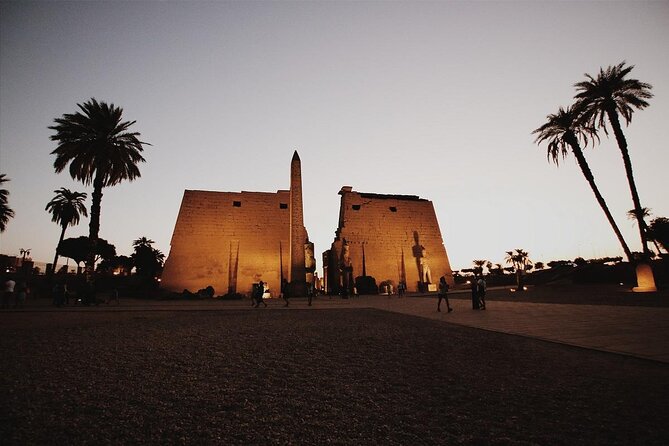
Your last major temple stop is Luxor Temple. It’s about a two-hour visit, and it’s located on the East Bank in modern Luxor, once ancient Thebes. Construction began in the New Kingdom, with Amenhotep III building the core and Ramses II completing it later.
Luxor Temple is also tied to earlier reigns. The description notes that an oldest existing shrine dates back to the time of Hatshepsut. That means you’re still seeing the overlap between rulers and eras, with old sanctuaries influencing what came next.
One especially interesting detail is the “Divine Birth” scenes in an inner room. They describe the story of how the king’s true father was Amun-Ra, disguised as Thutmose IV. For your visit, these kinds of scenes are where a guide’s Egyptology helps you connect what you’re seeing to meaning, not just style.
This is a nice ending point because Luxor Temple has a different feel than Karnak. Karnak is broad and monumental; Luxor Temple often feels more direct and grounded once you’re already warmed up by the scale you saw earlier.
Price and value: how $35 can work, and what to confirm
At $35 per person, this tour is positioned as a value day. You’re paying for more than sightseeing. You’re paying for pickup, private A/C transport, bottled water, and a structured route that hits major sites across both banks in one day.
That said, value depends on what you opt into. The guide is described as a professional Egyptologist but listed as optional. Entry fees are also listed as optional. Some stops in the itinerary show admission as free, but because entry fees are marked optional overall, you should confirm what’s included for your departure date.
The one extra expense you should actively plan for is the Tomb of Tutankhamun interior. The tour includes the KV62 stop, but entry inside requires an additional ticket. If you want that interior experience, budget for it and don’t assume it’s automatic.
Also note lunch is listed as optional. If you skip lunch, you will still be out for much of the day, so bring a simple snack from your own supplies if that’s your style.
Guides, pacing, and what to expect from the day
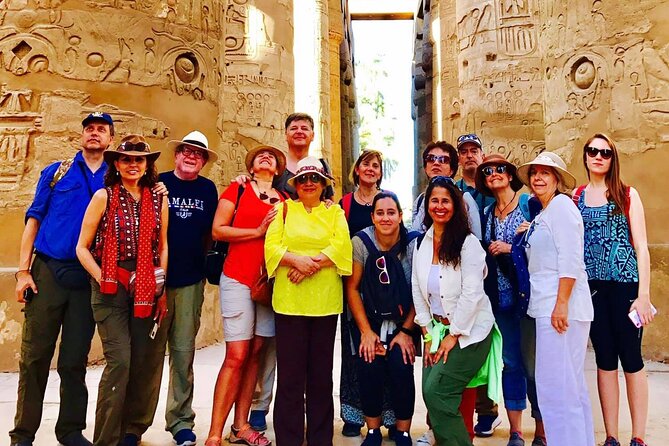
This is a group-based private tour, meaning only your group participates. That usually helps with timing and questions, especially in places where you want clarity about what you’re standing in front of.
The guide names that show up in past experiences include Abdullah and Waleed. That’s a good sign, because in a day like this, the guide makes the difference between seeing monuments and understanding why they were built the way they were. You also get mobile ticket support, which can simplify check-in at busy sites.
Pacing is the tradeoff. The day moves from West Bank to East Bank and stacks multiple major stops. The good news is the stops are distributed, with shorter time at places like the Colossi of Memnon. The caution is that two hours at Valley of the Kings plus two hours at Hatshepsut plus two hours at Karnak and two hours at Luxor Temple adds up quickly when you factor in walking and sun.
If you tend to slow down at museums, you’ll still be fine. Just keep your expectations realistic and treat the time inside each site as part of the overall arc, not a chance to do everything perfectly.
Should you book this Luxor day tour or plan a different one?
Book it if you want a straightforward highlights day in Luxor, especially if it helps to have pickup handled and a private route through both banks. This is ideal for first-timers who want the Valley of the Kings, Hatshepsut, Karnak, and Luxor Temple without chaining together multiple day trips.
Skip it or switch plans if you hate long days. This is 7 to 9 hours, and it’s outdoors for much of the time. Also, if you only care about one area, like just Karnak or just the Valley of the Kings, you might get a better-feeling experience by staying more focused and less rushed.
If you do book it, make two decisions early: will you pay the extra ticket to enter the Tomb of Tutankhamun interior, and will you get the optional Egyptologist guidance. Those choices shape how much you get out of the day, because Luxor’s monuments reward interpretation as much as they reward photos.
FAQ
FAQ
How long does the Luxor day tour take?
It runs about 7 to 9 hours.
Where does pickup happen?
Pickup is offered from your hotel or Nile cruise in Luxor, and it can also be arranged from Luxor airport.
What parts of Luxor are visited?
You visit the West Bank first (Valley of the Kings, Hatshepsut at Deir el Bahari, and the Colossi of Memnon), then the East Bank (Karnak Temple and Luxor Temple).
Is the Tomb of Tutankhamun included?
The tour includes a stop at the Tomb of King Tutankhamun (KV62), but entry inside the tomb requires an additional ticket.
Do I need to pay for entry fees during the tour?
Entry fees are listed as optional. The tour notes the Tomb of Tutankhamun interior requires an extra ticket, and other admission is shown as free in the stop details.
What’s included in the price?
Included items listed are hotel pickup and drop off, private transportation, bottled water, and an Egyptologist guide (optional). Lunch and entry fees are also listed as optional.
What if I want the tour to end at Luxor airport?
The tour can be ended in Luxor airport.
Can I cancel and get a full refund?
Yes. You can cancel up to 24 hours in advance for a full refund.
More Valley of the Kings trips
- Hurghada: Luxor Valley of the Kings & Tutankhamun Tomb Trip
★ 4.7 · 13,208 reviews - Luxor Day Tour: Valley of Kings & Queens & Hatchepsut Temples
★ 5.0 · 1,496 reviews - Luxor: Valley of the Kings and Queens Guided Tour with Lunch
★ 4.5 · 337 reviews - Luxor: West Bank Kings and Queens All-Inclusive Tour & Lunch
★ 4.5 · 298 reviews
Reviewed most recently around Luxor
- Camel or Horse ride on west bank★ 5.0 · 20 reviews
- Nefertari and King Tut’s Tombs, Hatshepsut and More in Luxor★ 4.5 · 20 reviews
- Private Day Tour of Luxor★ 5.0 · 20 reviews
- Private Transfer from Luxor to Marsa Alam or vice versa★ 5.0 · 20 reviews
- Private Transfer Luxor to Aswan★ 5.0 · 20 reviews
- Private Full Day Tour: Dendera & Abydos Temples from Luxor★ 5.0 · 20 reviews
- 5 Days Nile Cruise from Luxor to Aswan with Hot Air Balloon★ 5.0 · 20 reviews
- Full Day Luxor East and West Banks Tour With Lunch★ 5.0 · 20 reviews
Valley of the Kings, compared.
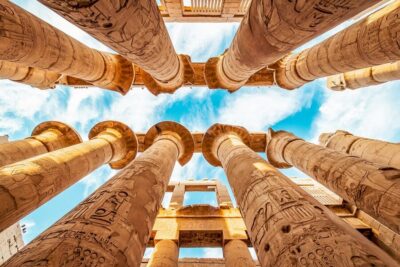
Luxor Valley of the Kings & Tutankhamun Tomb Trip
Read our review →
Small group Hurghada to Luxor, Valley of the Kings by Van
Read our review →
Luxor Day Tour: Valley of Kings & Queens & Hatchepsut Temples
Read our review →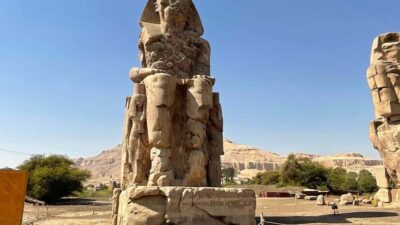
Valley of the Kings and Hatshepsut Temple Day Tour
Read our review →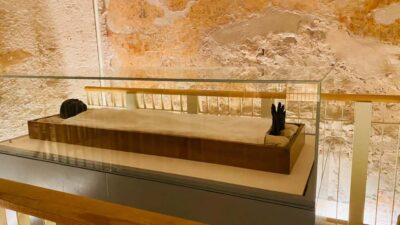
Luxor Tour with Valley of Kings, Karnak & Tut Tomb
Read our review →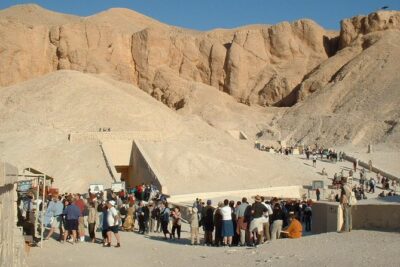
Valley of Kings, Hatchepsut Temple ,Karnak & Luxor-DayTour
Read our review →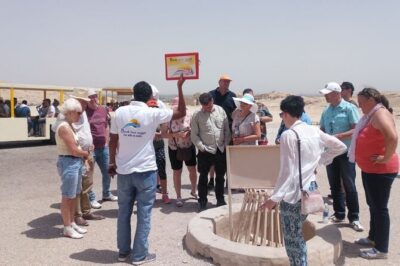
Small Group Excursion to Luxor Valley of the Kings from Hurghada
Read our review →
Valley of Kings Hatshepsut & Karnak Luxor Day Trip
Read our review →Browse the lists this tour appears in