
Reviewed · LUXOR TOURS
Luxor East and West Bank Tour with Egyptologist
Luxor can feel like a history overload in the best way, and this tour is built to turn that overload into something you can actually track and understand. You’ll hit the East Bank giants and the West Bank giants, with an Egyptologist style guide who connects the dots between temples, tombs, gods, and royal names.
I like two things most. First, the guide team is presented as licensed, local professionals, including archaeologists, and that shows in how the day is paced and explained. Second, the stops are chosen like a full Luxor story, not just a checklist, with specifics like Hatshepsut’s chapels and Karnak’s Hall of 134 columns.
One thing to watch: entrance fees and lunch are not included, so your final day budget will depend on which tombs you enter and how long you choose to stay during site visits.
Key Highlights You’ll Notice Right Away
- A real Egyptologist approach, with licensed local guides and archaeologist experience
- A focused Luxor storyline, switching between West Bank royal power and East Bank temple life
- Hatshepsut details that make the temple readable, including the Anubis and Hathor chapels
- Valley of the Kings context beyond the tomb doors, including the religious texts painted on walls
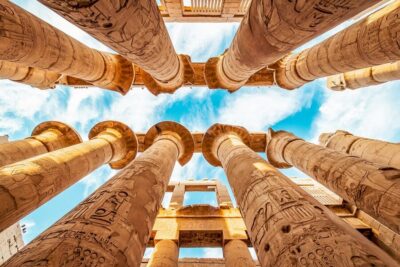
- Karnak in big, measurable terms, like the 134-column hall and a sacred lake originally underground
- Luxor Temple’s layered civilizations, including Egyptian, Greek, Roman, and Islamic elements
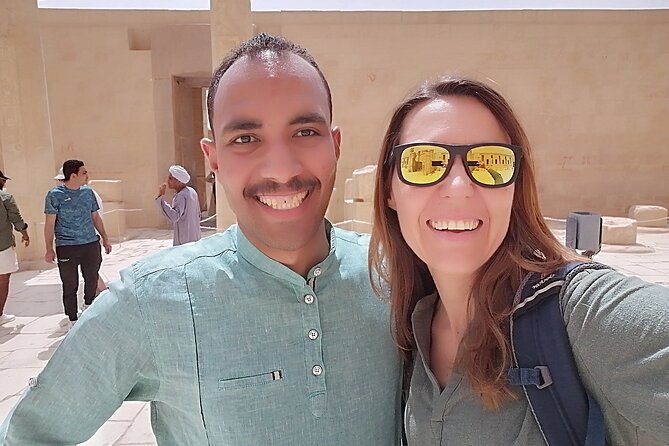
Meet Ahmad Salah-eldin Zaki and the Licensed Guide Team
This tour centers on a guide group led by Ahmad Salah-eldin Zaki, described as one of the top English and Dutch tour guides in Egypt, and a passionate specialist in tourism guidance. The big selling point here is that the guides are positioned as licensed professionals who are also archaeologists, not generic history talkers.
You’ll feel that in the way you move from stop to stop. Instead of only naming monuments, the guide aims to give you the “why” behind what you’re seeing, including how royal power, religion, and architecture connect across Luxor’s temples and tomb sites.
It also matters that the day runs as a private tour for your group. That gives you breathing room to ask questions, slow down where something clicks, and keep going when you just want the next room of facts.
Other Luxor days people put in the same week:
- Hurghada: Luxor Valley of the Kings & Tutankhamun Tomb Trip
★ 4.7 · 13,208 reviews - Luxor Day Trip from Hurghada Small Group & Tutankhamun Tomb
★ 4.8 · 5,366 reviews - Hot Air Balloon Ride in Luxor Egypt with Transfers Included
★ 5.0 · 4,319 reviews
How the Day Flows, From Pickup to Temple Circuit
The tour is timed as a full, 8 to 12 hour day, with about 9 hours of site time across six major stops. You start at Luxor Railway Station in Luxor City, and the experience ends back at the meeting point.
You’ll travel in air-conditioned comfort with a private vehicle, and water is included. The tour overview also mentions a very new luxury car and a qualified, licensed driver, which is the kind of practical detail that can save you from a headache when you’re bouncing between the East and West Banks.
Timing-wise, the day is set up so you get substantial time at the two biggest “wow” anchors on the West Bank: Hatshepsut and the Valley of the Kings. Then the rest of the tour keeps momentum with one-hour blocks at Colossi of Memnon, Medinat Habu, and Luxor Temple, plus a longer East Bank stretch for Karnak.
West Bank Stop 1: Deir el-Bahari and the Temple of Hatshepsut
Deir el-Bahari is one of those places where you immediately see that this wasn’t a casual build. The Temple of Queen Hatshepsut is arranged in terraces that step up the cliff, and the guide will point out that the first terrace is currently closed for restoration.
What you’ll actually get to experience is the second terrace with two chapels. The first chapel is dedicated to Anubis, the jackal-headed god tied to mummification, and the colors inside are described as original, lasting impressively after more than 3,000 years.
On the other side, the chapel dedicated to Hathor focuses on beauty, childhood, motherhood, and music. If you like symbols and storytelling, this is where the temple feels like it’s talking to you, not just sitting there.
Finally, you’ll reach the upper terrace to explore the sanctuary, which is presented as the most important part of the complex. Expect stories here, because this temple is full of political messaging, divine symbolism, and a queen using architecture like a megaphone.
Practical note: admission is not included for this stop, so plan your entrance budget accordingly.
West Bank Stop 2: Valley of the Kings and Its Painted Religious Texts
The Valley of the Kings is treated as the key archaeological site in Egypt, and the tone of the experience matches that. You go into the mountain and see royal tombs, described here as including 62 tombs of kings and queens.
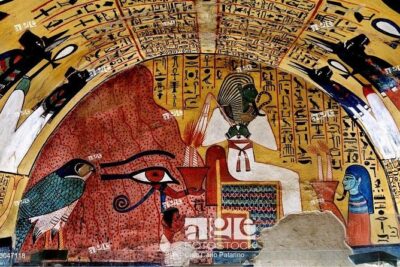
The guide’s aim goes beyond showing you where the tombs are. You’ll learn about the “ancient Egyptian books” painted on the walls, including the Book of the Dead, Book of the Caverns, Book of the Gates, and Book of the Earth.
If you’re the type who likes to understand what you’re actually looking at, this is a strong moment. Tombs can look similar if you only see doors and ceilings, but these named texts give you a framework for why the decoration exists in the first place.
You should know entrance fees are not included for the Valley of the Kings, so bring your plan for which tombs you’ll enter (and how long you want to spend inside each one). This is one of those sites where you’ll feel the difference between rushing and having a guide read the room for you.
A different kind of day out of Luxor:
- Luxor: Shared Full-Day Tour to Luxor West and East Banks
★ 4.5 · 1,812 reviews - Luxor: Hot Air Balloon Ride over Luxor Relics
★ 4.8 · 1,681 reviews - Luxor Day Tour: Valley of Kings & Queens & Hatchepsut Temples
★ 5.0 · 1,496 reviews - Full Day Tour to East and West Banks of Luxor
★ 5.0 · 1,449 reviews
West Bank Stop 3: Colossi of Memnon, 16.6 Meters of Red Granite
Next come the Colossi of Memnon, and this stop is all about scale and origin. You’ll stand in front of two enormous monolithic statues, each about 16.6 meters high, made of red granite.
The description adds a neat bit of supply-chain history: the stone was taken from a quarry in Cairo. The name Memnon is Greek, and the statues originally belonged to King Amenophis III, who is described with the title Magnificent, tied to a prosperous era known for artistic splendor.
The statues are also a useful break in the day. After tomb interiors and temple symbolism, it’s nice to step back and let your eyes adjust to open space and raw size. Admission is marked as free here, which is a budget-friendly win.
West Bank Stop 4: Medinat Habu and Ramesses III With Amun-Re
Medinat Habu is one hour in your schedule, but it’s positioned as a masterpiece of ancient Egyptian structure. The temple is associated with King Ramesses III and is dedicated to Amun-Re, the sun god and an important deity across ancient Egyptian religion.
Inside the temple, you’ll see references described as including a Ritual Massacre, along with cartouches containing the king’s name. The tour explanation also notes that cartouches appear as oval circles and that every king had two names, not just one modern-style label.
They’ll distinguish the birth name, meaning the day the king was born, from the coronation name, tied to the day the king ascended to the throne and became lord of Upper and Lower Egypt. If you ever wondered why so many inscriptions seem to repeat the same person with variations, this is the kind of detail that makes the writing system feel less mysterious and more logical.
Admission is not included for this stop, so add it to your day budget.
East Bank Stop 5: Karnak Open Air Museum and the Hall of 134 Columns
Karnak is where Luxor starts to feel like the main character. The tour frames Karnak Temples as the biggest temples in the world, built across the Middle Kingdom and then expanded into the New Kingdom.
You’ll see the Hall of Columns, described here as having 134 columns and enough space that, in the guide’s comparison, it could fit the Cathedral of Notre Dame in France. The hall is given as about 5,000 square meters, which is the sort of number that helps you visualize scale when you’re standing under them.
You’ll also learn about a sacred lake that was originally underground. That’s a great example of why a guide matters here, since a “lake” in your mind might mean something you can walk beside, but in ancient temple planning, water could be part of religious design and symbolism.
The tour also mentions a statue of King Ramesses inside the Karnak complex, giving you another anchor point while you explore.
Admission is not included for Karnak, so plan on paying site entry separately.
East Bank Stop 6: Luxor Temple as Egyptian, Greek, Roman, and Islamic Layers
Luxor Temple is described as the temple of different civilizations, and the architecture reflects that layered timeline. It’s said to have been built in 1974 BC by Amenophis III and completed by Ramesses II, and later additions bring in Greek, Roman, and Islamic influence.
You’ll see that mixture in the presence of a mosque and a church inside the temple area. It’s also where the obelisks story shows up again: Luxor Temple is said to have two obelisks, one still in place and one that was gifted by Muhammad Ali Pasha to Louis Philippe of France, with that second obelisk now in Place de la Concorde in Paris.
This last stop can hit a little differently than the others. If you’ve spent the morning thinking about kings, tomb texts, and gods, Luxor Temple gives you perspective on how later cultures kept reusing, renaming, and repurposing the sacred spaces they inherited.
Admission is not included for Luxor Temple in this tour format.
Price and What $84 Really Buys You
At $84 per person, this tour is positioned as good value for a private, full-day Luxor circuit with an Egyptologist guide and transportation. The “gotcha” is the same for many Luxor tours: entrance fees are not included, and lunch is also not included.
Here’s what you do get included: air-conditioned vehicle, private transportation, guiding services, gratuities, and bottled water. That matters more than it sounds. In a long day, having gratuities handled and water provided keeps small logistics from turning into extra stress.
Another budget note: admission is listed as free for the Colossi of Memnon stop, so not every site is paid separately. Still, the Valley of the Kings and Karnak and the major temples will affect your final total, depending on what you choose to enter.
If you want a single-day way to understand both banks without translating everything yourself, $84 plus site entries can be a smart trade. If you already have strong guide skills or prefer a do-it-yourself sprint, you might spend less by planning entry tickets and routing on your own.
Practical Tips That Keep the Day Smooth
Wear something comfortable for walking and heat, because Luxor days can add up quickly even when you’re not going “hard.” Bring a hat and sunscreen, and use the included water early rather than saving it for later.
Use your guide time like it’s part of the ticket. Ask about royal names and temple symbolism during Hatshepsut and Medinat Habu, then ask about the religious texts you’ll see in the Valley of the Kings. The facts connect better when you ask in context.
Also, remember this tour is private, so you can usually adapt the pace to your group. If you love photography, you’ll want to plan for a few extra minutes at the Colossi of Memnon and the Karnak column hall, where the geometry and scale really matter.
Who This Luxor East and West Bank Tour Fits Best
This fits best if you want a structured Luxor day with explanation, not just sightseeing. It’s also a strong match for people who like when a guide can answer questions clearly and connect what you see to ancient Egyptian religion, royal identity, and temple design.
Families with teens often do well with this style of pacing because you get variety across tombs, terraces, statues, and temple courts. Couples and solo travelers who want to see both banks in one go usually appreciate the private, guided approach.
If you hate walking between sites or you want long museum time with minimal movement, you might find a full-day circuit a lot. But the schedule includes enough breaks in variety that many people handle it fine.
Should You Book This Tour?
Book it if you want an organized Luxor day, guided by a licensed local Egyptologist and not just a driver with a script. The best reason to book is the way this tour tries to make the monuments “readable,” from Hatshepsut’s chapels and cartouches to Karnak’s column hall and Luxor Temple’s layered civilizations.
Skip it or adjust expectations if your main goal is lowest cost and you plan to DIY entrance tickets and route planning. Also factor in that your final spending will rise once you add site entry fees and lunch.
If you’re aiming for one memorable, well-explained Luxor day on both banks, this is a solid choice.
FAQ
What is included in the tour price?
The price includes an air-conditioned vehicle, private transportation, guiding services, gratuities, and bottled water. Entrance fees and lunch are not included.
Are entrance tickets included?
No. Entrance fees for the sites are not included in the price. Colossi of Memnon is listed as admission free.
How long is the tour?
The duration is approximately 8 to 12 hours.
Where does the tour start and end?
The start is Luxor Railway Station in Luxor City, Luxor. The tour ends back at the meeting point.
Is this a private tour?
Yes. It’s described as a private tour/activity, only your group participates.
Do I need a mobile ticket?
A mobile ticket is listed as part of the tour features.
Can I cancel for free?
Yes, free cancellation is offered. You can cancel up to 24 hours in advance for a full refund.
Is the tour suitable for most travelers?
It’s listed as Most travelers can participate.
Is lunch included?
No, lunch is not included in the price.
Reviewed most recently around Luxor
- Camel or Horse ride on west bank★ 5.0 · 20 reviews
- Nefertari and King Tut’s Tombs, Hatshepsut and More in Luxor★ 4.5 · 20 reviews
- Private Day Tour of Luxor★ 5.0 · 20 reviews
- Private Transfer from Luxor to Marsa Alam or vice versa★ 5.0 · 20 reviews
- Private Transfer Luxor to Aswan★ 5.0 · 20 reviews
- 5 Days Nile Cruise from Luxor to Aswan with Hot Air Balloon★ 5.0 · 20 reviews
- Private Full Day Tour: Dendera & Abydos Temples from Luxor★ 5.0 · 20 reviews
- Full Day Luxor East and West Banks Tour With Lunch★ 5.0 · 20 reviews
Luxor Tours, compared.
Luxor Valley of the Kings & Tutankhamun Tomb Trip
Read our review →
Luxor Day Trip from Hurghada Small Group & Tutankhamun Tomb
Read our review →
Hot Air Balloon Ride in Luxor Egypt with Transfers Included
Read our review →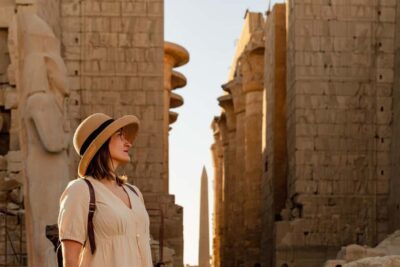
Shared Full-Day Tour to Luxor West and East Banks
Read our review →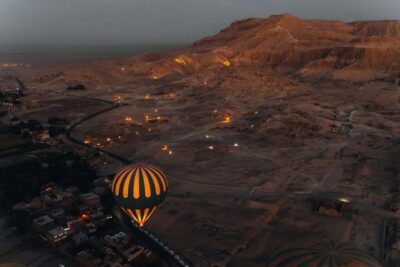
Luxor Day Tour: Valley of Kings & Queens & Hatchepsut Temples
Read our review →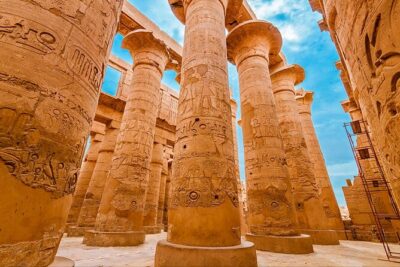
Full Day Tour to East and West Banks of Luxor
Read our review →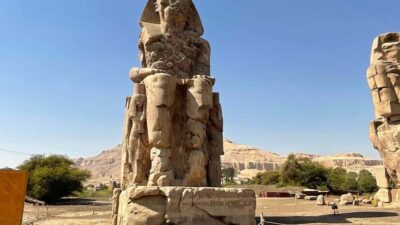
Valley of the Kings and Hatshepsut Temple Day Tour
Read our review →Browse the lists this tour appears in