
Reviewed · VALLEY OF THE KINGS
Luxor East and West Bank: Valley of the kings, Habu Temple,Karnak&Luxor Temples
Luxor feels split in two, East for the temples that face the rising sun, West for the tombs facing eternity. This private day tour is interesting because it strings together Karnak and Luxor Temple with Valley of the Kings and the West Bank highlights, so you get the full picture without needing a second day. I especially like the qualified Egyptologist guide and the smooth pacing between sites in an air-conditioned private vehicle. One thing to plan for, the itinerary says most major entrances are not included, so you’ll want to budget for tickets and go in with realistic expectations for heat and walking.
The day starts early (7:00 am), and it runs about 8 hours. You’ll have pickup from your hotel or Nile cruise, one bottle of water during the tour, and mobile ticket support. If you’re prone to long-day fatigue, pack a simple snack and take breaks when your guide offers a pause.
Key highlights I’d circle on your list
- East and West Bank in one day with a logical route from tombs to temples
- Egyptologist tour guide using clear explanations and time-saving ticket handling
- Valley of the Kings and Deir el Bahari together, so you see two different “why here” stories in the same morning
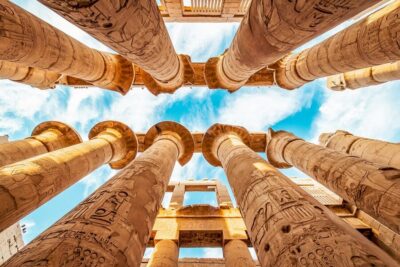
- Karnak Temple Complex with enough time to grasp how the site grew over centuries
- Medinat Habu (Temple of Ramesses III), including the standout backstory tied to labor unrest
- Small, flexible feel for a group tour, since it’s private for your group and guides can manage your pace
East and West Bank in one day: what $85 gets you (and what it doesn’t)
At $85 per person, the headline value here is not the temples themselves, it is the way the day is organized. You’re paying for private air-conditioned transfers, a pickup and return from your hotel or Nile cruise, and an English-speaking Egyptologist who can translate the stones into a story you can follow.
What is not included is also important. Entrance fees are not included for the stops where admission applies, and tipping is not included. One stop is explicitly marked free (the Colossi of Memnon), but for the rest, you’ll be handling tickets separately. That means your real total cost depends on what tombs and entrances you choose on the day.
This tour is also scheduled for a reason: the big outdoor sites look and feel different depending on light and heat. Starting around 7:00 am gives you a better shot at a more comfortable visit, especially in summer. Still, expect a long day, sun exposure, and walking.
More Karnak visits:
- Hurghada: Luxor Tour with Valley of Kings, Karnak & Tut Tomb
★ 4.6 · 1,082 reviews - Luxor: Valley of Kings, Hatchepsut Temple ,Karnak & Luxor-DayTour
★ 5.0 · 735 reviews - Luxor: Karnak Temple and Luxor Temple Tour with Lunch
★ 4.4 · 658 reviews
Before the first temple: timing, tickets, and how to not waste time
This is an 8-hour experience and it starts at 7:00 am. Pickup is offered from your hotel or Nile cruise, and you return after the final transfer. Because it is private, it’s only your group in the car and with your guide, which usually makes it easier to keep your pace and ask questions.
A practical detail that comes up in real feedback is ticket readiness. People describe guides having tickets organized in advance, which can help you avoid long lines and spend more of your time inside the sites rather than outside them.
Bring a few basics and your day will run smoother:
- A small snack, because it’s long and there are extended site visits
- Water habits, since the tour includes one bottle of water, but you may want more
- Sun protection, because several stops are open-air or partly exposed
If you’re planning to visit specific tombs in the Valley of the Kings, it helps to ask your Egyptologist guide how the day can fit your priorities. In one cited experience, the group visited tombs connected with Ramses III, Ramses IV, and Ramses IX, and that kind of targeted selection is often what makes the Valley of the Kings feel personal rather than random.
Stop 1, Valley of the Kings: the Gates of the Kings and the tomb choices that matter
The Valley of the Kings, also called the Valley of the Gates of the Kings, sits on the West Bank across from Thebes. It is in the heart of the Theban Necropolis and is made up of two valleys, East Valley and West Valley. The point of this stop is not just to say you saw a tomb. It’s to understand why this place was chosen and how the burial landscape is arranged.
You get about 2 hours here. Since admission is not included, you’ll be buying entry separately for the Valley and likely for whatever tombs your day includes. This is where your guide can make a difference. A good Egyptologist helps you pick tombs that match what you care about, so you aren’t spending time in places that don’t land.
One clear takeaway from real experiences: this is the stop people tend to remember most. The Valley can feel overwhelming on your own because it’s a lot of entrances with signs and numbers, but with a guide, it becomes a map of royal power, religion, and artistic choices. If your group has multiple energy levels, you can also arrange a flexible rhythm. In one example, the guide stayed with a person who needed rest while the other visitor toured additional tombs.
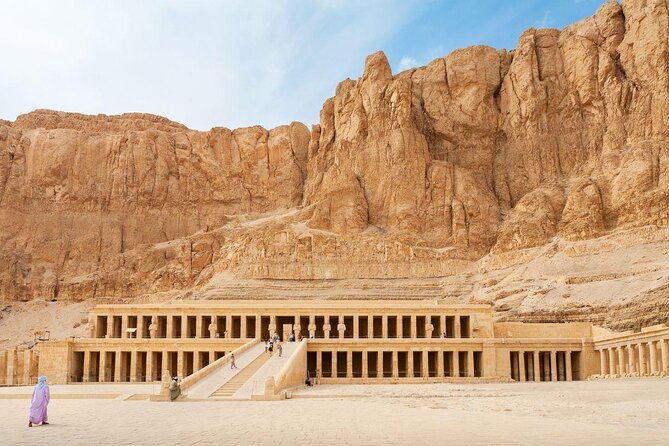
Stop 2, Deir el Bahari and Hatshepsut: a temple that reads like a plan
After the Valley, the itinerary moves you to Temple of Hatshepsut at Deir el Bahari. This is often one of the most satisfying transitions in a Luxor day, because the setting is more open and the architecture feels intentional in a different way than the tomb entrances.
You’ll have about 1 hour 30 minutes here, and admission is not included. Hatshepsut is a huge name in Egyptology for a reason. The tour framing puts her rule as a milestone within the 18th Dynasty, and it highlights her position as one of the most successful rulers of ancient Egypt.
Even if you don’t want a lecture, this site invites understanding. The tour info you’ll hear often includes her name meaning and how she was linked to Amun. That gives you a context for the temple’s religious function rather than treating it like a scenic backdrop.
One practical note: because this is a major temple site and the day is already moving, it helps to keep a camera ready but not constantly in front of your face. Listen for what your guide points out, then take a few focused photos where the perspective actually helps you see the design.
More Valley of the Kings trips:
- Hurghada: Luxor Valley of the Kings & Tutankhamun Tomb Trip
★ 4.7 · 13,208 reviews - Small group Hurghada to Luxor, Valley of the Kings by Van
★ 4.5 · 2,470 reviews - Luxor Day Tour: Valley of Kings & Queens & Hatchepsut Temples
★ 5.0 · 1,496 reviews - Luxor: Valley of the Kings and Hatshepsut Temple Day Tour
★ 4.4 · 1,404 reviews
Stop 3, Colossi of Memnon: short visit, big visual impact
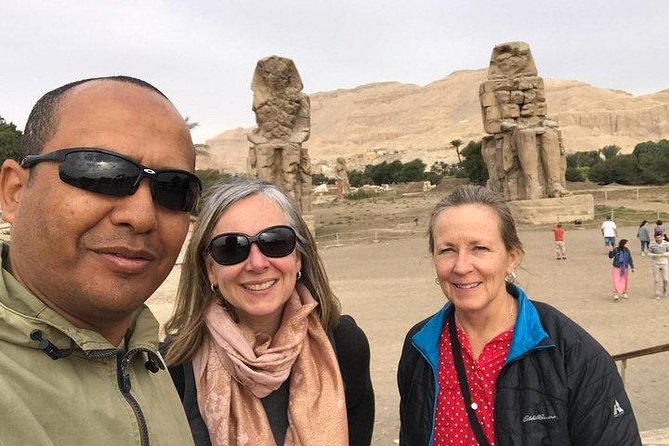
Next comes the Colossi of Memnon, two massive seated statues connected with Pharaoh Amenhotep III, built around 1350 BC. You get about 30 minutes here, and the tour marks admission as free.
This stop is quick by design. You’re not here to study every line of stone for hours. You’re here for the scale and the alignment, because the statues were built to face toward the river side, and they’re all that remains of a larger mortuary temple complex. Even in a short time, it’s an easy “wow” moment.
If you’re trying to manage energy for a long day, this is a nice reset. You stand, take pictures, and move on without feeling like you lost an entire half-day to one stop.
Stop 4, Karnak Temple: how to make sense of a temple complex that grew over time
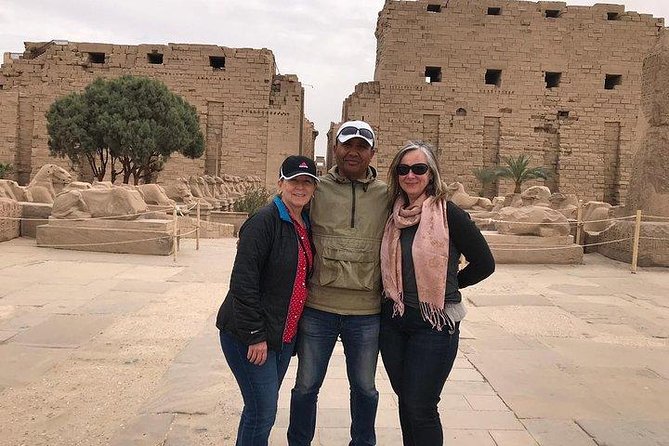
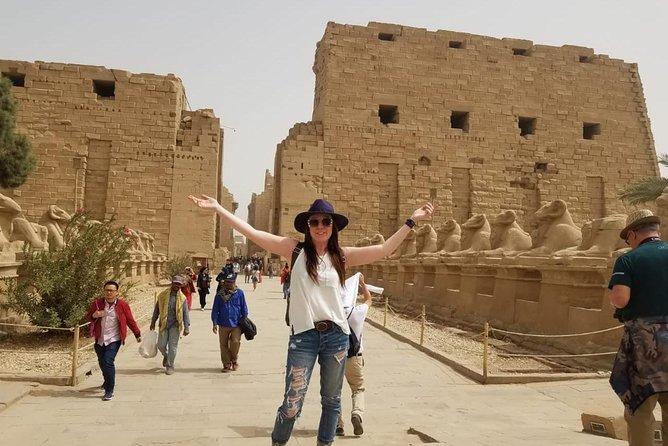
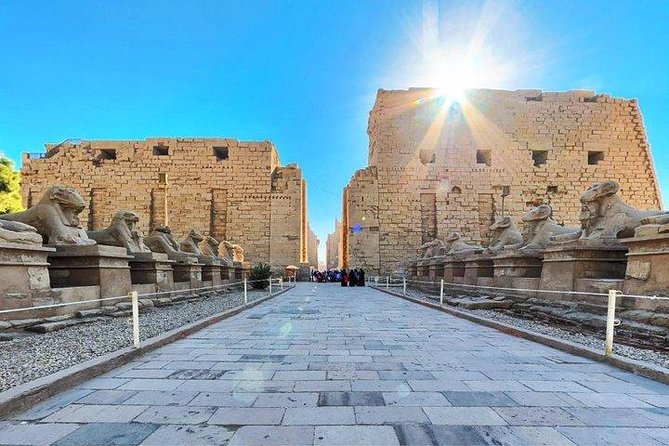
Karnak Temple Complex is one of the hardest places to explore alone. The scale is enormous, and it can start to feel like you’re wandering through a museum of ruins rather than learning one coherent story.
Here you get about 2 hours, and admission is not included. What’s useful is that your guide ties Karnak to the divine family worshiped there: Amun (and Amun-Ra), his wife Mut, and their son Khonsu. That framing helps you understand why so many structures and additions exist, because the site expanded and construction continued from the Middle Kingdom through later eras.
Real benefit for you, Karnak can be broken down into manageable chunks when someone explains the big relationships early. You’ll get more from it if you ask one simple question early, what should I pay attention to first? Then follow your guide’s cues instead of trying to figure out the site from signage.
Stop 5, Luxor Temple: the east bank’s daily worship vibe
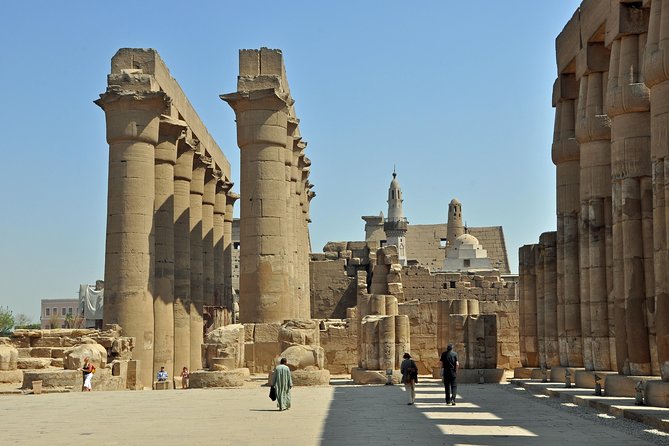
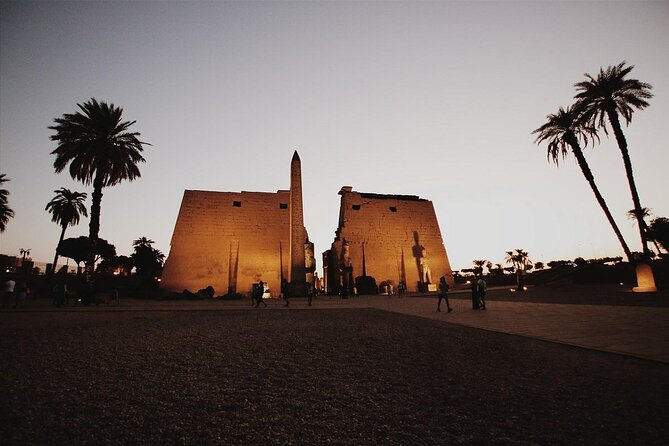
After Karnak, you head to Luxor Temple, on the eastern bank. The tour gives you about 1 hour 30 minutes, and again admission is not included.
Luxor Temple is tied to the same major religious roles, worship connected with Amun-Ra, Mut, and Khonsu, sometimes called the Theban Triad. Your guide will likely point out how the temple developed during multiple reigns, including major building work linked with Amenhotep III and Ramses II, and additions tied to Thutmose III.
What I like about putting Luxor Temple after Karnak is the change in pace. Karnak can feel like a maze of hypostyle halls and scale, while Luxor Temple often feels more like a walkable sequence. You can take a breath here and still absorb the symbolism.
If you’re someone who enjoys photography, this stop is a good place for it, but don’t rush. Spend time letting the shapes and alignments make sense, then capture a few images that show the temple space rather than just close-ups.
Stop 6, Medinat Habu and Ramesses III: the labor strike story you’ll hear
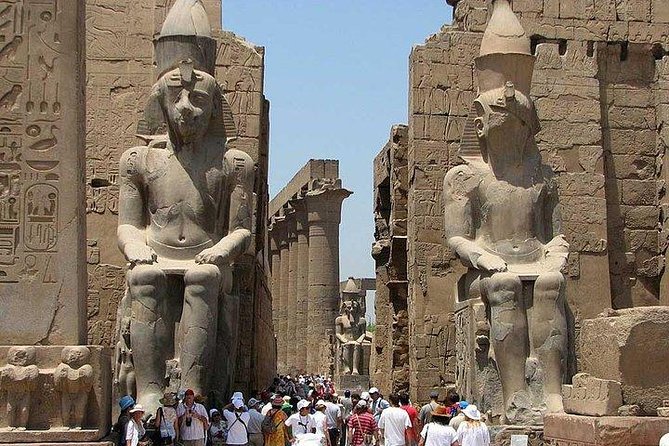
On the West Bank’s southern end of the Theban Necropolis sits Medinat Habu, the memorial temple of Ramesses III. You get about 1 hour 30 minutes, and admission is not included.
This stop is described as one of Egypt’s better-preserved temples and includes a massive mud-brick enclosure wall. That matters because a well-preserved enclosure helps you picture how the complex worked as a protected space rather than just exposed stones.
The standout story connected with this temple is the claim about the first labor strike in history, tied to unrest against Ramesses III. Even if you’ve heard the name before, having it placed at the actual site tends to make it stick. It shifts the visit from entertainment to understanding, because suddenly you’re not only looking at royal propaganda, you’re also looking at the human reaction around it.
The guide makes it: Mohamed Noor and Laila, and what to look for
This tour leans heavily on the Egyptologist guide, and the reviews reflect that. People repeatedly praise guides who are clear in English, organized with tickets, and patient with different needs in the group.
Two names come up often: Mohamed Noor and Laila. One group highlights Mohamed Noor’s work taking them to Hatshepsut and the Valley of the Kings, including visiting tombs connected with Ramses III, IV, and IX. Another set of reviews praises Laila for making the day feel smooth, efficient, and structured, with tickets ready so visitors did not lose time in long lines.
Other practical positives to watch for in your guide style:
- They manage your time so you still have a little space to pause and take photos
- They answer questions in a way that feels like a conversation, not a script
- They can adjust when someone needs rest mid-day
One caution, based on a less-positive note in the provided feedback, is that you should expect to spend extra money on items the tour does not include, especially entrance fees and tipping. Go in prepared, stick to official purchases for the sites, and you’ll avoid surprises.
Who should book this Luxor East and West Bank tour
This is a strong fit if you want:
- A single-day plan covering both banks
- An Egyptologist to connect the sites into a story you can follow
- Private comfort via pickup, return, and air-conditioned transfers
- A practical schedule starting at 7:00 am and moving through major highlights
It’s also a good choice for solo travelers who want structure. One review mentions solo enjoyment supported by a guide who can help you take photos and keep you moving without feeling like you’re being rushed.
If you dislike long days, this may not feel ideal, because the tour is about 8 hours with multiple stops and walking between them. But if you’re willing to pace yourself and bring a snack, it can still be very doable.
Should you book it? My straight answer
Book it if you want maximum Luxor for one day with a guide who can make Karnak, the Valley of the Kings, and the West Bank temples feel connected instead of like a checklist. The price point works especially well when you value the guide and private transport, because entrances and tipping are extra.
Skip or reconsider if you are very price-sensitive for entrances, or if you know you struggle with a morning start plus a long sequence of outdoor sites. In Luxor, comfort matters, and this day is built to pack in a lot.
FAQ
What is the start time for this Luxor East and West Bank tour?
The start time is 7:00 am.
How long is the tour?
The duration is approximately 8 hours.
Is hotel or Nile cruise pickup included?
Yes. Pickup is offered from your hotel or Nile cruise and you are transferred back afterward.
Does the tour include an Egyptologist guide?
Yes. You get a qualified English-speaking Egyptologist tour guide.
Are entrance fees included for all stops?
No. Entrance fees are not included. One stop, the Colossi of Memnon, is listed as free.
Does the tour include bottled water?
Yes. You receive one bottle of water during the tour.
Is tipping included in the price?
No. Tipping is not included.
Is this a group tour or private tour?
This is a private tour/activity. Only your group participates.
Is mobile ticketing part of the experience?
Yes. Mobile tickets are listed as a feature.
What happens if weather is poor?
This experience requires good weather. If it is canceled due to poor weather, you will be offered a different date or a full refund. You can cancel for free up to 24 hours in advance for a full refund.
Reviewed most recently around Cairo
- Giza pyramids, Saqqara and Dahshur day tour★ 5.0 · 20 reviews
- Cairo Stopover Tour with Giza Pyramids, Sphinx, Egyptian Museum, and Old Cairo★ 5.0 · 20 reviews
- Pyramids of Giza, Sphinx and Egyptian Museum Day Tour★ 5.0 · 20 reviews
- Discover Cairo by night★ 3.5 · 20 reviews
- Private Experienced Tour for Camel ride during the sunset with Local Bedouin Dinner★ 4.0 · 20 reviews
- Private Day Tour to Giza Pyramids, Sphinx, Coptic Cairo and Saint Simon Church in Cairo★ 4.5 · 20 reviews
- 10 Day Treasures of Egypt Tour Giza Pyramids & Cairo & Nile Cruise & Abu Simbel★ 5.0 · 20 reviews
- Transfer from Cairo Airport to the Hotels in Cairo or Giza★ 4.5 · 20 reviews
Valley of the Kings, compared.
Luxor Valley of the Kings & Tutankhamun Tomb Trip
Read our review →
Small group Hurghada to Luxor, Valley of the Kings by Van
Read our review →
Luxor Day Tour: Valley of Kings & Queens & Hatchepsut Temples
Read our review →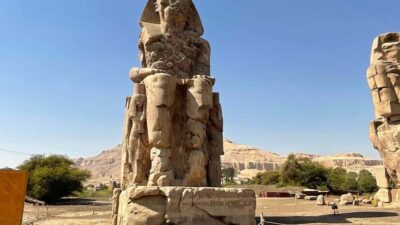
Valley of the Kings and Hatshepsut Temple Day Tour
Read our review →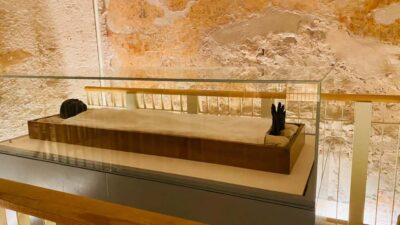
Luxor Tour with Valley of Kings, Karnak & Tut Tomb
Read our review →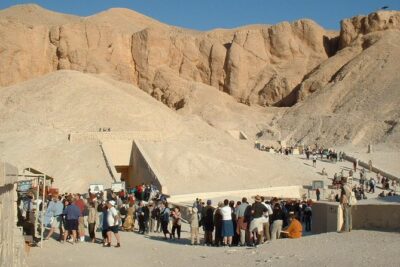
Valley of Kings, Hatchepsut Temple ,Karnak & Luxor-DayTour
Read our review →
Small Group Excursion to Luxor Valley of the Kings from Hurghada
Read our review →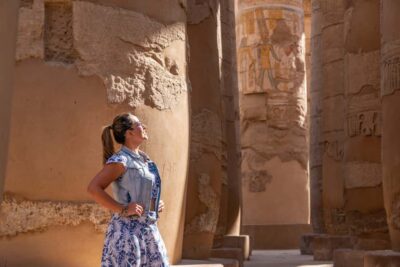
Valley of Kings Hatshepsut & Karnak Luxor Day Trip
Read our review →Browse the lists this tour appears in