
Reviewed · LUXOR TOURS
Luxor’s East & West Bank Highlights Tour
What makes Luxor’s East and West Bank highlights tour so interesting is that you get the big hits in one efficient day, without trying to stitch it all together on your own. I like that the route is built around the two sides of the Nile, starting on the West Bank where you can feel the theme of royal tombs, then finishing on the East with Karnak’s scale. A professional Egyptologist guide does the heavy lifting, turning ruins into something you actually understand.
I also like the practical side: round-trip hotel pickup and drop-off plus private vehicle transport, so your time goes to temples and tombs instead of local logistics. The main drawback to keep in mind is simple, but important: pickup problems can ruin a day, so you’ll want to carefully confirm your pickup details before travel, especially if your day ties to an airport arrival.
Key takeaways before you go
- Egyptologist explanations help you connect what you see across both banks of the Nile
- Private, flexible pacing means you can spend extra time where your interest is strongest
- Valley of the Kings, Hatshepsut, Memnon, and Karnak hit the core “must-see” Luxor stops in one sweep
- Lunch and bottled water are included, which matters in Luxor heat
- Admission is listed for several major sites, but the fine print can be inconsistent, so confirm before you arrive
Why this Luxor East and West Bank day works so well
Luxor is one of those places where the landmarks are close on a map but far in real life. The East Bank and West Bank have different vibes, different crowds, and different reasons to exist. A guided day connects those dots so your brain stops treating everything like random stone blocks.
This tour is designed around that reality. You start on the West Bank with the Valley of the Kings and Deir el Bahari, then you end on the East Bank with Karnak. That order matters because the West Bank gives you the funerary story first, and Karnak lands you in the living, political, and religious power center of Thebes.
If you’re the type who hates doing math on travel time between sites, you’ll appreciate the private vehicle and hotel pickup included in the price. And if you want context instead of just pictures, the Egyptologist guide is the difference between a checklist day and an actual understanding day.
Other Luxor days people put in the same week:
- Hurghada: Luxor Valley of the Kings & Tutankhamun Tomb Trip
★ 4.7 · 13,208 reviews - Luxor Day Trip from Hurghada Small Group & Tutankhamun Tomb
★ 4.8 · 5,366 reviews - Hot Air Balloon Ride in Luxor Egypt with Transfers Included
★ 5.0 · 4,319 reviews
Price and logistics: what you’re paying for (and what to double-check)
The tour price is listed as $107.70 per person for about 8 hours. That’s not just “transport and entrance tickets,” it’s a full day package built around guided time at multiple major monuments.
Here’s what the package includes based on the tour details:
- Professional Egyptologist guide
- Hotel pickup and drop-off
- Private vehicle transport
- Bottled water
- Lunch
- All taxes and handling charges
- Mobile ticket
- Group discounts (when applicable)
There’s also a clear private-tour note: only your group participates. In Luxor, that can mean fewer waiting moments and more control over your pace, especially if someone in your group needs a break.
One thing to watch closely: the information provided about entry tickets is a bit contradictory. The stop details say admission tickets are included for Valley of the Kings, Hatshepsut temple, and Karnak temple, while the overall list also states entry tickets are not included. You should confirm this at booking so there are no surprises when you get to the ticket counters.
Also, keep your eyes on pickup details. One unhappy experience in the supplied reviews involved a missed pickup connected to an airport arrangement. That doesn’t mean every booking goes wrong, but it does mean you should verify your exact pickup location, time window, and contact method before your tour day. In Luxor, small timing issues can snowball fast.
Valley of the Kings: pharaohs’ glory in a carved landscape
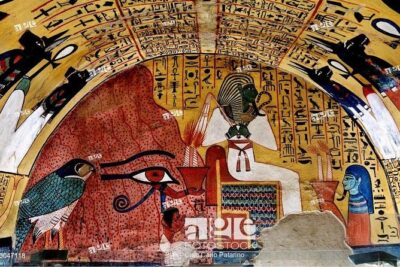
Your day starts at the Valley of the Kings, the royal necropolis chosen by pharaohs in Luxor after Egypt’s lower region pyramids set the earlier standard. It’s the kind of place where you expect grandeur, but what really hits you is how intentional it all feels. These are tombs carved for power, legacy, and afterlife belief.
The tour gives you about 2 hours here, with admission ticket noted as included. That’s usually enough time to take in the site and understand what makes the valley special without rushing. The guide’s explanations matter because the names and roles of pharaohs and dynasties can blur together if you’re just reading walls at speed.
A practical tip: wear shoes you trust. The site is outdoors and carved areas can be uneven. Also, plan for sun exposure and heat because you’ll be moving between viewpoints. If you’re sensitive to the pace of tomb sites, tell your guide early so they can adjust your timing inside the valley.
What’s great about this stop is that it sets your emotional baseline for the rest of the day. You go from “tombs of the mighty” to “temples built to project divine authority,” and that shift makes the East Bank feel even more powerful when you finally arrive.
Deir el Bahari and Hatshepsut’s temple: architecture that hugs the cliff
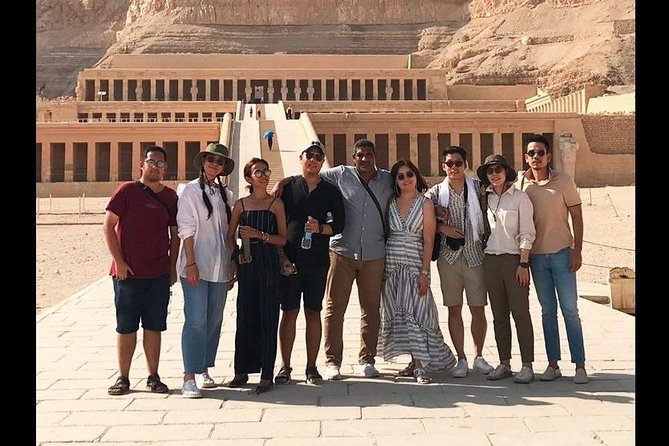
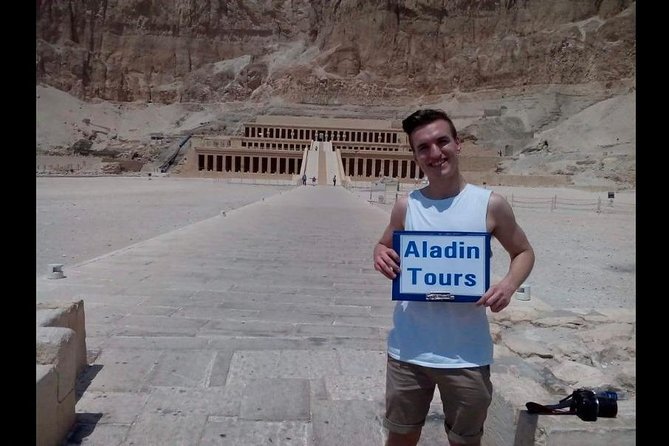
Next up is Temple of Hatshepsut at Deir el Bahari, also referred to as the memorial temple of Hatshepsut. This stop is one of Luxor’s most visually satisfying transitions, because you walk into a place where the architecture seems to match the surrounding cliff.
The highlights here are both visual and story-driven:
- You get about 1 hour
- Admission is noted as included in the stop details
- The temple sits at the foot of the dramatic cliff line, with the feeling of something sculpted directly from rock
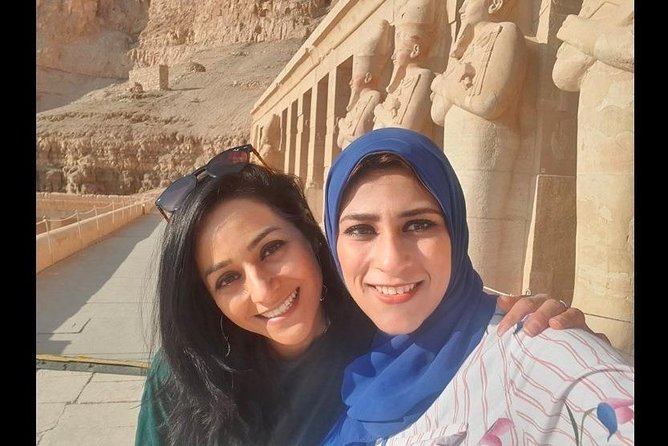
Once you’re inside, the guide helps connect the temple artwork to the reign of Hatshepsut, including scenes showing Hatshepsut as a female pharaoh under whom Egypt grew strong and wealthy. The temple also has a darker layer. Many faces are damaged because depictions of Hatshepsut were targeted by Tutmosis III, who sought to remove her presence from the historical record.
That detail is important because it changes how you read the stone. You stop seeing it as just a carved tourist backdrop and start seeing it as a political document. It explains why the temple’s surfaces can look “unfinished” or broken in places, even though the craftsmanship is extraordinary.
Potential drawback to consider: this is a site where shade and walking paths can feel limited depending on the time of day. If your group includes someone who needs regular breaks, let your guide know. A private tour helps because the pacing can be adjusted without you losing the whole itinerary.
A different kind of day out of Luxor:
- Luxor: Shared Full-Day Tour to Luxor West and East Banks
★ 4.5 · 1,812 reviews - Luxor: Hot Air Balloon Ride over Luxor Relics
★ 4.8 · 1,681 reviews - Luxor Day Tour: Valley of Kings & Queens & Hatchepsut Temples
★ 5.0 · 1,496 reviews - Full Day Tour to East and West Banks of Luxor
★ 5.0 · 1,449 reviews
Colossi of Memnon: two giants, earthquakes, and the sunrise legend
After Hatshepsut, the tour moves to the Colossi of Memnon on the West Bank. These are the two enormous statues associated with Amenhotep’s memorial temple. They stand guard facing the Nile, and that single fact gives you the scale instantly.
This stop is shorter, about 15 minutes, and the admission is noted as free. Even with limited time, it’s worth it because the colossi are a kind of landmark shorthand for Luxor’s long timeline of destruction and recovery.
Here’s the story the guide would help you connect:
- The colossi were guardians of Amenhotep’s memorial temple, once described as the vastest and most sumptuous in Egypt
- In 27 BC, an earthquake damaged one of the statues
- After that damage, it was believed that one colossus would sing at sunrise
- That sound legend disappeared after renovations
- Later earthquakes and floods erased the rest of the temple complex
- Today, the area is an archaeological research site, with the colossi still standing as the main survivors
What I like about this stop is that it adds texture. Valley of the Kings feels like planned burial landscapes. Hatshepsut feels like intentional, lived-in divine power. Colossi of Memnon feels like time doing its work, still visible in stone.
Then you get lunch at a nice local restaurant. The lunch break matters more than people think, because you’re stacking big sights back-to-back. A proper meal keeps your energy steady for Karnak on the East Bank.
Karnak Temple: the Theban triad and the scale of devotion
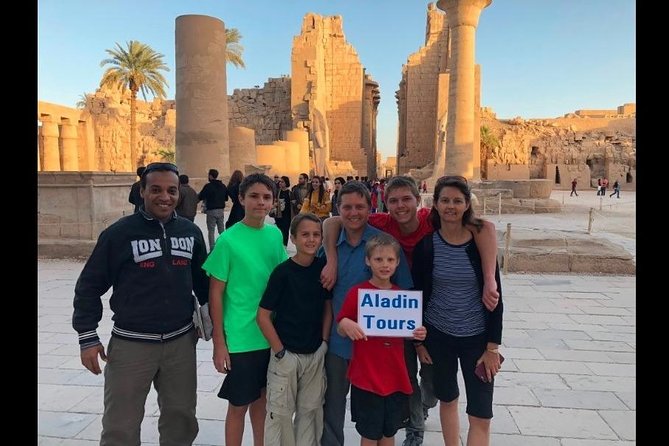
For your final major stop, you head to the Karnak Temple complex. Karnak is massive, and the value of having a guide becomes obvious here because “wandering and hoping” turns into “I’m tired and I don’t know what I’m looking at.”
This portion is allotted about 2 hours, with admission noted as included. Karnak is dedicated to the Theban triad: Amun, Mut, and Khonsu. The tour notes also explain a key historical link that makes the site more than just columns and wall carvings.
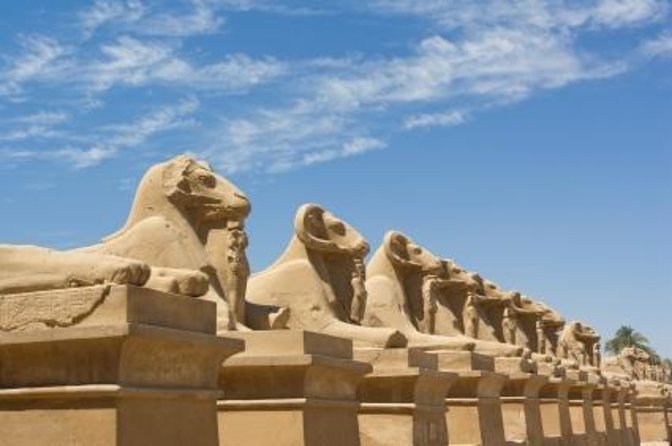
One especially memorable detail is the connection to Luxor Temple during the Opet Festival. Karnak was linked to Luxor Temple by an alley of sphinx statues used for festival processions. Statues of the Theban triad were carried from Karnak to Luxor so that Amun-Ra could meet Amun-Min. That kind of ritual context makes the spaces feel functional, not just decorative.
The tour also notes that Karnak is composed of three precincts, and only the Amun-Ra precinct is accessible to the public. That matters because it clarifies why you don’t see everything. With a guide, you can still appreciate the “bigger whole” even if your ticketed access is limited.
Possible drawback: Karnak can feel like a lot of information at once. If you like to take photos constantly, you might miss interpretive details. A private tour helps because you can slow down, ask questions, and focus on the parts your guide thinks will click for you. Ask for the stories behind what you’re standing in front of, not just general descriptions.
Timing, pacing, and making the day feel worth it
This is an 8-hour day that hits four major stops plus lunch. That means you’ll be moving through Luxor efficiently, but you should still think like this is a full day outdoors and on archaeological grounds.
A smart way to use your time:
- Prioritize questions at the first major stop (Valley of the Kings). If you get the big picture early, the rest makes more sense.
- Save your deepest curiosity for Hatshepsut and Karnak, because those stops include specific political and religious storylines that benefit from explanations.
- Use the lunch break as a real pause. Hydrate even if you don’t feel thirsty.
Also remember that transfer time depends on traffic and time of day, so your schedule can shift slightly. Your tour includes hotel pickup and drop-off, which keeps things simple, but it also means the start time can vary based on where you’re staying. If you have a tight plan for the same day after the tour, leave buffer time.
One more practical note: this experience requires good weather. That matters because outdoor walking and standing time can change if skies are poor. If weather forces a change, the tour information indicates you’d get offered another date or a full refund.
Who this tour suits best, and who might want something else
This tour fits you best if:
- You want a private, guided day across both Luxor banks without hopping between independent tour operators
- You like having a professional Egyptologist explain what you’re seeing at each stop
- You prefer a plan that includes lunch and water so you can keep going
- You want to cover Valley of the Kings, Hatshepsut, Colossi of Memnon, and Karnak in one long day
It might be less ideal if:
- You want a very slow, long-form visit to just one site. This day is efficient by design.
- You need lots of independent time for wandering without guidance. The route is structured, and the value is in the interpretation, not just free roaming.
- Your main priority is a single tomb or a specific niche within the West Bank. This tour covers major highlights, but it’s still a set itinerary.
The private format helps most people feel relaxed, because you’re not sharing your guide with strangers who all want different things at the same moment. That alone can turn Luxor from overwhelming into manageable.
Should you book the Luxor East and West Bank Highlights Tour?
If you want the classic Luxor storyline, this is a strong pick. The combination of West Bank funerary sites and East Bank religious power centers gives you a full picture in one day. Add the Egyptologist explanations, lunch included, and private transport, and you get good value for the time you’ll spend.
I’d book it if you:
- Like structure and context
- Want to see multiple top sites without the hassle of arranging each segment yourself
- Appreciate when a guide connects the dots, like the Tutmosis III face-damage story at Hatshepsut and the Opet Festival connection between Karnak and Luxor Temple
The one reason to pause is logistics. If your travel day includes a critical pickup moment, confirm details carefully so you don’t get stuck with no transfer and no time buffer. When pickup goes smoothly, this type of day tour tends to feel like it was built exactly for your itinerary.
FAQ
How long is the Luxor East and West Bank Highlights Tour?
The tour is listed as about 8 hours.
What sites does the itinerary include?
It includes the Valley of the Kings, Temple of Hatshepsut at Deir el Bahari, the Colossi of Memnon, and Karnak Temple.
Is hotel pickup and drop-off included?
Yes, hotel pickup and drop-off are included.
Is this a private tour?
Yes. The tour is private, and only your group participates.
What does the tour include, and do entry tickets come with it?
The tour includes a professional Egyptologist guide, transport by private vehicle, bottled water, lunch, and all taxes and handling charges. The stop details list admission tickets for several sites, but there is also a note that entry tickets are not included, so it is worth confirming at booking.
What is the cancellation policy and what happens with bad weather?
You can cancel for a full refund up to 24 hours in advance. If it is canceled due to poor weather, you will be offered a different date or a full refund.
Reviewed most recently around Luxor
- Private Full Day Tour of Luxor West and East Bank Tombs & Temples★ 5.0 · 45 reviews
- Luxor Private Transfer To Hurghada With visit Dendera Temple★ 4.5 · 45 reviews
- FULL Day Tour:Valley of the Kings &Queens &Hatshepsut Temple&more★ 5.0 · 46 reviews
- Private Sailing Traditional Egyptian Boat in Luxor★ 5.0 · 46 reviews
- Dendara and Abydos Temples Day Tour from Luxor★ 5.0 · 46 reviews
- Private Full-Day Luxor Tour to East and West Banks★ 5.0 · 47 reviews
- Private Full-Day Tour to West and East Banks of Luxor★ 5.0 · 48 reviews
- Private Tour: Luxor East and West Banks Full Day Tour★ 5.0 · 49 reviews
Luxor Tours, compared.
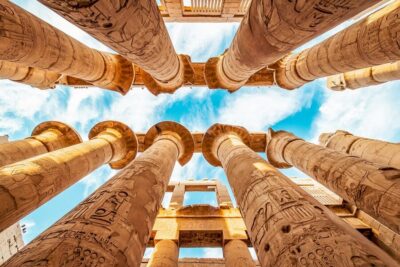
Luxor Valley of the Kings & Tutankhamun Tomb Trip
Read our review →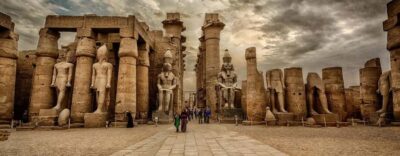
Luxor Day Trip from Hurghada Small Group & Tutankhamun Tomb
Read our review →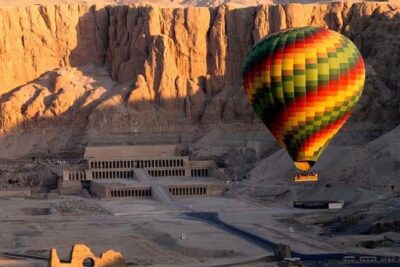
Hot Air Balloon Ride in Luxor Egypt with Transfers Included
Read our review →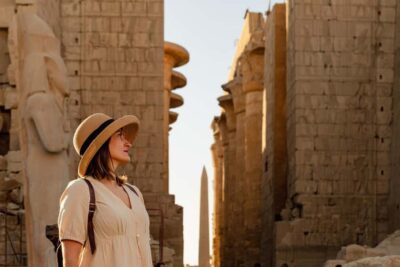
Shared Full-Day Tour to Luxor West and East Banks
Read our review →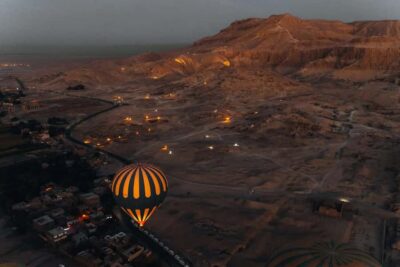
Luxor Day Tour: Valley of Kings & Queens & Hatchepsut Temples
Read our review →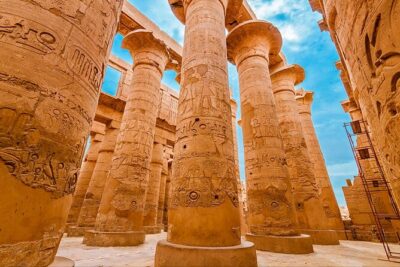
Full Day Tour to East and West Banks of Luxor
Read our review →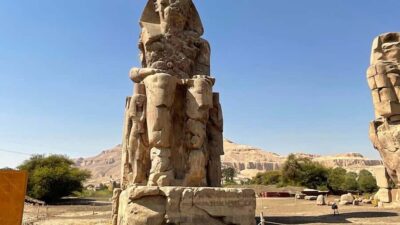
Valley of the Kings and Hatshepsut Temple Day Tour
Read our review →Browse the lists this tour appears in