
A day like this is interesting because it strings together Egypt’s most famous pyramid sites into one workable plan. You start at the Giza Plateau and finish with Saqqara’s older, step-shaped monuments, then wrap up at Memphis. I love how the tour keeps moving with a private setup, and how guides like Osama or Soumaya help you understand what you are seeing without turning it into a lecture. I also love the practical parts, air-conditioned transport and bottled water, so the heat and long drive feel less painful. The main drawback to plan around is ticket coverage, some stops include admissions while others do not, and entry fees can change what you actually pay on the day.
This is a private experience, so your group stays together the whole time and you can ask for tweaks in the order of sights. It runs about 7 to 9 hours, so wear comfy shoes and expect a long day, not a short hop between monuments.
You can also choose optional extras like lunch, pyramid interior access, or a camel ride. If you want the full experience, you’ll do best by deciding ahead of time what matters most to you, because the schedule is packed.
Key Giza to Saqqara highlights in one day
- Private guide guidance with real photo help, including guides known for finding great angles and taking time rather than rushing.
- Air-conditioned pickup plus bottled water, which matters on a long day starting from Cairo or Giza.
- Giza pyramids core views, with the Great Pyramid stop carrying included admission.
- Step Pyramid of Djoser and Pyramid of Teti, with admissions included for these Saqqara monuments.
- Memphis and Ramses II statue ruins, an important add-on that turns “just pyramids” into a bigger picture.
- Flexible pacing and order changes, something you can ask for once you are on the ground.
A Long Day That Links Giza to Saqqara Like a Proper Itinerary
If you only have one day around Cairo, this route makes sense. You are not just collecting postcard shots. You are moving through the evolution of royal tomb building, from the famous Fourth Dynasty giants at Giza to Saqqara’s older Step Pyramid era.
Your day starts with hotel pickup in Cairo or Giza. Then you head straight to the Giza area where the monuments are concentrated, so you spend more time looking and less time commuting in circles. The tour is built for a group that wants structure, but not rigidity.
Because the tour runs 7 to 9 hours, I treat it as an active sightseeing day. It is not a “hang out and snack” plan. You’ll likely do a lot of standing, walking, and heat exposure, even with air-conditioned driving.
Price and Inclusions: What You’re Paying For, and What Can Cost Extra
The listed price is $12.00 per person, booked about 15 days in advance on average. That sounds like a bargain given the included transport, but the value depends on how your admissions shake out.
Here’s the inclusion logic that matters:
- You get hotel pickup and drop-off, air-conditioned vehicle, private transportation, and bottled water.
- A tour guide is optional (so when you book, confirm whether you want the guide for your whole day).
- Lunch is optional, not automatically included.
- Entry fees vary by stop. Inside-the-pyramids entry fees are not included.
This is where a lot of confusion can happen. For example, admission is included for the Great Pyramid stop, and admissions are included for Saqqara stops like the Step Pyramid of Djoser and the Pyramid of Teti, plus the Memphis stop. Meanwhile, some other pyramid complexes and the Sphinx stop are marked as not included.
So my advice is simple: if you care about seeing certain areas inside buildings, budget extra and confirm the exact admissions attached to your chosen stops before you go.
More of Saqqara, Dahshur and Memphis:
- Private Tour to explore Giza Pyramids – Saqqara -Memphis
★ 5.0 · 294 reviews - Unbeatable tour (Giza Pyramids,Sphinx,Sakkara,Memphis)
★ 5.0 · 123 reviews - Giza Pyramids – Sphinx & Saqqara & Memphis
★ 5.0 · 114 reviews
Hotel Pickup, Air-Conditioned Transport, and a Schedule That Moves
The tour is set up as a private day out. Only your group participates, so you are not stuck waiting for other groups to finish slow photo stops or long bathroom breaks.
You also get bottled water, which is not glamorous, but it makes a real difference. On a day that covers multiple major sites, hydration becomes part of the itinerary, not an afterthought.
One more practical note: the tour is flexible. People have changed the viewing order on the fly without drama, and your guide or driver can adjust the flow so you still hit the key sights. If you want a specific photo angle first, or you want to spend more time near the Sphinx, ask early rather than waiting until you’re already walking away.
Giza Plateau Orientation: Where the Whole Complex Makes Sense
Your first major stop is the Giza Plateau and the wider pyramid area. This is where you start to get your bearings. The Giza Pyramid Complex, also called the Giza Necropolis, includes the Great Pyramid of Giza, the Pyramids of Khafre and Menkaure, plus associated temples and the Great Sphinx.
The plateau is about 9 kilometers west of the Nile River and roughly 13 kilometers southwest of central Cairo. That geographic context helps, because you quickly realize these sites are not “in town.” They sit on the edge of the Western Desert, so everything feels more open and exposed than you might expect.
You spend about 2 hours here, and the admission for this stop is listed as free. I like this approach for first-time visits. You get time to set your mental map before you pay for any specific pyramid access.
Tip I follow: start with wide views first. Once you can see how the three pyramids line up, the later close-up stops feel easier, and your photos look more intentional.
The Great Pyramid, Khafre, and Menkaure: Size, Shape, and Context
Next, you move through the Pyramids of Giza section. The tour gives you a balanced mix of the big icon plus the two other major pyramids, each with its own quirks.
More ways to see the pyramids:
- From Cairo: Half-Day Tour to Pyramids of Giza and the Sphinx
★ 4.6 · 2,891 reviews - Private guided tour to Giza Pyramids, and Great Sphinx
★ 5.0 · 1,755 reviews - Giza Pyramids and Sphinx: Half-Day Private or Group Tour
★ 4.4 · 1,424 reviews - Pyramids of Giza: 1-Hour Quad Bike Desert Safari
★ 4.5 · 930 reviews
Great Pyramid of Giza (Khufu)
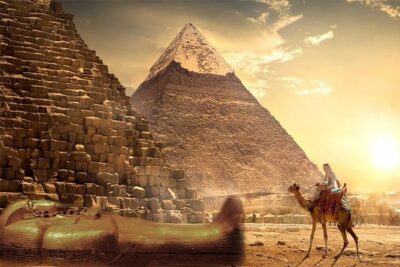
This is the biggest and oldest of the three, built around 2560 BCE. It was originally about 146.6 meters tall, and now stands at about 138.5 meters. It held the title of tallest man-made structure for more than 3,800 years.
Admission for this stop is included. That’s the one I’d prioritize for anyone who only wants one “inside access” moment, since your time is limited.
Pyramid of Khafre
Khafre’s pyramid can look taller even though it is slightly smaller. The reason is elevation. It also retains some original casing stones at the top, which helps you see that the pyramid was once smoother and more uniform.
The Khafre complex is listed with admission not included for that specific portion. Still, your guide should help you understand what you are looking at, including the broader complex elements.
Pyramid of Menkaure
Menkaure’s pyramid is the smallest of the three, about 65 meters tall. The scale contrast is useful. It helps you avoid thinking of the pyramids as one identical shape. Even within the same necropolis, the design choices feel different.
The Menkaure stop is only about 30 minutes, and admission is listed as not included. Go with a “quick but sharp” mindset here. If something captures your attention, ask your guide to spend a few extra minutes on that exact view.
Khafre and Menkaure Complexes: Temples and Causeways You Might Miss Alone
After the main pyramid views, the tour includes time at the Khafre and Menkaure pyramid complexes. This is where you start seeing the idea of the pyramid as part of a bigger ritual landscape, not a lone monument.
For Khafre, the complex includes a valley temple, a Sphinx temple, a causeway, a mortuary temple, and the king’s pyramid. The valley temple also yielded statues of Khafre, discovered in a well in the temple floor back in 1860.
For Menkaure, the complex includes a valley temple, causeway, mortuary temple, and the king’s pyramid. A smaller ante-temple was added during the Fifth Dynasty.
Here’s the practical challenge: you will likely see less if you go without a guide, because these areas can look like walls, platforms, and scattered stone. With a guide, the same shapes turn into a story, and the time feels justified instead of rushed.
The Sphinx plus a Panoramic View: Two Ways to See the Same Icon
Then you hit two classic “face the facts” stops: the Great Sphinx and a panoramic view area.
Panoramic view near the pyramids
This stop is about 30 minutes and has admission listed as not included. The point is speed and angle. You get a hill-overlook view of the pyramids and the Sphinx in one place, which makes photography and orientation easier.
If you care about getting multiple angles without walking all over, this is a smart add-on. If you are the kind of person who wants the “best shot first,” this stop gives you a rehearsal before you decide where to linger.
Great Sphinx of Giza
The Great Sphinx is one of the world’s most recognizable monuments. It depicts a mythical creature with a human head and a lion’s body and is located on the Giza Plateau near the pyramids.
It is believed to have been built during the reign of Pharaoh Khafre in the Fourth Dynasty, around 2500 BCE. The statue is made of limestone, measures about 73.5 meters long, 19.3 meters wide, and 20.22 meters high, and has endured weathering over the centuries.
Admission is listed as not included for this stop. Even so, this is worth giving time to. I like the Sphinx because it forces you to think beyond tomb architecture. It is protection symbolism made into stone.
Saqqara Step Pyramid of Djoser: Where the Pyramid Story Gets Older
Now you move to Saqqara, home to some of Egypt’s earliest pyramid forms. This is where the tour becomes more than famous landmarks. You get to see the “before” and the “how it changed.”
Step Pyramid of Djoser
You spend about 30 minutes at the Step Pyramid of Djoser with admission included. Built around 2670 BCE for Pharaoh Djoser, it is designed by the architect Imhotep.
It features six stepped layers of limestone and stands about 62 meters tall. It also represents an advancement from earlier mastaba tombs. In plain terms, you are looking at a major architectural step toward the smoother, later pyramid forms.
Why I think people enjoy this part: the shape is easier to interpret than you might expect. You can physically see the layers. It feels like watching ideas evolve, not just watching a finished masterpiece.
Pyramid of Teti: Pyramid Texts and Early Funerary Writing
Next comes the Pyramid of Teti, again about 30 minutes with admission included.
Teti’s pyramid dates to the Sixth Dynasty, around 2345 to 2333 BCE, and stands about 14 meters high. The big detail here is the Pyramid Texts, among the earliest religious texts meant to help the king in the afterlife.
This stop is smaller than the big-name monuments, but it adds a layer that Giza sometimes skips: writing and belief systems tied to royal burial.
If you like details you can’t see in a quick photo, this is your moment. Even with limited time, your guide can connect the texts to why the pyramid mattered beyond engineering.
Memphis and the Ramses II Connection: Egypt After the Pyramids
Then you head to Memphis and Sakkara. Memphis was one of Egypt’s oldest and most important cities. It served as the capital during the Old Kingdom and was a major political, cultural, and religious center.
Memphis was founded around 3100 BCE by King Menes, who unified Upper and Lower Egypt. It included major structures like the Temple of Ptah, dedicated to the god Ptah, and it is known for large statues, including the famous statue of Ramses II.
The tour schedule gives you about 1 hour here and marks admission as included for this stop.
Why this matters: it shifts the day from “monuments in a desert” to “a civilization at work.” You see that these pyramids were part of a wider system that included temples, governance, and public religious life.
The route also includes a stop at the Great Pyramid of Cheops (Khufu) complex, specifically noting the valley temple that is now buried beneath the village of Nazlet el-Samman. The site is described as not yet excavated, so you do not get a full dig-site experience, but you do get context about what exists beyond the visible edges.
Tips for Comfort and Photos Without Losing the Plot
This is one of those days where small decisions pay off.
First, treat footwear like it is part of the ticket. You’ll be walking near major monuments and moving between areas in an outdoor setting. Comfort beats style here.
Second, use the guide to cut through repetition. On a day like this, it is easy to think you’ve “seen enough pyramids” by stop three. Ask your guide to point out differences. When someone explains why Khafre looks taller, or why Djoser’s steps matter, the whole day stops feeling repetitive.
Third, build your photo strategy around the planned viewpoints. The panoramic view stop is designed for fast angles. Use it to plan where you want your “final” pictures at the Sphinx and pyramids.
Finally, if you want optional add-ons like camel rides or pyramid interior access, decide early. The tour already runs long enough. Adding too much can squeeze the time you need for a calm walk and a proper view.
Who This Tour Fits Best (and Who Might Want Something Different)
This is a strong fit if you:
- want a private, structured day rather than a public-group scramble
- care about seeing Giza plus Saqqara, not just one of them
- like history with a practical guide who can keep the day organized and help with photos
- travel as a couple, family, or small group and want a clear schedule with pickup
It may not be the best match if you:
- want a relaxed, slow-paced day with long stays in only one place
- dislike admission variability and prefer fully all-in pricing
- plan to do every optional add-on, since the schedule is built to cover a lot
One more note based on real-world feedback: communication and attitude matter. Guides and drivers have been praised for safety, attention, and not rushing people. That fits the style of this tour, which feels like it’s meant to keep you comfortable while still hitting the big markers.
Should You Book This Private Giza, Memphis, and Saqqara Tour?
I’d book it if you want a one-day plan that covers the “must-see” monuments plus the extra context of Saqqara and Memphis. The private transport, bottled water, and hotel pickup reduce a lot of stress, and the inclusion of admissions at key stops (Great Pyramid, Djoser, Teti, and Memphis) keeps the day from feeling like an endless series of “pay again” moments.
Before you book, do two things:
- confirm whether you want a guide included, since the tour guide is listed as optional
- double-check admission coverage for any interior access you care about, because inside-pyramid entry fees are not included, and some outdoor sections are also marked not included
If you do that homework, this is the kind of day that makes Egypt feel real fast, not vague. You’ll come away with a clearer sense of how pyramids and power connect, from Giza’s icons to Saqqara’s earlier experiments.
FAQ
How long is the private tour?
The tour duration is about 7 to 9 hours.
Is hotel pickup and drop-off included?
Yes. The tour includes hotel pickup and drop-off in Cairo or Giza.
Are entry fees to the pyramids included?
Some admissions are included at specific stops. Inside-the-pyramids entry fees are not included, and other sites are marked as not included.
What parts of the tour are included at Saqqara?
The Step Pyramid of Djoser and the Pyramid of Teti are listed with admission included, and you spend about 30 minutes at each.
Is lunch included?
Lunch is optional. The tour offers lunch at a local restaurant as an add-on.
Is the tour private or shared?
It is private. Only your group participates.
What is the cancellation policy?
You can cancel for a full refund up to 24 hours before the experience start time. If you cancel within 24 hours of the start time, the amount paid is not refunded.
Reviewed most recently around Giza
- Camel or Horse riding Giza Pyramids Desert★ 4.5 · 20 reviews
- Private Full Day Tour Giza Pyramids Sphinx Saqqara and Memphis including Lunch★ 5.0 · 21 reviews
- Private Day Tour to Giza Pyramids Sphinx Saqqara and Memphis★ 5.0 · 21 reviews
- Cairo City Tour with Cairo Tower★ 4.5 · 22 reviews
- Private Tour to Coptic and Islamic Cairo★ 5.0 · 22 reviews
- Full day Private Tour Giza Pyramids Sakkara Memphis Dahshur★ 5.0 · 22 reviews
- Cairo Layover Tours Visit Giza Pyramids Memphis Sakkara Dahshur Pyramids & Bazaar★ 5.0 · 22 reviews
- Dinner Cruise Nile River at Cairo★ 5.0 · 22 reviews
Pyramids of Giza, compared.
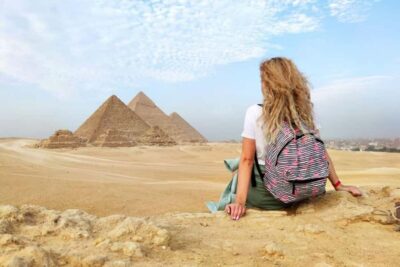
Pyramids & Great Sphinx Private Tour with Camel Ride
Read our review →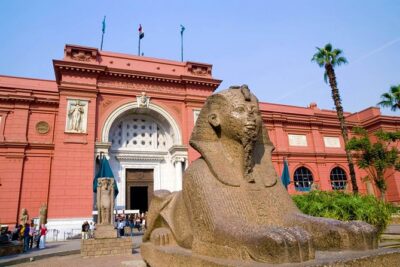
Tour to Giza Pyramids and The Egyptian Museum
Read our review →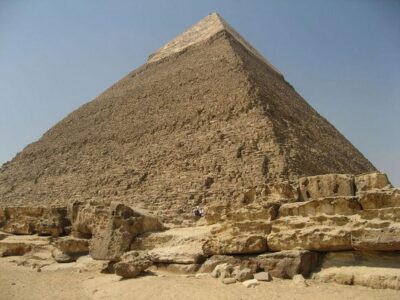
VIP All inclusive Best of the best Giza Pyramids,Sakkara,Memphis
Read our review →
Pyramids of Giza, Sphinx, Saqqara & Memphis Tour
Read our review →
Cairo 8 Hour Private Tour of Pyramids, Egyptian Museum and Bazaar
Read our review →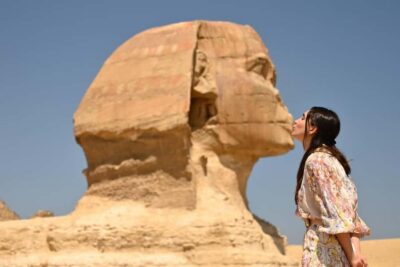
Half-Day Tour to Pyramids of Giza and the Sphinx
Read our review →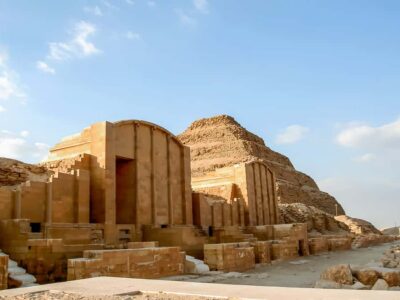
Private ViP all-inclusive Giza Pyramids,Sphinx,Inside Pyramid
Read our review →Browse the lists this tour appears in