
Reviewed · VALLEY OF THE QUEENS
Private Tour to Valley of the Queens, Valley of the Artisans, and Habu Temple
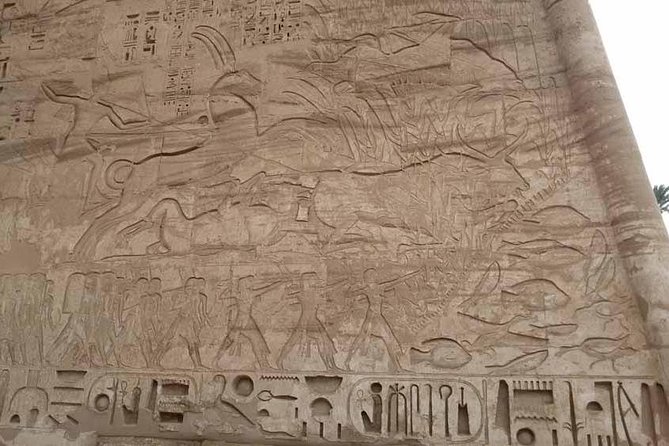
What makes this tour interesting is the way it moves through three different sides of ancient Thebes, royal burials, the work behind those tombs, and the carefully preserved power of Ramses III. I especially like the focus on the Valley of the Queens, with visits to tombs linked to queens and sons of pharaohs. I also love the payoff at Medinat Habu Temple of Ramses III, where battle scenes and festival imagery still look startlingly fresh.
The main drawback to keep in mind is that guide delivery can vary. On this kind of private tour, you want clear explanations while you walk and see art, and at least a few guests felt the narration was not constant inside the tombs. If you care about nonstop commentary, it is worth asking about your guide’s approach before you commit.
Key highlights at a glance
- Valley of the Queens tomb time in Ta-Set-Neferu, with a look at royal family burials
- Deir el-Medina aka Set Maat, the Place of Truth for New Kingdom artisans
- Ptolemaic temple at Deir el-Medina dedicated to Hathor and Maat
- Two decorated worker tombs linked to Sennedjem and Inherkau
- Medinat Habu’s best-preserved New Kingdom art tied to Ramses III
- All entrance fees and transport included, plus hotel or cruise pickup and drop-off
Why the Valley of the Queens, Artisans, and Habu combo works
This is not just a box-checking West Bank loop. It is a smart story arc from who got buried, to how the work got done, to how rulers wanted history remembered.
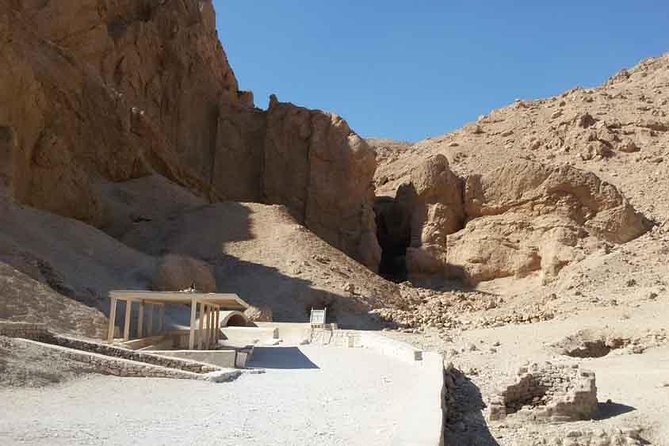
At the Valley of the Queens, you are seeing Ta-Set-Neferu, meaning place of beauty, a cemetery for wives and sons of pharaohs. It is a very different feeling from the more famous king tombs. Here you notice the structure of the tomb layout, the way entrances lead to short halls, and how the sarcophagus chamber anchors the space.
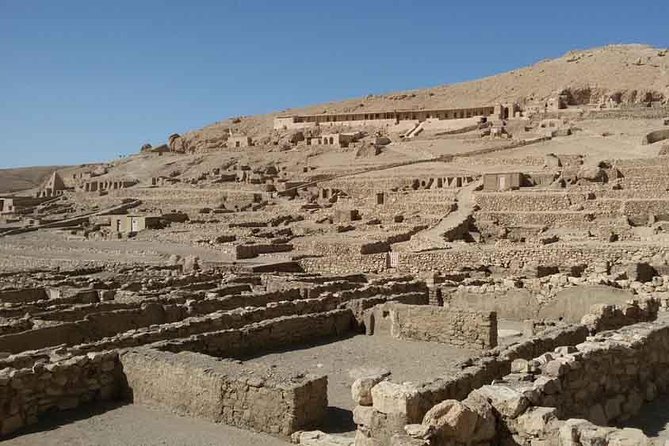
Then you shift gears to Deir el-Medina, the workers’ world. The site was called Set Maat, the Place of Truth, and it was home to the artisans and workmen who built royal tombs in the New Kingdom period (1550-1080 BC), especially during the 18th, 19th, and 20th dynasties. This is where the monuments get their human scale.
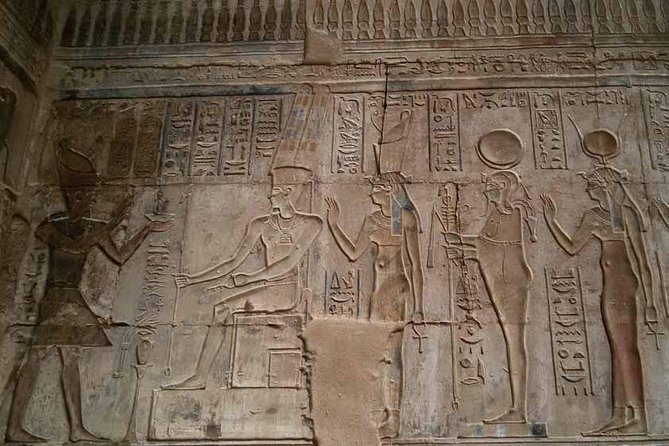
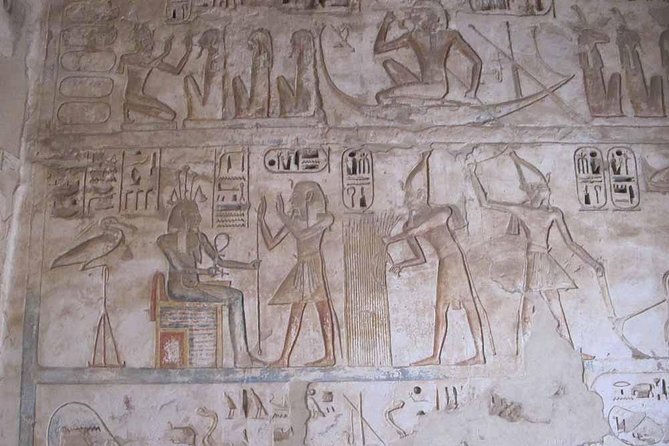
Finally you end at Medinat Habu, Ramses III’s temple complex. The art is the star: military scenes, texts about victories, and ritual or festival imagery. It is also one of the better-preserved memorial temples from that era, so you are not always fighting against faded detail.
More Valley of the Queens trips:
- Luxor Day Tour: Valley of Kings & Queens & Hatchepsut Temples
★ 5.0 · 1,496 reviews - Luxor: Valley of the Kings and Queens Guided Tour with Lunch
★ 4.5 · 337 reviews - Luxor: West Bank Kings and Queens All-Inclusive Tour & Lunch
★ 4.5 · 298 reviews
Price and what you actually get for $57
At $57 per person, the big value point is that this price is built around the day’s logistics, not just sightseeing. You get:
- Private air-conditioned vehicle for all transfers
- Hotel or Nile cruise pickup and drop-off in Luxor
- Qualified Egyptologist guide
- Entrance fees included for the sites named in the itinerary
- Bottled water during the tour
- Service charges and taxes
On the West Bank, entrance fees can add up quickly when you do more than one site. By bundling them, you avoid the annoying, piecemeal costs that can turn a “cheap day” into a not-so-cheap day once you arrive.
One caution, because it affects value, is the Queen Nefertari tomb. The itinerary notes it as an extra cost if it is open, and it is currently listed as closed. If you were hoping to add it no matter what, make sure you understand the pricing only applies if it can be visited.
Stop 1: Valley of the Queens (Ta-Set-Neferu) and what to look for
The day starts with pickup from your Luxor hotel or Nile cruise, followed by a drive to the West Bank Theban Necropolis area. From there, you begin at the Valley of the Queens, with around an hour on site.
This valley is known for more than 90 tombs, though you typically do not see them all. The tombs often follow a familiar rhythm: an entrance passage, a few short halls, then a sarcophagus chamber. Even if you are not a Egyptology nerd, this layout helps you understand what you are walking into. It is less of a “big hall” experience and more of a quiet, controlled sequence.
A neat detail to file away is that the earliest tomb mentioned here is linked to Sitre, wife of Ramses I. The tour focus is on visiting three tombs of queens and sons of the kings. The names included in the itinerary information are Amun-her-khepeshef, Seth-her-khopsef, and Khaemwaset, along with Ramessid-era family tombs.
The practical downside
Time is the constraint. With about one hour for the Valley of the Queens, you will have less slack than if you were wandering longer. If you are someone who likes to linger on inscriptions, go a bit slower in each tomb, and let your guide know early that you want a couple of specific scenes explained.
A different kind of day out of Luxor:
- Hurghada: Luxor Valley of the Kings & Tutankhamun Tomb Trip
★ 4.7 · 13,208 reviews - Luxor Day Trip from Hurghada Small Group & Tutankhamun Tomb
★ 4.8 · 5,366 reviews - Hot Air Balloon Ride in Luxor Egypt with Transfers Included
★ 5.0 · 4,319 reviews - Luxor: Shared Full-Day Tour to Luxor West and East Banks
★ 4.5 · 1,812 reviews
Stop 2: Deir el-Medina artisans, Set Maat, and the workers’ side of power
Next you head to Valley of the Artisans (Deir el-Medina). This stop is also about an hour, and it is one of the best places to get a real sense of how temples and tombs were actually produced.
Deir el-Medina was known as Set Maat, the Place of Truth. The settlement housed the artisans and workmen responsible for constructing the royal tombs in the Valley of the Kings during the New Kingdom.
What I like about this stop for your experience is that it reframes the whole West Bank. You go from royal burials into the working world that supported them, then you end at a temple that displays state ideology. It feels like stepping from the script into the workshop.
You explore:
- The ruins of the village settlement itself
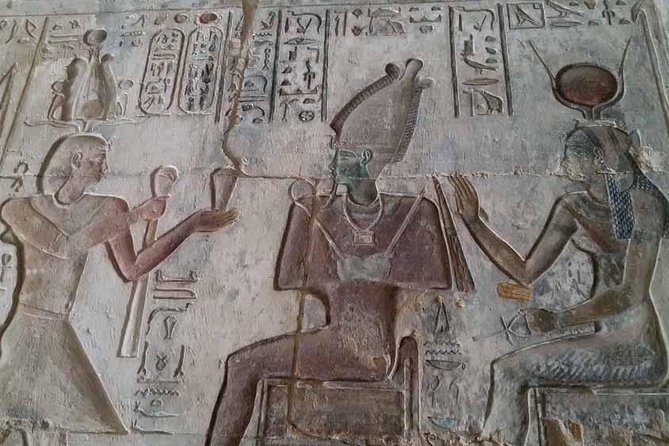
- A Ptolemaic temple dedicated to Hathor and Maat
- Two of the finest decorated tombs of the workers, Sennedjem and Inherkau
The Ptolemaic temple is described as a small building within a mud brick enclosure wall. That detail matters because it explains the site’s layered identity. You are not only seeing New Kingdom work. You are seeing later religious focus too, layered on top of the older community.
And the tombs of Sennedjem and Inherkau are where the “workers” label becomes real. Even without chasing every inscription, you can feel how decorated the spaces are, how carefully the interiors were made for life after death beliefs shared by the community.
A heads-up on pacing
Because it is private, your guide can shape the order and timing a bit. Still, this is one of those sites where the best parts require standing, looking up, and walking through uneven areas. Wear shoes you trust, and plan to take short breaks so you do not feel rushed through the tomb decoration.
Stop 3: Medinat Habu and Ramses III’s preserved wall scenes
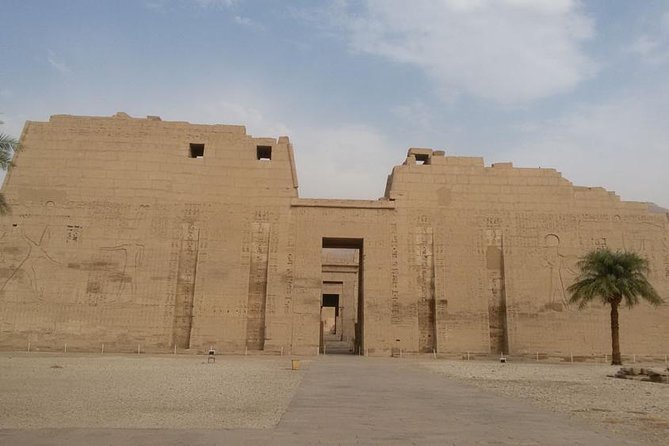
Your final major stop is Temple of Medinat Habu, also called Medinat Habu, tied to King Ramses III. This is described as the last great warrior pharaoh of the New Kingdom, and it comes with a big reason to be excited: the temple is among the best-preserved New Kingdom memorial temples.
You get about an hour here, and the focus is on what the walls show. The temple decorations include:
- Military scenes and victory texts
- Rituals and festival scenes, tied to how the king’s reign was staged and remembered
There is also a layout that helps you visualize the broader complex. A royal palace was attached to the south of the temple, opening to a forecourt. Priests’ dwellings and administrative units sit to the sides. In other words, this is not just a single “pretty building.” It is a power center with multiple functions.
Why this stop is worth it even if you have seen other Luxor temples
Even if you have visited other sites on the East Bank or earlier on the West Bank, Medinat Habu often delivers a different kind of art reading. The military and festival elements make it easier to connect to what the pharaoh wanted people to remember, and the preservation level helps you actually see the details without guessing.
The role of your Egyptologist guide, and how to get the most out of private
This is a private tour, which is not just a marketing term here. It changes how you move through fragile, hot, and sometimes dim tomb spaces.
In the reviews connected to this experience, certain guide names show up again and again, including Azab, Hesham, Moses, ALI, and Emad. That pattern matters because many guests highlight how much they got from the day when the guide matched their pace and answered questions clearly.
But here is the honest bit: one review pointed out that the guide explanation felt thin, another noted difficulty understanding English, and one mentioned the guide did not stay with them in the tombs. So if you want the guide to actively narrate every stop, set that expectation at the start.
A simple way to do that is to ask:
- Will you guide us inside each tomb, or do you stay outside and explain at the entrances?
- Can you focus on the story of who is buried there, not just how old the tomb is?
Because this is private, it is reasonable to ask for that kind of attention.
Logistics that keep the day from feeling like a scramble
Most of the stress on a West Bank day comes from getting to sites efficiently. This tour handles that by including:
- Private vehicle transfers all day
- Hotel or cruise pickup and drop-off in Luxor
- Bottled water during the tour
That sounds basic, but it matters. It means you spend your energy on the tombs and temples, not on haggling, finding drivers, or timing your own route between distant points.
The itinerary is also built around realistic time blocks. Each main stop is listed around one hour, and the full tour is about 5 hours. That is a good rhythm if you want three big experiences without turning the day into a marathon.
Should you book this private West Bank tour
Book it if you want a West Bank day that feels like a story, not a checklist. The standout value is that you get royal tombs at the Valley of the Queens, the workers’ world at Deir el-Medina, and the preserved Ramses III art at Medinat Habu in one organized, private package. You also benefit from included entrance fees and transport, which keeps the final cost from surprising you.
Skip it or choose carefully if you are the type who needs heavy, constant explanation inside every tomb. Because guide styles can vary, do not be shy about asking how you will be guided while you are actually inside the sites. Also, if Queen Nefertari is a must for you, confirm whether it is open during your travel dates, since the itinerary notes an extra cost if it can be visited.
If you like history that shows both rulers and the people who built the monuments, this tour has a strong fit for you.
Reviewed most recently around Luxor
- Camel or Horse ride on west bank★ 5.0 · 20 reviews
- Nefertari and King Tut’s Tombs, Hatshepsut and More in Luxor★ 4.5 · 20 reviews
- Private Day Tour of Luxor★ 5.0 · 20 reviews
- Private Transfer from Luxor to Marsa Alam or vice versa★ 5.0 · 20 reviews
- Private Transfer Luxor to Aswan★ 5.0 · 20 reviews
- Private Full Day Tour: Dendera & Abydos Temples from Luxor★ 5.0 · 20 reviews
- 5 Days Nile Cruise from Luxor to Aswan with Hot Air Balloon★ 5.0 · 20 reviews
- Full Day Luxor East and West Banks Tour With Lunch★ 5.0 · 20 reviews
Valley of the Queens, compared.
Luxor Day Tour: Valley of Kings & Queens & Hatchepsut Temples
Read our review →
Valley of the Kings and Queens Guided Tour with Lunch
Read our review →
West Bank Kings and Queens All-Inclusive Tour & Lunch
Read our review →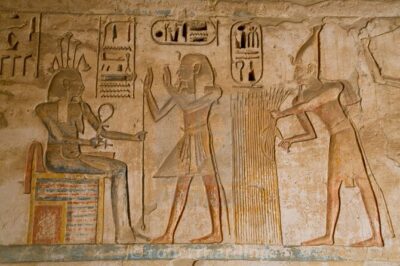
Luxor Day Tour: Explore Valley of Kings, Queens, Hatshepsut& More
Read our review →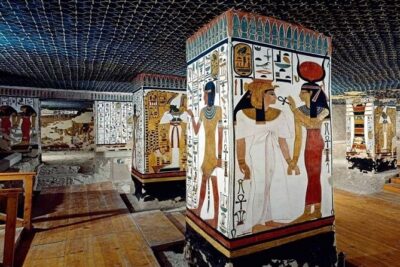
Valley of the Kings and Queens Guided Tour from Luxor with Lunch
Read our review →
Full Day East Bank, West Bank, and Valley of the Queens in Luxor
Read our review →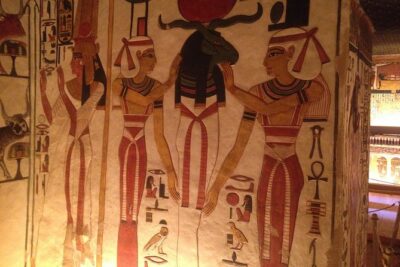
Private King Tut’s Tomb, Valley of the Kings & Queens, Hatshepsut
Read our review →
Balloon, East Bank, West Bank, and Valley of the Queens in Luxor
Read our review →Browse the lists this tour appears in