
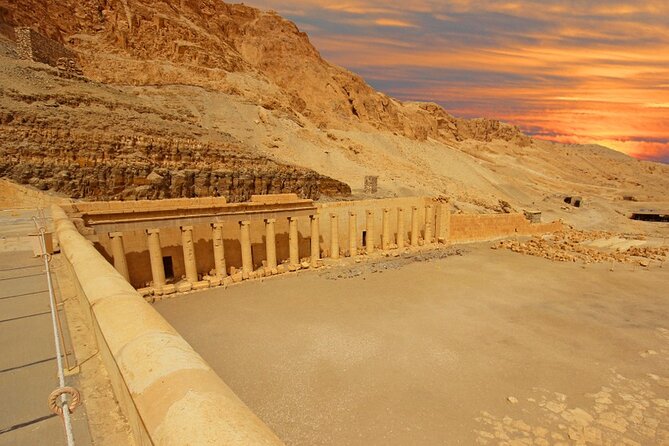
Reviewed · LUXOR TOURS
West Bank Tombs and Temples
The West Bank is where Luxor gets serious, and this day trip turns that mood into a smart route through royal power and funerary art. I love how you get round-trip transfers plus an Egyptologist-led flow, so you spend less time figuring things out. I also love the fact that you get access to key sites without the usual chaos. The only real drawback to plan for is that it is a long day, and the Valley of the Kings includes a limited number of open tombs with optional extras.
This feels especially good if you want a guide who can connect the monuments to the big picture, not just point at carvings. Depending on who you get, you may also appreciate guides with a knack for clear explanations and a friendly, steady pace, like Ghada, Nermeen (Nana), Nana, Neema, or Mary Mena, plus drivers who keep the logistics smooth.
One more thing to consider: you start early, and tomb touring is weather-sensitive. If the heat or the sun is intense, build in water and patience, and know that your tomb time depends on what is open and what you choose.
Key points before you go
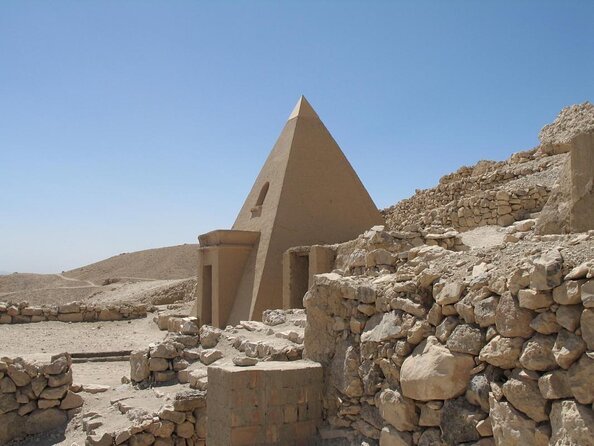
- A private format means the day moves at your group’s pace, with room for questions
- Valley of the Kings entry includes 3 tombs from a specific list, with more optional tomb tickets
- Medinet Habu is a major stop, one of Egypt’s largest mortuary complexes linked to Ramses III
- Colossi of Memnon is quick, but it is a classic photo moment you should not skip
- Tombs of the Nobles plus Hatshepsut add the human side and the architecture contrast
- Good weather matters, so the plan can shift if conditions are poor
A West Bank route built around funerary power, not just photos
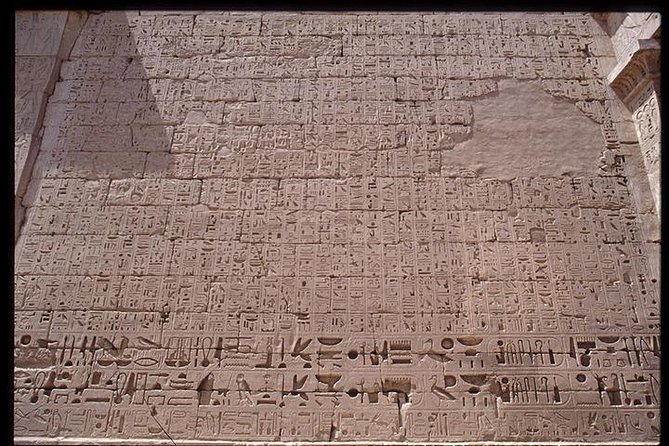
This tour works because it respects how the West Bank is organized. You are not bouncing randomly across the hills, you are walking a logical thread: royal burials in the Valley of the Kings, then monuments tied to state ideology and remembrance at Medinet Habu, then the “how ordinary people lived” angle through the Tombs of the Nobles, and finally the sheer architecture impact of Hatshepsut’s temple.
I like the way the day is sequenced. You start with the place most people dream about, then you move into larger temple spaces where reliefs and courtyards make more sense once you already have tomb context. By the time you reach Hatshepsut, the cliffs and the scale hit harder, because you’ve already seen how much effort the ancient Egyptians put into honoring rulers after death.
Expect plenty of time under the sun and in shaded entrances. Bring water, and wear shoes that are stable on uneven paths. Also, this is not a “rush through everything” style tour, because it is private for just your party, so the pacing can adjust to your interest level.
Other Luxor days people put in the same week:
- Hurghada: Luxor Valley of the Kings & Tutankhamun Tomb Trip
★ 4.7 · 13,208 reviews - Luxor Day Trip from Hurghada Small Group & Tutankhamun Tomb
★ 4.8 · 5,366 reviews - Hot Air Balloon Ride in Luxor Egypt with Transfers Included
★ 5.0 · 4,319 reviews
Timing, transfers, and why the early start helps
The tour runs about 7 hours 35 minutes and operates within a window that starts early morning, with opening hours listed from 6:00 AM to 12:00 PM. In practice, that early start matters on the West Bank. You avoid some of the harshest late-morning heat, and you give yourself better energy for tomb interiors, which can feel darker and more tiring than people expect.
Round-trip hotel transfers are included, so you are not negotiating rides or guessing routes while carrying a small day pack. A driver also helps with the practical stuff, like timing between stops and keeping you on schedule when there are crowds at a major entrance.
One small planning consideration: your time inside tombs depends on which tombs you pick and what is open that day. If you love tomb painting and hieroglyphs, you will want to arrive mentally ready to slow down once you get in. If you want a lighter touch, choose tombs that match your interests so your hour inside does not feel stretched.
Valley of the Kings tombs: what you get with your main entry
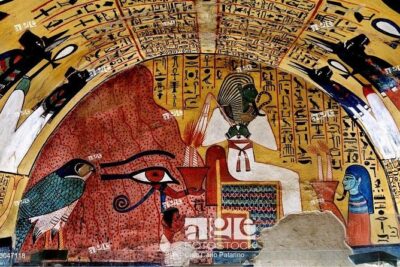
The Valley of the Kings is your anchor stop, and it is easy to see why it is famous. This necropolis served as a royal burial ground for nearly 500 years during the New Kingdom, with tombs carved into desert cliffs across from ancient Thebes (modern Luxor). Inside, the walls carry painted scenes and hieroglyphic texts that connect kings and officials to the afterlife.
Here’s the practical part that affects your experience: your main entry ticket includes access to 3 open tombs chosen from a list. The included options are:
- KV1 (Ramesses VII)
- KV2 (Ramesses IV)
- KV6 (Ramesses IX)
- KV8 (Merenptah)
- KV14 (Tausert & Setnakht)
- KV15 (Sety II)
- KV16 (Ramesses I)
- KV43 (Thutmose IV)
- KV47 (Siptah)
Optional tombs that may require an additional ticket purchase include:
- KV9 (Ramesses V & VI)
- KV17 (Seti I)
- KV62 (Tutankhamun)
What I love about having a “3 included tombs” structure is that it helps you focus. Instead of trying to sprint through five or six sites, you can pick a few that match your vibe, then spend real time reading the stories on the walls. A strong guide can also help you prioritize carvings and scenes so you come out feeling like you understood something, not just saw darkness and dust.
Possible drawback: if you are set on a very specific tomb like KV62, you may need to buy the optional additional ticket. If you care about that, confirm your preference at booking time and be flexible if openings change.
Colossi of Memnon: a short stop with a big “I’m here” feeling
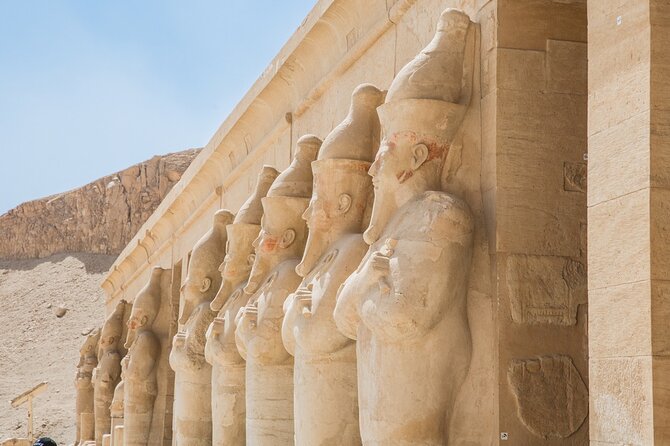
After the Valley, the route includes a Colossi of Memnon stop. This is not a long visit, you’re given about 10 minutes for the arrival and entry and then another 15 minutes for a photo moment.
Even with limited time, it’s worth treating this like a breather with purpose. These massive statues are a recognizable landmark, and they help you shift from cliff tombs to monumental scale. It is the kind of stop where your brain recalibrates, then you’re ready again for the temples.
If you want the most out of a short window, stand back first and take a full view. Then move closer for the details. Don’t spend the entire time half-squinting for a single shot. Use the photo moment to capture the sense of size, because that’s what you can’t fake.
A different kind of day out of Luxor:
- Luxor: Shared Full-Day Tour to Luxor West and East Banks
★ 4.5 · 1,812 reviews - Luxor: Hot Air Balloon Ride over Luxor Relics
★ 4.8 · 1,681 reviews - Luxor Day Tour: Valley of Kings & Queens & Hatchepsut Temples
★ 5.0 · 1,496 reviews - Full Day Tour to East and West Banks of Luxor
★ 5.0 · 1,449 reviews
Medinet Habu and Ramses III: one of Luxor’s largest mortuary temples
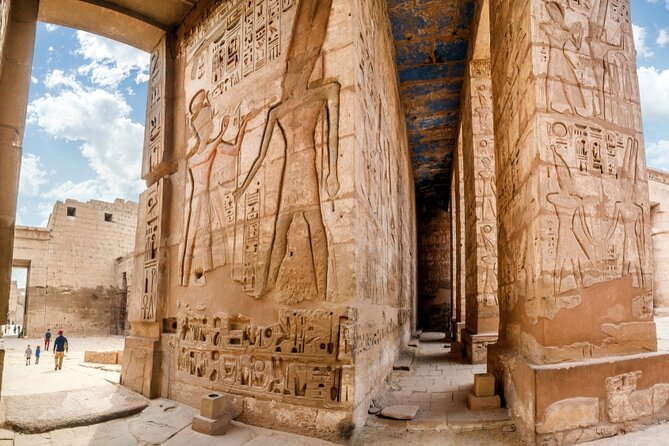
Next comes Temple of Medinet Habu, the mortuary temple complex of Ramses III. This stop is about 1 hour, and it is a major reason to choose this tour over the shortest West Bank options.
This complex is described as one of Egypt’s largest mortuary temples, built to commemorate Ramses III after his death, including reliefs and scenes that focus on battles and rituals. That theme matters because Medinet Habu is not just “funeral decoration.” It’s political storytelling in stone, built to reinforce power and divine legitimacy.
What I like here is the scale and the “you can’t see it all at once” feel. Even when you keep moving, you get moments where you stop because the courtyard size forces you to re-orient. A good guide helps you make sense of the shrines, huge courts, and imposing towers, so you are not standing in one spot waiting for the temple to explain itself.
If you only care about the most famous places, you might feel this is less iconic than the Valley. But if you want the West Bank to feel like a living system of beliefs, Medinet Habu is where that clicks.
Tombs of the Nobles: daily life scenes, not just royal names
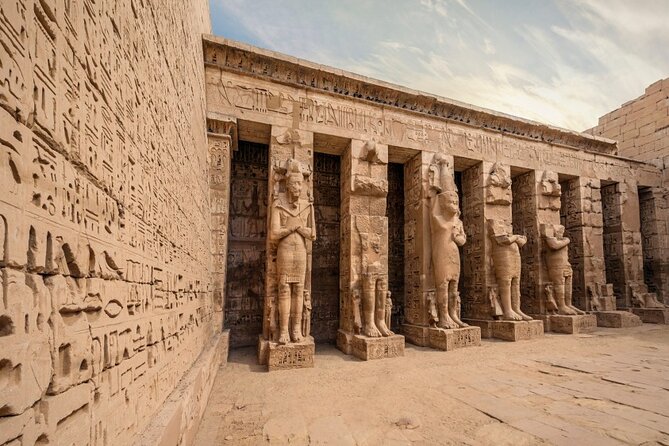
After Medinet Habu, you head to the Tombs of the Nobles. Your visit here totals about 1 hour, and it’s a valuable contrast to the royal focus of the Valley.
The key difference is the “human window.” These tombs belong to high officials and priests, and the scenes aim to show daily life in ancient Egypt. That means you get a different kind of information than you see in royal contexts. Instead of the whole story being about kings as distant figures, you start to see how administration, worship, and everyday activities fit into the afterlife picture.
This is also a great place to ask questions. In private settings, you can keep your questions going as long as the guide has the answers, and that makes the paintings and symbols feel less mysterious.
Time note: you have about an hour total at this stop. That’s enough to see the highlights and get a guided interpretation, but it is not enough for a slow, hour-by-hour art seminar. If you want extra time, prioritize what you want to read most before you enter.
Hatshepsut’s Temple: cliffs, angles, and a female ruler’s statement
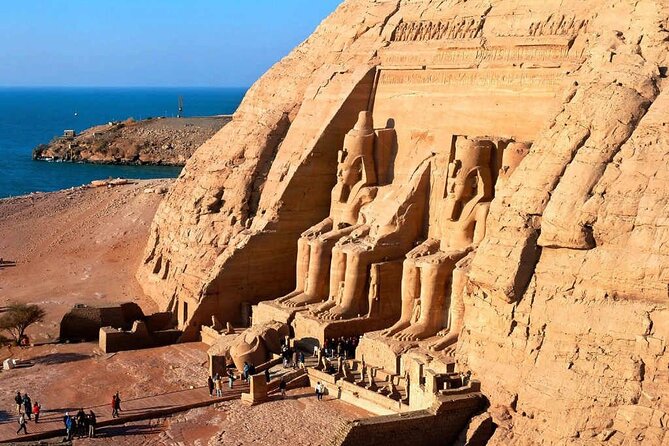
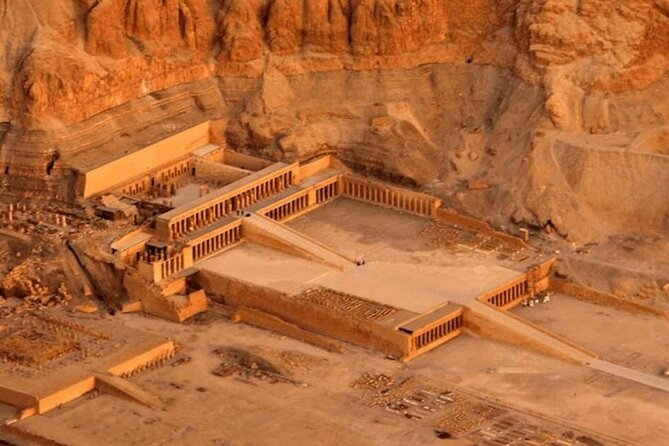
The final major monument on the West Bank route is Temple of Hatshepsut. You’ll spend about 45 minutes here, then move on toward the end of the day.
Hatshepsut’s temple is famous for how it sits against towering cliffs, and the architecture is the whole point. This is where the West Bank shifts from tomb interiors to a monumental visual argument. Hatshepsut, one of Egypt’s most powerful female rulers, is honored through grand design choices that reinforce authority and permanence.
I like using Hatshepsut as a closing stop because it’s a reminder that Egypt’s story is not only about kings who ruled in name. It is also about who held power, who made decisions, and how the state chose to represent legitimacy to future generations.
A practical tip: spend your first minutes from a distance to get the layout in your head. Then go into the details. If you start by staring at the carvings right away, you can miss what the architecture is trying to say.
Price and value: what $125 buys, and where costs can rise
At $125 per person for a 7 hour 35 minute private tour with round-trip transfers, this is built for value in three ways.
First, you get a serious guide format with an Egyptologist leading the sites. Second, many of the entries are included for key stops like the Valley of the Kings, Colossi of Memnon, Medinet Habu, the Tombs of the Nobles, and Hatshepsut. Third, you get the private setup, which often means your time inside sites is used more efficiently.
Where costs can shift is at the Valley of the Kings tomb level. Your entry includes 3 tombs from the included list. If you want an included list tomb set, you are covered. If you want optional tombs like KV9, KV17, or KV62, you may pay extra for those additional tickets.
So the smart way to judge the price is this: if you want a guided, multi-site West Bank day that includes most admissions and transfers, $125 can feel fair. If you already plan to pay for optional tombs no matter what, decide that before you book so you understand your total spend.
Who should book this West Bank day, and who might want a different plan
This tour makes the most sense if you fit one of these boxes:
- You want a structured West Bank day without renting a car or managing entrances yourself
- You care about how tombs connect to royal ideology, rituals, and state power
- You like having time to ask questions while you see painted walls and carved reliefs
- You prefer private pacing, especially if you’re traveling with family members who need flexibility
It might be less ideal if you have very limited time in Luxor and need a shorter sampling day, or if your top priority is only one site and you do not care about the rest. The route is built as a full West Bank narrative, so skipping half the stops misses the point.
Also, wear your patience on your sleeve. This is Egypt, and sites can have crowd patterns and timing changes. The private format helps, because your guide can adjust how fast you move within the plan.
Should you book West Bank Tombs and Temples with Nasco Tours?
If you want the West Bank to feel like more than a photo checklist, I think you should book. This itinerary is designed around major monuments with clear meanings, and the mix of royal tombs, Ramses III at Medinet Habu, and the daily life scenes in the Tombs of the Nobles gives you more variety than a basic “Valley only” day.
Before you click confirm, do two things. First, decide whether you want optional Valley tombs like KV62, and budget for them if yes. Second, plan for heat and sun, since the day includes both outdoor walking and dark tomb interiors.
If those fit your style, this is a strong choice for a first or second trip to Luxor, especially if you want a private, Egyptologist-led day that actually helps you make sense of what you’re seeing.
FAQ
How long is the West Bank Tombs and Temples tour?
The tour is approximately 7 hours 35 minutes.
Where is the tour located?
It takes place in Luxor, Egypt, on the West Bank.
Is pickup and round-trip transport included?
Yes. Round-trip hotel transfers are included.
Is this a private tour?
Yes. It is private, and only your group will participate.
What sites are included in the itinerary?
You will visit the Valley of the Kings, Colossi of Memnon (photo stop), Temple of Medinet Habu (Ramses III), Tombs of the Nobles, and Temple of Hatshepsut, with travel back to Luxor at the end.
Are entrance tickets included?
Admission is included for the Valley of the Kings, Colossi of Memnon, Temple of Medinet Habu, Tombs of the Nobles, and Temple of Hatshepsut. Entry at the start and end in Luxor is listed as ticket free.
How many tombs can I visit at the Valley of the Kings?
Your main entry ticket includes access to 3 open tombs selected from the included list.
Which optional tombs are available for extra tickets?
Optional tombs listed for additional ticket purchase are KV9 (Ramesses V & VI), KV17 (Seti I), and KV62 (Tutankhamun).
What are the tour hours?
The listed opening hours are 6:00 AM to 12:00 PM (Monday through Sunday) for the date ranges shown.
What happens if the tour is canceled due to weather?
The experience requires good weather. If it is canceled due to poor weather, you are offered a different date or a full refund.
What is the cancellation policy?
You can cancel for a full refund up to 24 hours before the experience start time. If you cancel less than 24 hours before, the amount paid is not refunded.
Reviewed most recently around Luxor
- Camel or Horse ride on west bank★ 5.0 · 20 reviews
- Nefertari and King Tut’s Tombs, Hatshepsut and More in Luxor★ 4.5 · 20 reviews
- Private Day Tour of Luxor★ 5.0 · 20 reviews
- Private Transfer from Luxor to Marsa Alam or vice versa★ 5.0 · 20 reviews
- Private Transfer Luxor to Aswan★ 5.0 · 20 reviews
- 5 Days Nile Cruise from Luxor to Aswan with Hot Air Balloon★ 5.0 · 20 reviews
- Private Full Day Tour: Dendera & Abydos Temples from Luxor★ 5.0 · 20 reviews
- Full Day Luxor East and West Banks Tour With Lunch★ 5.0 · 20 reviews
Luxor Tours, compared.
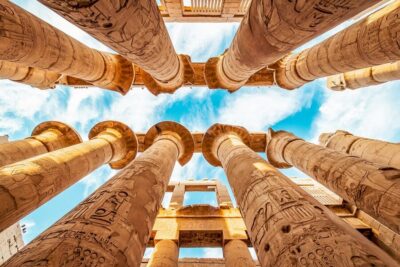
Luxor Valley of the Kings & Tutankhamun Tomb Trip
Read our review →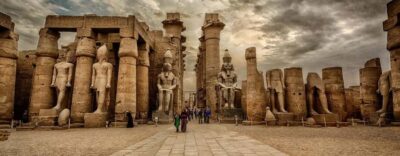
Luxor Day Trip from Hurghada Small Group & Tutankhamun Tomb
Read our review →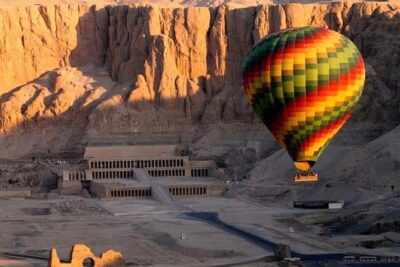
Hot Air Balloon Ride in Luxor Egypt with Transfers Included
Read our review →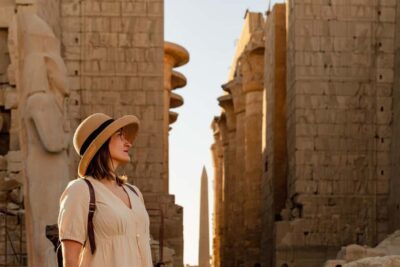
Shared Full-Day Tour to Luxor West and East Banks
Read our review →
Luxor Day Tour: Valley of Kings & Queens & Hatchepsut Temples
Read our review →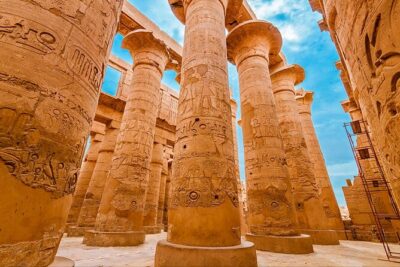
Full Day Tour to East and West Banks of Luxor
Read our review →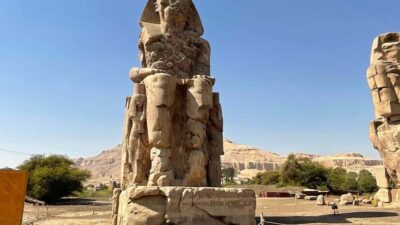
Valley of the Kings and Hatshepsut Temple Day Tour
Read our review →Browse the lists this tour appears in