
A Nile cruise that packs Abu Simbel plus Luxor highlights, then tops it off with a sunrise hot-air balloon is a very smart way to see Upper and Lower Egypt in a short window. I love that you get a real 5-star ship setup with full-board meals, so you are not constantly hunting for food between sites. I also love the pacing between major monuments, with a guide to tie it all together across Aswan, Edfu, and Luxor.
One thing to plan for: the big ticket entrance fees are not included (and tipping is not included either). Also, you may need to budget for the domestic flight to Aswan since the tour lists domestic air fare as not included.
Key highlights to know before you go
- Sunrise hot-air balloon over the Thebes area, with breakfast on board afterward
- Abu Simbel timed for pre-dawn departure, so you can reach the temples when the light is better
- 5-star Nile cruise full-board with breakfast, lunch, and dinner included
- Major temple sequence in a tight route: Philae, Kom Ombo, Edfu, Karnak, Luxor Temple
- West Bank tomb and mortuary stops including the Valley of the Kings and Hatshepsut at Deir el-Bahri
Aswan to Luxor on a 5-star Nile Ship, with Full Board
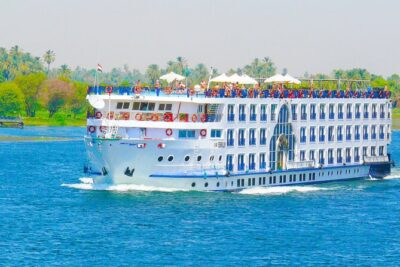
This is built for comfort, not chaos. You get meet-and-assist support with an air-conditioned vehicle at arrival and departure, plus qualified Egyptology guidance during the sightseeing. The ship is described as 5-star and the trip runs on full-board, with 4 breakfasts, 3 lunches, and 3 dinners included.
That matters because you are stacking a lot of sacred sites into a few days. When meals and ship logistics are handled, you can focus on the monuments instead of timing restaurants and transit. It also makes the early starts easier to stomach since you are not paying for every meal after a big morning.
The tour is labeled as private for your group, but Abu Simbel is listed as with a group. In practice, that usually means shared movement for one specific attraction while the rest stays organized around your group’s schedule.
More Hot Air Balloon Rides in Aswan
- 4-Days Nile Cruise From Aswan To Luxor including Abu Simbel and Hot Air Balloon
★ 5.0 · 3,142 reviews - 4-Day 3-Night Nile Cruise from Aswan to Luxor including Abu Simbel, Air Balloon
★ 4.5 · 612 reviews - From Aswan: 3-Day Cruise to Luxor with Hot Air Balloon
★ 4.3 · 598 reviews
Day 1: High Dam views, Philae Temple on Agilkia, then check in
Your day begins in Egypt with a transfer starting from your Cairo hotel or the airport. You then travel to Aswan via a domestic flight, which is noted as not included. Once you arrive in Aswan, you head straight into the Upper Egypt highlights.
First stop is the Aswan High Dam. Admission is not included, so you will want to budget separately. It is not just a quick photo stop. It helps you understand how modern engineering reshaped life along the Nile, which gives context before you step into the ancient temples.
After that, you sail across the Nile to Agilkia and visit the Temple of Philae, dedicated to Isis. This temple is one of the most atmospheric stops on the route because it is associated with worship, magic, and the island setting. Even if you are moving through quickly, you get a sense that you are not just looking at ruins, you are seeing how the sacred landscape was designed.
Then you check in to the cruise. That is when the trip shifts from touring to living the Nile schedule, with your ship becoming your base as you work your way downstream.
Day 2: Pre-dawn Abu Simbel and the crocodile god at Kom Ombo
Day 2 is the most demanding day, and it is also the most “wow” day.
You depart for Abu Simbel around 4:30 am. That pre-dawn timing is deliberate. You arrive later in the morning for the visit, and the temples feel like a different world once you are inside the rock-cut complex. Abu Simbel is associated with Ramesses II, with a façade featuring four massive statues. There is also a smaller temple dedicated to his beloved wife, Queen Nefertari.
The Abu Simbel stop lists admission as free, which is a rare and helpful perk. You still want to confirm the exact inclusion when you book, but it is clearly flagged as part of the package.
After lunch, you continue to Kom Ombo. Here you visit the temple dedicated to Sobek, the crocodile god tied to fertility and power. You also stop at the Crocodile Museum, where you can see excellently preserved mummified crocodiles. This is not everyone’s favorite subject, but it is exactly the kind of Egyptian detail that makes the trip feel less generic. It gives you a glimpse into ancient cult practices you do not usually see on a quick photo run.
You are then sailing to Edfu. That sailing time helps you absorb what you saw rather than feeling like every hour is booked solid with standing in lines.
Day 3: Edfu’s Temple of Horus, Karnak’s scale, and Luxor Temple at Opet time
This day blends the “most well-preserved” temple experience with the two heavyweights in Luxor.
You start with the Temple of Horus in Edfu. It is located in the Nile-side town of Edfu, and the highlight is its preservation. You will feel it when you walk in, with stone details that look sharper than what you might expect on first glance. Admission is not included, so factor that into budgeting.
Then the focus moves to Karnak, described as the vast complex known as Ipetisut, or Most Select of Places. It is tied to the sacred gods of Thebes and is noted as the largest temple structure ever built by man. Karnak can overwhelm you in a good way. It is enormous, and you will likely spend your time both reading symbols and just soaking in the scale.
After Karnak, you visit Luxor Temple, specifically Ipet Resyt or the Southern Sanctuary. This is connected to the Opet Festival, which is helpful context if you want to understand why so much attention was placed on these spaces. Even if you do not catch every detail of the festival story, you will feel how this was designed for ritual and celebration, not just a tomb for statues to sit in.
Admission fees for these stops are listed as not included, so keep that in mind.
More Nile Cruises in Aswan
- 4-Day 3-Night Nile Cruise from Aswan to Luxor&Abu Simbel+Balloon
★ 5.0 · 2,023 reviews - From Aswan: 4-Day Nile Cruise from Aswan to Luxor with Guide
★ 4.1 · 593 reviews - 4-Days Nile Cruise From Aswan To Luxor including Abu Simbel and Hot Air Balloon
★ 4.5 · 509 reviews - 4-Day 3-Night Nile Cruise from Aswan to Luxor – Private Tour
★ 5.0 · 369 reviews
Day 4: Sunrise balloon, Valley of the Kings, and Hatshepsut at Deir el-Bahri
This is the “big finish” day, and it starts early in the best possible way.
You take a hot-air balloon over the remains of ancient Thebes at sunrise. The tour includes breakfast on board, then you check out. Seeing Thebes from the sky gives you a different kind of understanding. You start to connect temples and tomb valleys to the wider terrain instead of viewing everything like separate postcard stops.
After the balloon, you move to the Valley of the Kings. This is where kings carved tombs into the mountains, aiming to protect mummies and treasures when earlier pyramids did not do the job. You get about 3 hours here, which is enough time to choose your priorities. Admission is not included, so again, budget separately.
Next is Temple of Hatshepsut at Al-Deir Al-Bahri. This mortuary temple is associated with Queen Hatshepsut, one of Egypt’s most striking female rulers. You also pass by the Colossi of Memnon, the two massive sandstone statues of Amenhotep III. Even if you have seen the statues in photos, standing nearby is a different experience. It helps you understand why these stones became landmarks.
Then you transfer to the airport, station, or hotel based on your preference.
Price and logistics: does $720 feel like a deal?
At $720 per person, the value is best judged by what you are getting beyond the sightseeing.
Included items that matter a lot:
- 3 nights on a 5-star Nile cruise, with full-board meals
- Qualified Egyptology guide
- Hot-air balloon (included)
- Abu Simbel with group
- Meet-and-assist with air-conditioned vehicle
The not-included costs you should plan for:
- Entrance fees to the sites listed
- Tipping
- Domestic air fare (Cairo to Aswan in this route)
So the math works if you would otherwise pay for a higher level ship stay and a balloon. The cruise and meals alone can absorb a big portion of the budget. The balloon inclusion also turns the price into something more than a standard temple tour.
The best way to decide is to ask yourself one question: do I want a structured, guide-led route with ship comfort, and am I okay with early starts like the 4:30 am Abu Simbel departure and sunrise balloon timing? If yes, $720 starts to look like a practical bargain for the density of major sites.
What you’ll feel each day: timing, comfort, and energy management
This tour is not slow travel, but it is also not a theme-park sprint. You get enough time to enjoy stops, and the days are built around key monuments rather than constant mini-stops that feel like filler.
The main energy drains:
- Pre-dawn departure for Abu Simbel
- Sunrise balloon time on the final day
- Walking and standing at temples, especially at Karnak and the West Bank
Your best move is simple: plan for comfort clothing, good walking shoes, and water. Bring sun protection since these are open-air spaces for parts of the day.
Also, think about how you handle photos and reading. Karnak and Valley of the Kings reward people who slow down for symbols and tomb details. If you rush, you still get the big impression, but the meaning gets lost faster.
Why the route works: Aswan context down to Luxor meaning
One reason this sequence is effective is that it gives you context on both ends.
You start with modern and sacred Nile context in Aswan, then move to the island temple of Philae. Then you hit Abu Simbel, which feels almost like a statement across time, before shifting to Kom Ombo’s crocodile cult and museum detail. Edfu and Karnak bring you into the thick of temple architecture, and Luxor Temple adds the festival element. Finally, the West Bank gives you the burial logic, then ties it to Hatshepsut’s mortuary complex and the monumental Colossi of Memnon.
It reads like a coherent story, not just a checklist.
Who this cruise suits best, and who should rethink it
This is a strong fit if you:
- Want a tight, efficient route from Aswan to Luxor without arranging separate guides and transfers
- Like the idea of a 5-star ship base with full-board meals
- Really want Abu Simbel and a sunrise hot-air balloon, since both are included
You might rethink it if you:
- Hate early mornings, since Abu Simbel starts pre-dawn and balloon is at sunrise
- Prefer flexible free days instead of a schedule heavy on major monuments
If you love guided explanations and you are happy to see the big names in a short window, this tour is built for you.
Should you book this 4-day Nile cruise with balloon?
If you want one solid package that covers the highest-impact sites across Aswan, Edfu, and Luxor, plus Abu Simbel and a sunrise balloon, I think this is an easy yes. The value comes from the cruise comfort, full-board meals, and the fact that the balloon is included, not tacked on as an extra.
Just budget realistically for entrance fees, tipping, and the domestic flight to Aswan since those are listed as not included. If those extra costs fit your plan, you will come away with a trip that feels dense, guided, and genuinely memorable without feeling like you are constantly managing logistics yourself.
FAQ
What route does this tour cover?
You visit sites in Aswan and sail downstream to Edfu and Luxor, with Abu Simbel included. You also visit West Bank highlights in Luxor, including the Valley of the Kings and Hatshepsut’s temple.
How long is the cruise?
It is listed as a 4-day experience, approximately.
Is the hot-air balloon included?
Yes. The Luxor hot-air balloon at sunrise is included, and breakfast is provided on board.
Are meals included?
Yes. The tour includes breakfast (4 times), lunch (3 times), and dinner (3 times) as part of full-board on the cruise.
Are entrance fees included?
No. Entrance fees for the sightseeing are listed as not included.
Does the tour include domestic flights?
Domestic air fare is listed as not included. The transfer to Aswan is described as being by domestic flight from Cairo.
Is pickup provided?
Yes. There is meet and assist upon arrival and departure with an air-conditioned vehicle.
Is this tour private or shared?
The experience is described as private for your group, but Abu Simbel is listed as with group.
Where do you sleep during the trip?
You sleep for 3 nights on a 5-star Nile cruise from Aswan to Luxor.
Can I cancel for free?
Yes. Free cancellation is available if you cancel at least 24 hours before the experience starts for a full refund.
More ways to reach Abu Simbel
- From Aswan: Abu Simbel Temple Day Trip with Hotel Pickup
★ 4.4 · 2,807 reviews - Private Day Tour to Abu Simbel Temples from Aswan
★ 4.5 · 507 reviews - 4 Days Nile Cruise from Aswan to Luxor including Abu Simbel and Hot Air Balloon
★ 4.5 · 356 reviews - From Aswan: Abu Simbel Day Tour with Private Guide and Car
★ 4.3 · 342 reviews
Reviewed most recently around Aswan
- Private Day Tour to Abu Simbel Temples and Nubian Village From Aswan★ 5.0 · 20 reviews
- 4 Days 3 Nights Cruise Aswan To Luxor, Abu Simbel and Air Balloon★ 5.0 · 20 reviews
- Private Day tour to High Dam&Unfinished Obelisk&Philae From Aswan★ 5.0 · 20 reviews
- Private Tour in Aswan : Nubian Village and Felucca★ 5.0 · 20 reviews
- Best Half Day Private Tour of Aswan★ 4.5 · 21 reviews
- Abu Simbel Excursion Day Trip from Aswan (Sharing Bus without Guide)★ 4.0 · 21 reviews
- Aswan to Luxor via kom ombo and EDFu temples★ 4.5 · 21 reviews
- Aswan : Private Tour to Unfinished Obelisk, High Dam and Philae Temple by BOAT★ 4.5 · 22 reviews
Abu Simbel, compared.
4-Days Nile Cruise From Aswan To Luxor including Abu Simbel and Hot Air Balloon
Read our review →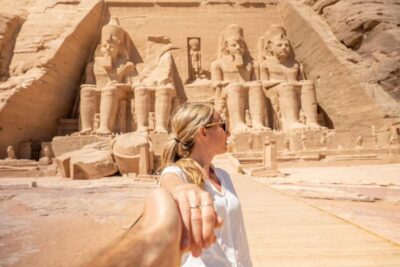
4-Day 3-Night Nile Cruise from Aswan to Luxor&Abu Simbel+Balloon
Read our review →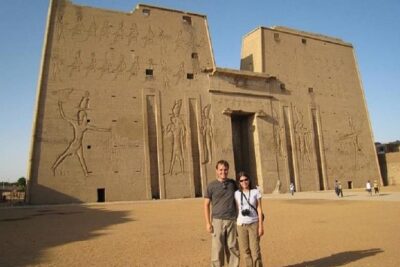
4-Day 3-Night Nile Cruise from Aswan to Luxor including Abu Simbel, Air Balloon
Read our review →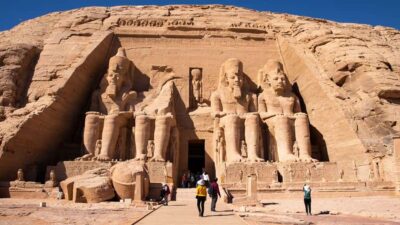
Abu Simbel Temple Private Guided Day Trip with Lunch
Read our review →4-Days Nile Cruise From Aswan To Luxor including Abu Simbel and Hot Air Balloon
Read our review →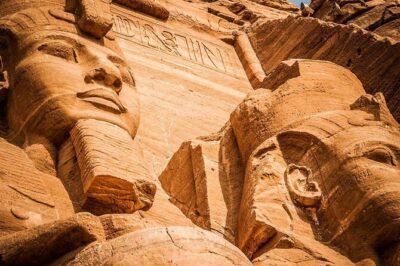
Private Day Tour to Abu Simbel Temples from Aswan
Read our review →4 Days Nile Cruise from Aswan to Luxor including Abu Simbel and Hot Air Balloon
Read our review →Browse the lists this tour appears in