
Reviewed · PYRAMIDS OF GIZA
8 Hours Full day tour to Giza Pyramids, Memphis, Sakkara & Dahshur
This is interesting because it stitches together four of Egypt’s most important pyramid zones in one full day, without you fighting traffic, tickets, or touts. You start with Dahshur’s older pyramids, then move to Saqqara’s Step Pyramid era, then finish at Giza for the Great Pyramids and the Sphinx.
I especially like the door-to-door private transfers plus the fact that you have a real guide to connect the sites, not just “stop, take photos, go.” I also like that the schedule builds in time at key points, with natural pacing so you can actually look. One consideration: the day is long and some major extras, like inside-pyramid visits and camel rides, are not included, so you need to decide early if you want to pay for them.
Key things that make this tour work
- Private, full-day plan across Dahshur, Saqqara, Memphis, and Giza, so you don’t waste half your trip traveling.
- Guided stops at major monuments, including the Sphinx, Valley Temple, and multiple pyramid complexes.
- Comfort factor with bottled water and private A/C vehicle from hotel to hotel.
- Entry fees for basic areas included, which saves you time, but not all add-ons are covered.
- Optional add-ons such as inside any pyramid or camel rides if you want that extra level of experience.
- Planned shopping breaks at Egyptian-run places for perfume, papyrus, and handmade carpets, plus government souvenir stops.
The big idea: Dahshur, Saqqara, and Giza in one long, practical day
If you only have limited time in Cairo, the smartest move is doing the “pyramid sweep” in a single day. This tour does that with a logical flow. You do Dahshur first, then Saqqara, then Memphis, then you end at Giza, where the attention naturally shifts to the Great Pyramids and the Sphinx.
The payoff is context. Dahshur shows earlier pyramid-building ideas, Saqqara shows the Step Pyramid stage, and Giza is where you see the later “classic” pyramid forms dominating the skyline. A good guide helps you keep those stages straight, because otherwise you can end up seeing three fields of stone without knowing what changed and why.
Your day is organized around a tour rhythm, with short blocks at each stop. That means you get close enough to appreciate the scale and details, but you are not stuck in one place forever. Just remember you’re dealing with dust, sun, and time on the road, so pack like it’s a full-day outdoor outing.
More Full-Day Tours in Cairo
- From Cairo: Private Full-Day Tour of Historical Alexandria
★ 4.1 · 1,155 reviews - Old Cairo: Full-Day Islamic and Coptic Cairo Tour with Lunch
★ 4.6 · 688 reviews - Private Full-Day Tour to Giza Pyramids,Sphinx,Memphis, and Saqqara
★ 5.0 · 626 reviews
Price and logistics: what you’re really paying for at $65 per person
At $65 per person, this is priced like a serious value if you want private transfers and a guide for a full day. The big reason is the combination: you’re not just buying “a driver.” You’re getting a private guided route with hotel pickup and drop-off in the Cairo/Giza area, using a private A/C vehicle.
Included items matter here:
- Tour guide
- Private tour
- All transfers by private A/C latest model vehicle
- Hotel/port pickup and drop-off
- Entry fees (basic area only)
- Bottle of water
What is not included is where you need to budget mentally:
- Lunch at a local restaurant (koshari is the named option) is optional
- Inside any of the pyramids is not included
- Camel rides are not mentioned as included, and the note is that they cost extra if you want them
So the real value equation is simple: you’re paying for convenience, pacing, and interpretation. If you had to arrange private transport and guide on your own, the cost often climbs fast.
One more detail that affects your experience: you’ll see planned stops at shops like Paradise Perfumes & Flower Cotton, Key of Life Papyrus, and Handmade Carpets. You do get time to see and learn, but if you hate shopping interruptions, mentally prepare for them.
Getting started at 8:00 am: how the day usually feels
The tour starts at 8:00 am, with pickup from your hotel in Cairo or Giza. The total duration is listed at about 9 hours. That means you’ll be out for a full day, but the schedule is tightly routed to keep you moving between zones.
You also get something practical with a private setup: you are not stuck with a big group waiting on everyone’s pace. Your guide can adjust timing in a reasonable way, as long as you still respect the sequence of stops.
Comfort-wise, bottled water is included. That small thing helps more than you’d think when you’re walking in the heat and dealing with long distances between monument clusters.
Giza Pyramids and Valley Temple: Great Pyramid views plus real context
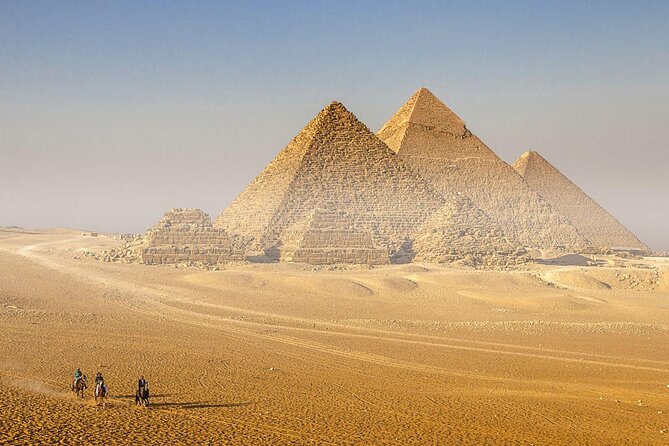
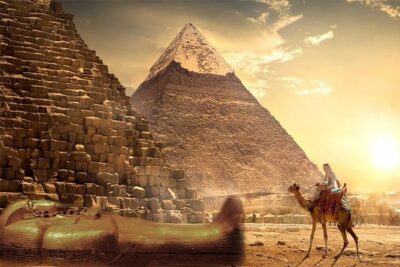
Giza is the headline, and the itinerary treats it like it should be treated. You spend time at the Giza complex, including the Great Pyramids and the Valley Temple, plus the Sphinx.
At this stage, here’s what to look for to make your limited time count:
More of Saqqara, Dahshur and Memphis:
- VIP All inclusive Best of the best Giza Pyramids,Sakkara,Memphis
★ 5.0 · 3,164 reviews - From Cairo: Pyramids of Giza, Sphinx, Saqqara & Memphis Tour
★ 4.7 · 3,110 reviews - Cairo: Pyramids, Sakkara & Memphis Tour with Lunch
★ 4.6 · 2,493 reviews - Private Day Tour Giza Pyramids, Sphinx, Memphis, and Saqqara
★ 4.5 · 904 reviews
Great Pyramids of Khufu, Khafre, and Menkaure
You’ll visit the pyramids associated with Cheops (Khufu), Chephren (Khafre), and Mykerinos (Menkaure). These are the famous ones, but what makes the visit worthwhile is the guide’s explanations, especially around their reigns and what’s known from inscriptions and later documents.
One small but useful moment in the schedule is the stop focused on the Great Pyramid of Cheops (Khufu). The guide’s discussion can help you notice that history here is partly reconstruction. Even when you don’t get every artifact in hand, you can learn how researchers piece together what we know.
Valley Temple and mummification connection
You’ll also visit the Valley Temple, described as the place where priests mummified the dead body of King Chephren. Even if you only take away the big idea, it changes the pyramids from “pretty shapes in sand” into parts of an organized religious machine.
The Sphinx, up close
Then comes the Sphinx, described as the guardian with a lion body and the head of King Chephren. Your time at the Sphinx includes a close-up look at the monument itself.
Practical tip: plan for a photo mindset and a listening mindset at the same time. With a guide, you’ll want to alternate between looking at the stone details and letting the story land.
Your time at the Giza stops is listed in chunks (for example, around two hours total at Giza for the first stop, plus additional brief periods at specific pyramid structures). That is enough time to get the feel of the site if you manage expectations: you’re seeing the top-tier icons, not doing a museum-grade deep study.
Why the stop lengths matter (and how to get the most from them)
Throughout the day, you’ll notice a repeated pattern: short, focused blocks at each place. Some stops are around 30 minutes, others longer, like the Giza start time. This isn’t random. It’s how a day becomes possible across four zones.
Here’s what that means for you:
- You should pick one or two “must look” things per stop, instead of trying to look at everything.
- If you love details, you’ll want to linger at the right moment, not at every moment.
- You should use the guide time efficiently, because the guide is effectively your translation layer.
The itinerary also includes listed “admission ticket not included” notes for certain pyramid structures. That’s a clue that your visit can be “view and walk the basic areas” in most cases, but not necessarily “walk inside and see everything.”
So when your guide points out features, pay attention early. The earlier you learn what you’re looking at, the more satisfying each short stop becomes.
Dahshur: Red and Bent Pyramids show the pyramid-building story
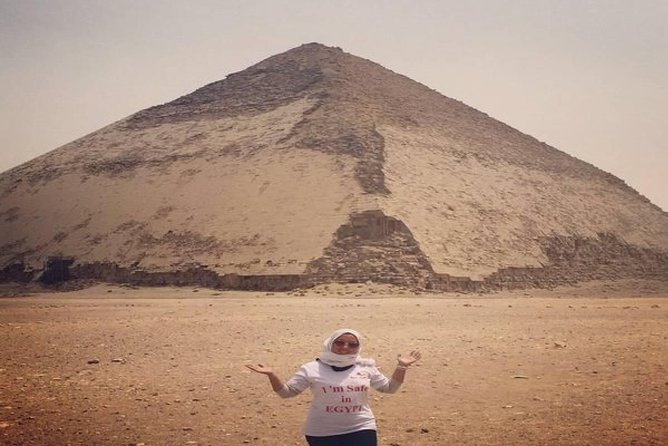
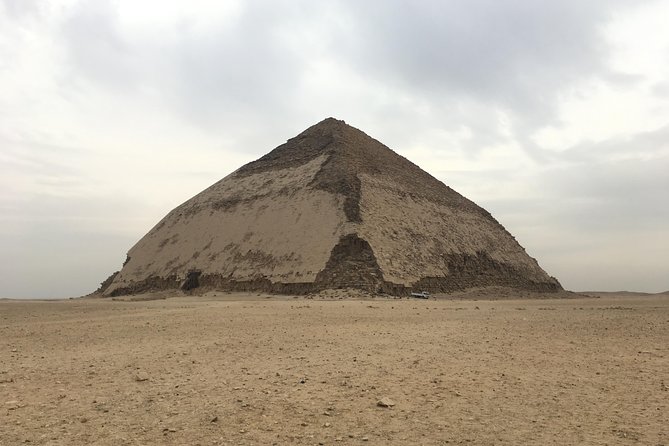
After Giza, the tour plan moves to Dahshur for the Bent Pyramid and the Red Pyramid. This is one of the strongest parts of the day if you like seeing development over time.
Dahshur is described as a royal necropolis about 40 kilometers south of Cairo. It’s known for several pyramids, and the two you’ll see are among the oldest, largest, and best preserved in Egypt, built around 2613 to 2589 BCE.
Why you should care: the name Bent Pyramid is not just a catchy label. It hints that pyramid design was still evolving. When you compare Dahshur to Saqqara and then to Giza, the “why” starts to click.
You get about 1 hour here, with admission ticket not included for the Dahshur portion. That usually means you’ll focus on what’s accessible in the basic areas and use your guide to interpret what you can see.
If your personal style is “I want to understand the story,” Dahshur tends to feel like the most satisfying stop, because it connects the big monuments into a sequence.
Saqqara: Step Pyramid, Mastaba of Ti, and pyramid texts era
Next up is Saqqara (Sakkara), and specifically the Step Pyramid. Saqqara is only about 27 km southwest of Cairo, so the tour keeps the distance manageable.
The Step Pyramid is described as built for King Zoser, and it’s considered important for the process of pyramid evolution, from simple mastaba to the widely known pyramid form. That is exactly the kind of statement that becomes useful if you’re watching the progression all day.
In practical terms, your time here is about 1 hour, plus additional stops at smaller but meaningful sites. You’ll also visit the Mastaba of Ti. The details are great for a guided visit: the mastaba includes two serdabs, and the tomb walls show scenes of everyday life. That’s the kind of thing you might miss if you only zoom in on monuments and not on how people lived and imagined the afterlife.
Then there are more pyramid field stops:
- Pyramid of Unas, listed as a replica in the itinerary wording, described as a magnificent replica with intricate detail
- Pyramid of Teti, described as a smooth-sided pyramid and noted as the second known pyramid containing pyramid texts
One caution: some of these stops have “admission ticket not included.” That suggests you are likely seeing the areas around the structures rather than paying for every possible interior experience. Still, for many people, that’s enough if the guide gives you the story.
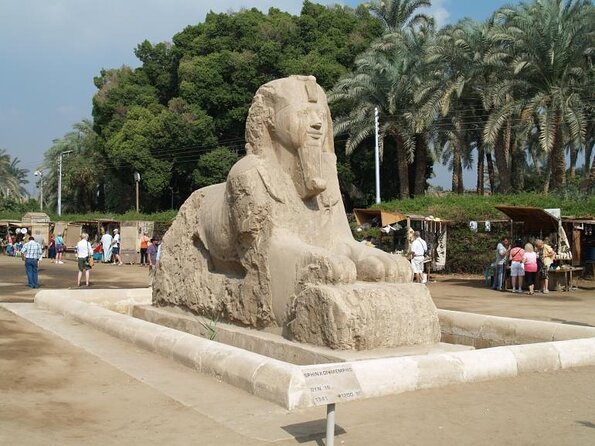
Memphis: Ramses II statue and Alabaster Sphinx in the ancient capital
Memphis is the break in the pyramid focus, and that’s a good thing. It’s the ancient capital of Egypt, dating back to around 3100 BCE in the description provided.
You’ll spend about 1 hour here, with a focus on major artifacts, including:
- a colossal statue of Ramses II
- the great Alabaster Sphinx
This part of the day works well because it changes your frame. Instead of only thinking about royal tomb architecture, you remember pyramids belonged to a larger civilization with power centers, craftsmen, and ongoing religious life.
It also gives you a mental reset before you finish the full route and head back.
Optional extras: inside pyramids and camel rides
The tour notes that your guide can arrange extra experiences for additional charge. Two big categories come up:
- Inside any of the pyramids
- Camel rides
Neither is included in the base package. Also, “inside pyramids” is explicitly listed as not included.
Here’s how I’d decide if you should pay:
- If you hate crowds and want a quiet experience, inside-pyramid options can be worth it because they focus your time. But they can also add time pressure if the day is already full.
- If you care about photos and an easy thrill, camel rides can be a good add-on, but only if you’re comfortable with the reality of organized animal experiences.
- If you want maximum value for your money, prioritize the guided interpretation and the iconic exteriors first, then add an interior visit only if you feel like you’re getting real personal value from it.
Ask your guide what’s realistically possible within the day timing, because the tour already includes multiple zones and several short stops.
The planned shop stops: what to expect and how not to get steamrolled
The itinerary includes government stops and several artisan-style stops. You may visit:
- Paradise Perfumes & Flower Cotton, including natural oils and soft Egyptian cotton
- Key of Life Papyrus, with papyrus making and traditional artwork
- Handmade Carpets, where you can see artisans hand-weaving rugs
- Government souvenir stops described as offering high-quality souvenirs guaranteed by the Egyptian government
To be clear, these stops can be interesting if you like crafts and want a story behind objects. They also give you a chance to buy without it feeling like a street chase.
How to keep control of your day:
- Treat these as optional browsing time, not an obligation.
- If shopping is not your thing, keep your energy focused on the monument moments and let the shop stops pass without stress.
- Bring small cash or be ready to confirm payment methods, since these shops are not listed as free.
If you’re shopping-savvy, you can end up leaving with items that feel tied to the craft process. If you’re not, you’ll still get the main payoff from the guided monument sequence.
Who this tour suits best, and who might prefer something else
This tour fits best if you want:
- A private guided route with door-to-door comfort
- A single-day way to cover Dahshur, Saqqara, Memphis, and Giza
- A schedule that balances time on the stones with time to understand what you’re seeing
- The option to add inside-pyramid visits or camel rides if you decide later
It may be less ideal if:
- You dislike shopping stops or you get annoyed by structured detours
- You want a slow, in-depth day where you sit and study one site longer than an hour or two
- You have very limited mobility, because most major stops involve walking on uneven ground and lots of outdoor sun
Based on the rating you see for this kind of experience, most people come away happy when they accept the day’s pace and let the guide steer.
The one downside to watch: pickup reliability is everything
One warning shows up in the form of an experience where pickup was missed and communication didn’t happen right away. That’s rare, but it’s the kind of risk that matters because the tour starts at 8:00 am.
So do the boring thing that prevents headaches:
- Confirm your pickup details before the morning.
- Keep the contact information from your booking handy.
- If you’re staying far from a straightforward pickup point, make sure the driver can find you without delays.
If pickup goes smoothly, the rest of the day is exactly the kind of organized pyramid marathon you want.
Final verdict: should you book this full day pyramid tour?
I’d book this tour if you want maximum iconic coverage in one day with private transfers and a guide who helps you connect Dahshur, Saqqara, Memphis, and Giza into a single story. The value is strongest when you treat the itinerary as an organized route, not as a museum plan.
I would hesitate if you are very picky about shopping stops or if you know you’re sensitive to tight pacing. Also, because pickup timing matters, you should verify your pickup details the day before so you start the day stress-free.
If you’re the kind of traveler who likes structure, good guiding, and seeing the big monuments without the transport hassle, this is a solid way to spend your Cairo day.
FAQ
What time does the tour start?
The tour starts at 8:00 am, with pickup from your hotel in Cairo or Giza.
How long is the full-day tour?
The duration is listed as approximately 9 hours.
Is the lunch included?
Lunch at a local restaurant is optional. Koshari is mentioned as the restaurant option.
Are entry tickets included?
Entry fees are included, but they cover basic area access only. Some parts are noted as not included.
Can I visit the pyramids inside?
Inside-pyramid visits are not included. Your guide can arrange inside visits for an additional charge.
Are camel rides included?
Camel rides are not included. Your guide can arrange them for an additional charge.
Is the tour private?
Yes. It is a private tour, with only your group participating.
More ways to see the pyramids
- Cairo: Pyramids & Great Sphinx Private Tour with Camel Ride
★ 4.9 · 6,335 reviews - Tour to Giza Pyramids and The Egyptian Museum
★ 5.0 · 6,016 reviews - Cairo 8 Hour Private Tour of Pyramids, Egyptian Museum and Bazaar
★ 5.0 · 2,931 reviews - From Cairo: Half-Day Tour to Pyramids of Giza and the Sphinx
★ 4.6 · 2,891 reviews
Reviewed most recently around Cairo
- Giza pyramids, Saqqara and Dahshur day tour★ 5.0 · 20 reviews
- Cairo Stopover Tour with Giza Pyramids, Sphinx, Egyptian Museum, and Old Cairo★ 5.0 · 20 reviews
- Pyramids of Giza, Sphinx and Egyptian Museum Day Tour★ 5.0 · 20 reviews
- Private Experienced Tour for Camel ride during the sunset with Local Bedouin Dinner★ 4.0 · 20 reviews
- Discover Cairo by night★ 3.5 · 20 reviews
- Luxor East and West Bank: Valley of the kings, Habu Temple,Karnak&Luxor Temples★ 5.0 · 20 reviews
- Private Day Tour to Giza Pyramids, Sphinx, Coptic Cairo and Saint Simon Church in Cairo★ 4.5 · 20 reviews
- 10 Day Treasures of Egypt Tour Giza Pyramids & Cairo & Nile Cruise & Abu Simbel★ 5.0 · 20 reviews
Pyramids of Giza, compared.

Pyramids & Great Sphinx Private Tour with Camel Ride
Read our review →
Tour to Giza Pyramids and The Egyptian Museum
Read our review →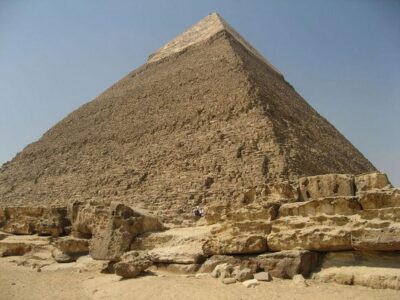
VIP All inclusive Best of the best Giza Pyramids,Sakkara,Memphis
Read our review →
Pyramids of Giza, Sphinx, Saqqara & Memphis Tour
Read our review →
Cairo 8 Hour Private Tour of Pyramids, Egyptian Museum and Bazaar
Read our review →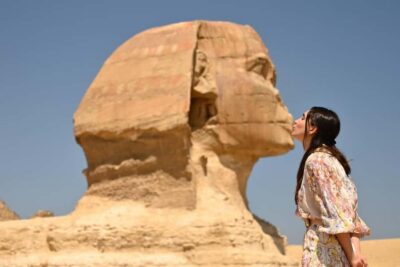
Half-Day Tour to Pyramids of Giza and the Sphinx
Read our review →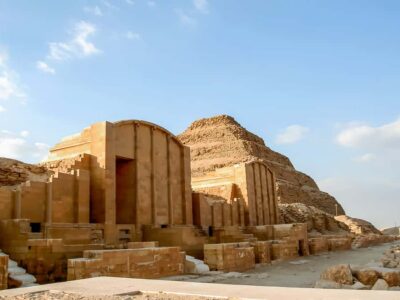
Private ViP all-inclusive Giza Pyramids,Sphinx,Inside Pyramid
Read our review →Browse the lists this tour appears in