
Reviewed · NILE CRUISES
4Day 3-Nights Nile Cruise From Aswan To Luxor
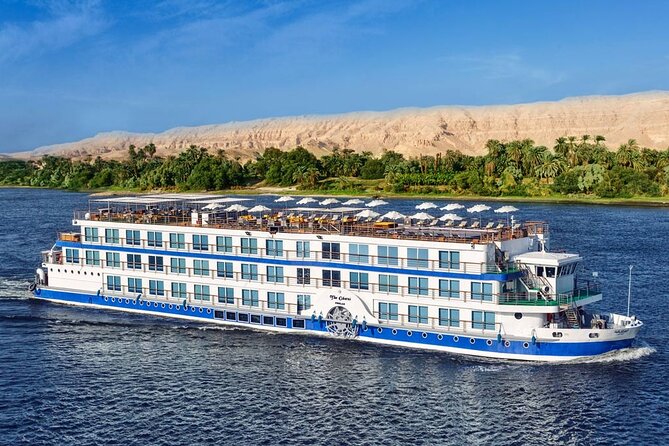
This Nile cruise stands out because it strings together Egypt’s biggest landmarks in a logical, river-based route. You’ll go from the dam and sacred island temple in Aswan to the storied burial sites and temple complexes in Luxor, without living out of a suitcase every day.
I especially like that the trip pairs Egyptologist-led guided visits with included admissions. I also like the comfort angle: a 5-star onboard cabin plus door-to-door air-conditioned transfers so you are not wrestling with logistics between stops.
One thing to think about before you book: the schedule is packed with major sites, so you should plan for early starts and a fair amount of walking on ancient, uneven ground. If you know you need lots of downtime, build it in when you’re on board.
Key things I’d highlight before you go
- A/C door-to-door transfers keep the day-to-day stress low
- Egyptologist-led tours at the big-name stops, with admission included
- Full-board meals starting with lunch on day 1 and ending with breakfast on the last morning
- Aswan High Dam plus Philae on day 1, then Kom Ombo and Edfu in the middle
- West Bank classics in Luxor, including the Valley of the Kings and Hatshepsut
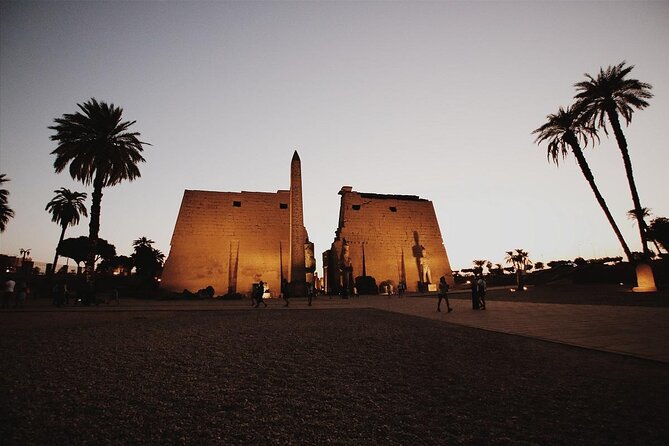
- Luxor Temple and Karnak later in the route, so you end on monument power
Why this Aswan to Luxor Nile route works so well
A Nile cruise can feel either romantic and slow, or efficient and packed. This one leans efficient, in a good way. The river ride is not just scenery, it’s your travel backbone, and the itinerary follows Egypt’s story beats across both cities.
What you’re really buying is time. You get guided visits to major temples and tomb areas, plus transportation that moves you from site to site without you hunting down tickets, meeting points, or bus routes. When the days are structured around the boat schedule, it’s easier to keep your energy focused on the monuments instead of the logistics.
Also, the timing makes sense. You start with Aswan’s modern-water story and sacred island heritage, then progress through Kom Ombo and Edfu, and finally land in Luxor for the West Bank necropolis and the grand temple complexes on the east side. That flow helps the sites make more sense as a single arc.
More Nile Cruises in Aswan
- 4-Days Nile Cruise From Aswan To Luxor including Abu Simbel and Hot Air Balloon
★ 5.0 · 3,142 reviews - 4-Day 3-Night Nile Cruise from Aswan to Luxor&Abu Simbel+Balloon
★ 5.0 · 2,023 reviews - 4-Day 3-Night Nile Cruise from Aswan to Luxor including Abu Simbel, Air Balloon
★ 4.5 · 612 reviews
Pickup, mobile ticket, and air-conditioned transfers
One practical win here is the way ground transfers are handled. You get a round-trip air-conditioned minivan and door-to-door pickup and drop-off. That matters because Aswan and Luxor are not small towns where you can casually hop between key sites at will. Comfort and predictability reduce the usual “where do we go next?” frustration.
You also receive a mobile ticket, which helps with check-in and keeps everything in one place on your phone. The tour is described as a private activity, meaning only your group participates, not a big free-for-all mixing everyone together.
If you like clear boundaries, this setup tends to feel good: you show up, you go, and the schedule is managed for you.
Day 1 in Aswan: High Dam, Philae, then tea and sailing
Day 1 is a strong opener because it starts with the Nile’s modern chapter and then flips back to ancient worship.
Aswan High Dam: the Nile’s “modern engine”
You’ll visit the Aswan High Dam, a rock-fill dam fed by the Nile and associated with Lake Nasser. The tour frames its construction timeline and its huge funding scale, which gives you an immediate sense of why this river matters beyond ancient monuments. It’s a good mental warm-up before you start seeing temples and gods again.
This stop is listed as about 3 hours with an admission ticket included, so it’s not a quick photo stop. If you like context, this is where you get it.
More Nile cruises:
- From Aswan: 4-Day Nile Cruise from Aswan to Luxor with Guide
★ 4.1 · 593 reviews - 4-Days Nile Cruise From Aswan To Luxor including Abu Simbel and Hot Air Balloon
★ 4.5 · 509 reviews - 4-Day 3-Night Nile Cruise from Aswan to Luxor – Private Tour
★ 5.0 · 369 reviews - 4 Days Nile Cruise from Aswan to Luxor including Abu Simbel and Hot Air Balloon
★ 4.5 · 356 reviews
Philae Temple: Isis and a temple moved for survival
Then you go to the Temple of Philae, dedicated to the goddess Isis. The key detail here is the temple relocation after the Aswan Dam threatened the original site. That turns Philae from a pretty location into a story about cultural preservation under real pressure.
The itinerary also includes time onboard and lunch, plus sailing on a felucca around Kitchener’s Island and the Agha Khan Mausoleum. That’s a nice rhythm shift after temple walking: you still get the river experience, but with a calmer pace.
An afternoon tea stop and dinner onboard round out the day, and you overnight in Aswan. This works well if you want your day to end comfortably without extra transportation.
Possible drawback to plan for on day 1: you may feel the day’s momentum, especially if you’re arriving from elsewhere the same morning. The mix of dam visit and temple touring is substantial.
Day 2: Kom Ombo’s double temple, plus navigation to Edfu
Day 2 brings you to Kom Ombo Temple, and it’s a fascinating choice because it’s described as the only double temple in Egypt, shared by two gods. You’ll focus on the crocodile-headed god Sobek and the falcon-headed god Haroeiris. That “two halves” design is exactly the kind of detail that makes Kom Ombo worth slowing down for.
How Kom Ombo changes the tone
Compared with Philae’s Isis theme, Kom Ombo’s split devotion gives you a different lens on Egyptian religious life. It’s not just one god and one temple layout. You see how the same building space can serve more than one cult focus.
Optional add-on context
The schedule notes that Abu Simbel is optional. Since it is not included, you would need to decide based on your priorities and time on the ground. If you’re the type who wants the big-ticket off-route sites, Abu Simbel may be tempting. If you prefer keeping each day focused, you can skip it and let the cruise do its job.
Edfu overnight
After Kom Ombo, you navigate to Edfu and overnight there. This sets you up perfectly for the next day’s temple visit in the Edfu area.
Day 3 morning: Edfu Temple, then Luxor West Bank tombs
Day 3 is where the cruise earns its reputation for giving you “the classics,” and it does it in a smart order: first Edfu, then the Luxor West Bank.
Edfu Temple: Horus in one of the best-preserved settings
You’ll visit Edfu Temple, dedicated to the falcon god Horus. It’s specifically described as the most well preserved temple in Egypt, and that kind of condition matters. When walls and carvings survive well, you can read the building more easily and get a better sense of the original design.
Navigation and crossing to the West Bank
After breakfast onboard, you navigate via Esna, then cross to the West Bank. That river crossing is more than a transfer, it signals a change in mood. The West Bank is about funerary tradition and royal tomb landscapes.
Valley of the Kings and the necropolis of Thebes
The itinerary includes the Necropolis of Thebes, the Valley of the Kings, and time with the Temple of Hatshepsut, plus the Colossi of Memnon. These are not random picks. Together they cover burial practices, mortuary temple design, and colossal statues tied to the kingship myth cycle.
You’re guided through the West Bank with a focus on what each site likely meant and how they connect. The Valley of the Kings is the centerpiece, and it’s usually the stop where you feel the scale of planning that went into royal burials.
What you’ll want to manage: walking time and sun exposure. You can only truly enjoy these sites if you pace yourself and keep water handy, especially during warm months.
Colossi of Memnon: quick, powerful, and easy to remember
The Colossi of Memnon are described as massive stone statues, and they’re usually the kind of landmark you remember even if you later forget smaller details. They help you get “ground truth” on the scale of ancient construction.
Afternoon rhythm on the boat
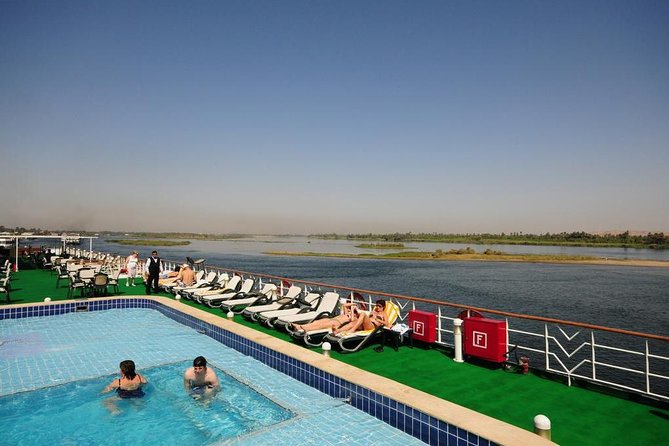
After the West Bank touring, you return for afternoon tea and relaxing onboard, including use of the swimming pool. Then you enjoy dinner and a last overnight on board. This is a good design choice. It gives you a recovery pocket before the Luxor temple complexes.
Luxor Temple and Karnak: finishing with the east-side monuments
Later on day 3 you move from the West Bank’s tomb focus to Luxor’s great temple energy.
Luxor Temple: the bigger-than-you-expect complex
You’ll visit Luxor Temple, described as fabulous, and then the Karnak complex. This is where you get a sense of how monumental Egyptian building really was. Luxor Temple gives you one major stage, and Karnak adds the bigger canvas.
Karnak: Hypostyle Hall and the column forest
Karnak is presented as temples built across different reigns over about 2000 years. That matters because it’s not one ruler’s idea in isolation. It’s Egypt’s long-term religious and political storytelling, layered over time.
The itinerary highlights the Hypostyle Hall, noting it covers about 5,356 sq meters and includes 134 colossal columns about 70 feet high. Even if you are not a museum person, those numbers help you wrap your head around what you’re looking at. You are not just seeing ruins, you are standing in the framework of a massive architectural plan.
What’s the upside of ending with Karnak?
Karnak can overwhelm people, especially on a first Egypt trip. Ending your cruise portion here gives you the context you built earlier on the West Bank. You’ve already learned about kingship tombs and temple roles, so the east-side spaces land with more meaning.
Meals and onboard comfort: the “low effort” part of the trip
This cruise is set up as full-board. Meals start with lunch on the first day and end with breakfast on the last day. You also get onboard lunch time and dinner each night, plus afternoon tea breaks.
That means you don’t have to hunt for food between sites. In Egypt, that freedom is a real value. Restaurant choices can turn into an exhausting game, especially when you’re already dealing with heat and walking.
Drinks are not included, so you should expect to pay extra for beverages. Gratuities are also optional, so if you’re someone who tips, plan for it in your budget.
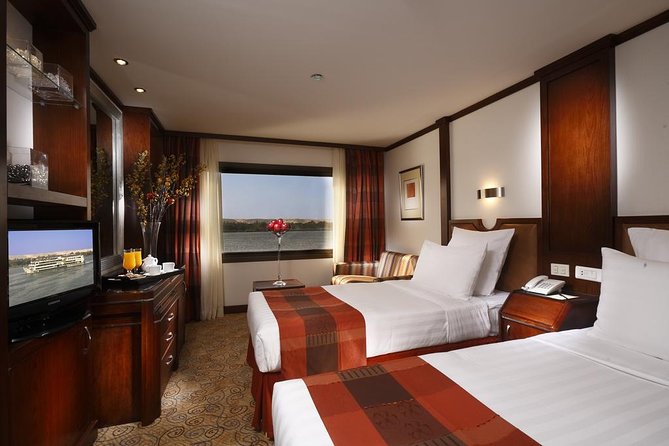
The cabin is listed as having all facilities, and the cruise is described as five-star accommodation. Even if you don’t expect luxury to be life-changing, a comfortable room matters. After early sightseeing, you want a place to recharge, shower, and reset for the next day.
Price and value: is $542.86 a fair deal?
At $542.86 per person, you’re paying for a lot that would cost extra if you booked everything separately. The itinerary includes:
- 3 nights in a 5-star cruise cabin
- Egyptology guide support and guided visits
- Air-conditioned door-to-door transfers by minivan
- Entrance fees
- Full-board meals (lunch, breakfast, dinner, plus tea)
- A set of major monuments across Aswan, Kom Ombo, Edfu, and Luxor
The biggest value here is coordination. Egypt can be straightforward, but it can also become time-consuming if you are assembling your own route. A packaged cruise with included admissions and meals usually wins when you want to spend your limited vacation days on monuments, not on planning sessions and ticket lines.
That said, the price can feel different depending on your style. If you already planned to see every site anyway, and you like independent travel, you might compare against a DIY mix. But if you want smooth pacing, guidance, and less hassle, this one is priced like a convenience deal.
Who this Nile cruise fits best, and who might not love it
This experience is best for you if you want a structured, guided introduction to Upper Egypt. It’s a strong match for:
- Couples and small groups who want a comfortable pace with major sights covered
- First-time Egypt visitors who benefit from an Egyptologist-led explanation
- People who like the idea of changing locations by boat, not by long daily road trips
It may feel less ideal if:
- You have limited mobility or fatigue tolerance. You will be moving through multiple historic sites with walking on uneven ground.
- You dislike early starts or busy days. The itinerary stacks major stops.
On the plus side, it’s described as most travelers can participate, and you are near public transportation. Still, the on-site walking is the part you should take seriously when deciding.
Smart tips to make the most of each day
Here are a few practical things to help your trip feel smoother, based on how this schedule plays out.
- Bring comfortable shoes with good grip. Temples and tomb areas often mean worn stone surfaces and uneven steps.
- Plan for sun and heat, especially on West Bank days. You’ll want a hat and something for water and hydration.
- Use onboard downtime. When you get afternoon tea and pool time, take it. It’s your reset button.
- Ask your guide questions during the guided segments. The value of Egyptology-led touring is not just seeing, it’s understanding why these places were built and how they functioned.
- If you’re tempted by optional add-ons like Abu Simbel, compare your energy level. This cruise already packs in the core route from Aswan to Luxor.
The bottom line, should you book this cruise?
I’d book this 4-day, 3-night Aswan to Luxor cruise if you want a guided, comfortable path through the river’s greatest monuments, with meals, admissions, and A/C transfers handled for you. It’s especially compelling if you appreciate explanations that connect the sites instead of treating each temple as a disconnected postcard.
You should reconsider if you want a super-slow cruise with minimal walking, or if you know you need lots of quiet time between major attractions. In that case, you might look for a shorter list of sites or a more relaxed itinerary.
If your goal is to go from Aswan’s modern Nile story to Luxor’s West Bank tomb power and Karnak’s column hall scale, this route does that job in a clean, well-paced way.
FAQ
What is the duration of the cruise?
The experience is listed as 4 days and approximately 3 nights, cruising from Aswan to Luxor.
Where does the tour start and end?
It starts in Aswan and ends in Luxor, with departure and disembarkation after breakfast on the last day.
What is included in the price?
The package includes 3 nights accommodation on the Nile Cruise, an Egyptology guide, air-conditioned round-trip minivan transfers, deluxe air-conditioned vehicle throughout, meals (lunch on day 1 through dinner on the listed days and breakfast on the last day), a cruise cabin with facilities, entrance fees, and the guided historical tours.
Are drinks included?
No. Drinks are not included.
Are tips included?
No. Gratuities are optional.
What optional activities are mentioned?
The itinerary notes Abu Simbel as optional, plus the option of a Nubian village visit and a hot air balloon ride. These are not included in the base package.
What is the cancellation policy?
Free cancellation is offered. You can cancel up to 24 hours in advance for a full refund, with the cutoff based on the experience’s local time.
Reviewed most recently around Aswan
- Private Day Tour to Abu Simbel Temples and Nubian Village From Aswan★ 5.0 · 20 reviews
- 4 Days 3 Nights Cruise Aswan To Luxor, Abu Simbel and Air Balloon★ 5.0 · 20 reviews
- Private Day tour to High Dam&Unfinished Obelisk&Philae From Aswan★ 5.0 · 20 reviews
- Private Tour in Aswan : Nubian Village and Felucca★ 5.0 · 20 reviews
- Best Half Day Private Tour of Aswan★ 4.5 · 21 reviews
- Abu Simbel Excursion Day Trip from Aswan (Sharing Bus without Guide)★ 4.0 · 21 reviews
- Aswan to Luxor via kom ombo and EDFu temples★ 4.5 · 21 reviews
- Aswan : Private Tour to Unfinished Obelisk, High Dam and Philae Temple by BOAT★ 4.5 · 22 reviews
Nile Cruises, compared.
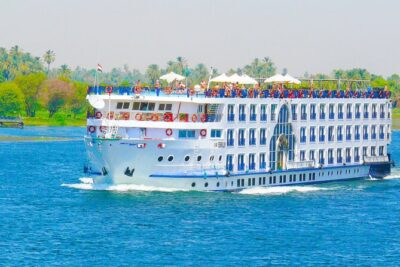
4-Days Nile Cruise From Aswan To Luxor including Abu Simbel and Hot Air Balloon
Read our review →
4-Day 3-Night Nile Cruise from Aswan to Luxor&Abu Simbel+Balloon
Read our review →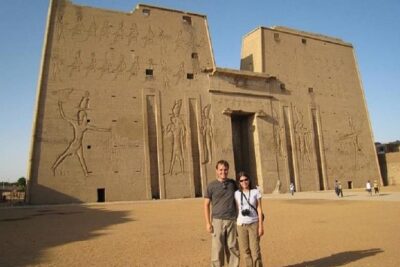
4-Day 3-Night Nile Cruise from Aswan to Luxor including Abu Simbel, Air Balloon
Read our review →
4-Day Nile Cruise from Aswan to Luxor with Guide
Read our review →4-Days Nile Cruise From Aswan To Luxor including Abu Simbel and Hot Air Balloon
Read our review →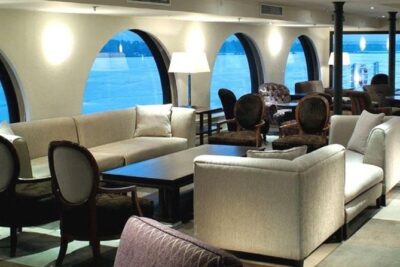
4-Day 3-Night Nile Cruise from Aswan to Luxor – Private Tour
Read our review →4 Days Nile Cruise from Aswan to Luxor including Abu Simbel and Hot Air Balloon
Read our review →
4-Day 3-Night Nile Cruise from Aswan to Luxor With Balloon and Abu Simbel
Read our review →Browse the lists this tour appears in