

Reviewed · NILE CRUISES
Dahabiya Nile Cruise: Aswan to Luxor – 4 Days/3 Nights
A Dahabiya Nile cruise is interesting because you slow way down. You move between Aswan and Luxor like you are watching Egypt from the water, not standing in lines on land. One big reason this style works is the mix of guided temple time plus long stretches of sailing and quiet boat life, including sunrise moments on deck.
I love how the itinerary hits the best-known sites on the Nile without feeling rushed. You get major stops like Philae and Karnak, plus standout temples like Kom Ombo and Edfu that many first-time trips skip. I also like the “small boat” feel that shows up in real feedback, including cozy shared meals, a crew that keeps things smooth, and calm evenings that feel romantic rather than chaotic.
The one consideration is that the Nile schedule depends on river conditions. On some days, you might find the boat is towed rather than fully powered, which usually keeps cabins quieter, but it is still worth expecting a change in how “sailing” feels day to day.
Key points before you go
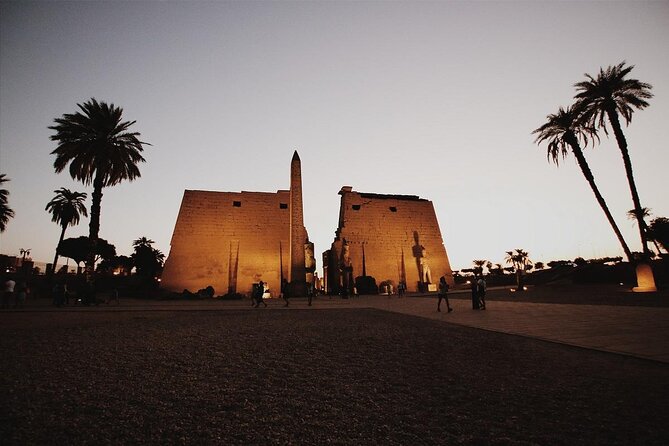
- Small-boat pace: temple visits plus slow cruising, with plenty of time to breathe between sights
- Sunrise and sundeck time: mornings on the water at a comfortable rhythm, not a wake-up-the-dead-of-night thing
- A strong temple lineup: Philae, Kom Ombo, Edfu (Horus), El Kab, Valley of the Kings, Hatshepsut, Memnon, Karnak
- Egyptologist guidance included: the guide role matters, especially for understanding what you are seeing
- Full board on board: breakfast, lunch, and dinner are included, plus tea, coffee, and natural water
- Guides can be a highlight: names that show up in real experience include Ahmed, Mohamed Salem, and Aref
Aswan to Luxor by Dahabiya, why the pace feels different
This cruise is built around a simple idea. Instead of checking temples back to back all day, you get guided visits, then you return to the boat and let the Nile do the work. That time shift matters. Temples feel less like a checklist and more like you are meeting Egypt in chapters.
You start in Aswan, then the trip walks you north through some of the best-known Nile temple sites, ending in Luxor where you get both the west bank funerary monuments and the east bank’s Karnak complex. Along the way, the cruise adds a few quieter moments, like a countryside walk from your first landing and moor time at small islands.
Also, this is a private tour in the sense that only your group participates. That tends to mean fewer crowd-shuffle moments and more space for the guide to answer your questions.
More Nile Cruises in Aswan
- 4-Days Nile Cruise From Aswan To Luxor including Abu Simbel and Hot Air Balloon
★ 5.0 · 3,142 reviews - 4-Day 3-Night Nile Cruise from Aswan to Luxor&Abu Simbel+Balloon
★ 5.0 · 2,023 reviews - 4-Day 3-Night Nile Cruise from Aswan to Luxor including Abu Simbel, Air Balloon
★ 4.5 · 612 reviews
Day 1 in Aswan: Philae Temple, Isis, then a countryside walk
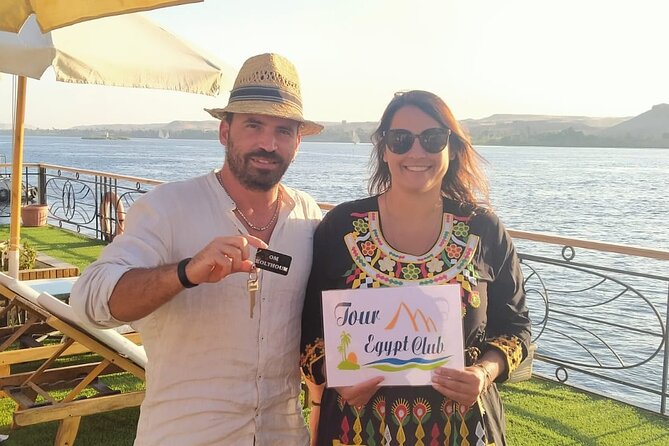
Your day starts with pickup from your Aswan hotel, station, or airport. A guide meets you for the Temple of Philae, devoted to the goddess Isis. Philae is one of those sites where the setting helps you understand why it mattered, since it sits in the Nile world more than many inland ruins do.
After the temple visit (about 4 hours total for this day’s first leg), you board your Dahabiya. Then you get your first “on-water” moment, sailing to a small Nile island for a walk in the countryside. This is a good break from the temple intensity. Even if you do not chase museums, this small land-and-walk time helps you reset.
Once you return onboard and have lunch, you continue sailing toward Kom Ombo.
Practical note: temples start earlier in the day for a reason, and Philae can be brighter and warmer than you expect. Bring a hat and sun protection, and keep water handy even though natural water is provided.
Kom Ombo: the crocodile-god temple on a bend in the river
Kom Ombo is one of the temples that feels “designed for the Nile.” The site sits on a promontory at a bend in the river, so you are not just walking through columns. You are reading a temple that was placed where the river would be part of daily life.
This temple is unique because it is dedicated to two sets of gods. You get the crocodile god Sobek and Haroeris, meaning Horus the Elder. That two-focus layout makes the visit more interesting than a single-deity stop, because you can compare carvings and themes as you move around.
The visit includes admission, and after Kom Ombo, you continue with transfers and sailing toward Gebel el-Silsila. This part of the journey is the “transition chapter,” moving you from Aswan’s temple zone toward the middle stretch of the river where rock and quarry history begins to show up.
Day 2: Gebel el-Silsila quarries, then Edfu at sunrise
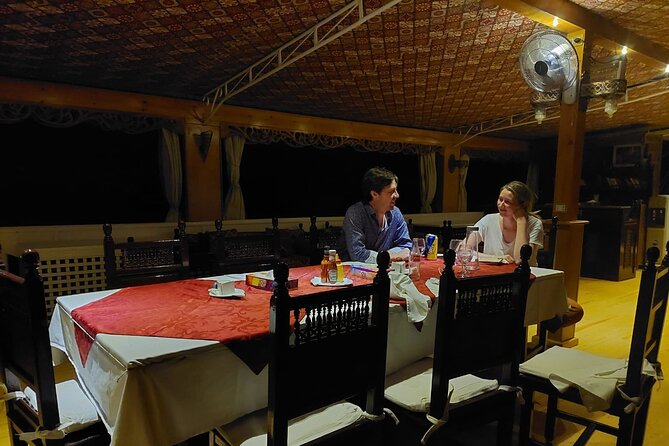
Day 2 has the kind of rhythm that makes a Dahabiya trip feel worth it. You enjoy an easy morning start, including sunrise from the sundeck, then breakfast before sailing begins.
Your first stop is Gebel el-Silsila, with rock-cut chapels linked to rulers and sandstone quarries. You will be able to see chapels associated with Horemheb, Seti I, Ramses II, and Merenptah, plus the quarry landscapes tied to how stone was sourced for major building projects. Even without a “sculptor’s eye,” the place helps you connect the dots between the raw material of empire and the monuments you later visit.
After Gebel el-Silsila, you continue sailing to Edfu. The Edfu temple visit is guided and includes admission. When you arrive, you meet your guide and head inside for the Temple of Horus, which is widely seen as one of Egypt’s best-preserved cult temples. The mythology connection here is strong: it is described as the place where the falcon-headed Horus avenged the murder of his father Osiris by killing Seth.
If you want one “aha moment” on this cruise, it is often Horus. The carvings and layout make the story feel less like a random legend and more like a visual program.
More Nile cruises:
- From Aswan: 4-Day Nile Cruise from Aswan to Luxor with Guide
★ 4.1 · 593 reviews - 4-Days Nile Cruise From Aswan To Luxor including Abu Simbel and Hot Air Balloon
★ 4.5 · 509 reviews - 4-Day 3-Night Nile Cruise from Aswan to Luxor – Private Tour
★ 5.0 · 369 reviews - 4 Days Nile Cruise from Aswan to Luxor including Abu Simbel and Hot Air Balloon
★ 4.5 · 356 reviews
Edfu Temple and Besaw Island overnight mooring
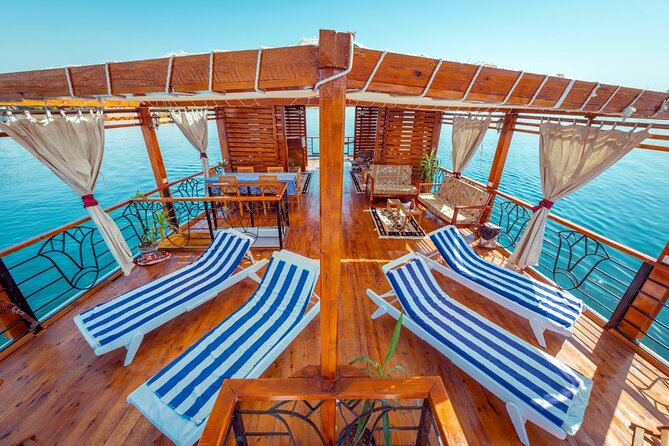
After spending time at Edfu, you moor for the night at Besaw Island. This is one of those logistics points that is actually part of the experience. The Dahabiya model works because the boat is not just transport. It is also your evening base.
Back onboard, you get dinner and the calm shift from day heat to river air. Many cruise moments feel similar, but the Nile evening on a smaller boat tends to feel more natural and less busy.
One small heads-up: in some real trips, sailing can change on the water. You might hear that you are towed rather than fully sailing at times. Either way, the cabin experience is often described as quiet, so you still get that decompression time.
Day 3: El Kab, cliff tombs, and the Nekheb story
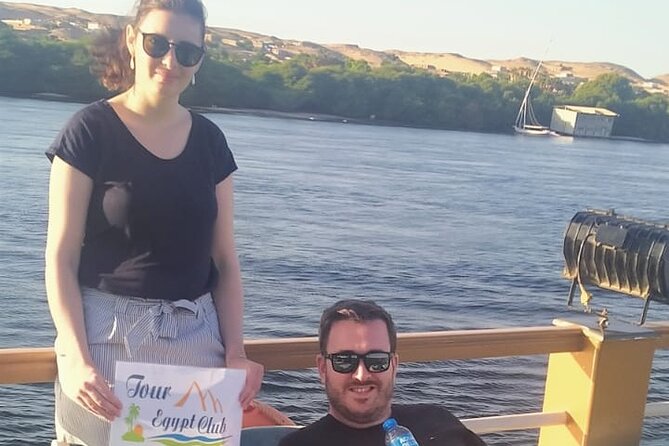
Day 3 starts with breakfast onboard, then you sail to El Kab. Once you arrive, you are met by your personal guide for the ancient town of Nekheb and its remains.
El Kab is older and quieter in feel than many major tourist sites. You visit temple remains and tombs cut into the cliffs. That cliffside design is a big part of why the place works. You are not only looking at stone, you are looking at a burial landscape that had to match the geography.
This stop runs about 2 hours with admission included, so it fits well between sailing time and later transfers. After the El Kab visit, you get transferred back to your Dahabiya and start sailing toward Esna.
Day 3 is also when the cruise begins to feel like it is coming into focus. You are moving from temple stops that explain how Egypt built its religious world into the final days when you see kings, queens, and power made monumental on the west and east banks of Luxor.
Day 4 in Luxor: Valley of the Kings, Hatshepsut, Memnon, Karnak
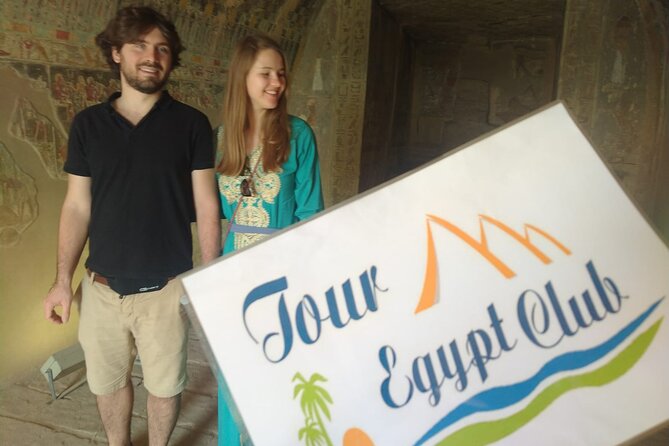
This is the packed day, but it is still structured. After breakfast, you check out from the Dahabiya and then meet your guide, traveling by air-conditioned car to Luxor’s major sights.
Valley of the Kings
First stop is the Valley of the Kings. You will visit 3 tombs, and your schedule excludes the Tomb of King Tutankhamun. If you are the kind of person who hates choosing between tombs, this is actually helpful. You still get variety without trying to solve the “which tomb is best” problem yourself.
The valley can feel grand even when tomb interiors are dim and cool. The guide time helps you understand what you are seeing, so it does not become a series of rooms with similar paintings.
Temple of Hatshepsut at Deir el Bahari
Next is the Temple of Queen Hatshepsut at Deir el Bahari. Hatshepsut ruled around 1490 to 1469 B.C., and this temple is tied directly to her reign. One of the best ways to appreciate it is simply to slow your walking and take in the terraces and position of the structures. It is built to be looked at from multiple angles, not just from a single path.
Colossi of Memnon
Then you stop at the Colossi of Memnon, the two huge figures of Amenhotep III. They are about 18 meters high and were originally part of a larger funerary complex. Egyptologists are currently excavating that temple area, and discoveries can be seen behind the colossi.
This is one of those “quick stop, big impact” moments. You see them first from the plain, and they feel like monuments from a different scale of time.
Karnak Temple
Finally comes Karnak Temple, one of the most extensive temple complexes in Egypt, spread over more than 2 sq km. The site covers sanctuaries, kiosks, pylons, and obelisks dedicated to the Theban triad, and the Temple of Amun sits at the center as the earthly home of the local god.
Karnak’s story is also about time. Built, added to, dismantled, restored, enlarged, and decorated over nearly 1500 years, it was the most important place of worship in Egypt during the New Kingdom. Your guided visit here is about 1 hour, which means you will not see everything. But you will see enough to understand why people keep coming back.
After Karnak, the trip ends with drop-off in Luxor, with options including airport, station, or hotel.
Boat life: cabins, meals, crew, and quiet Nile time
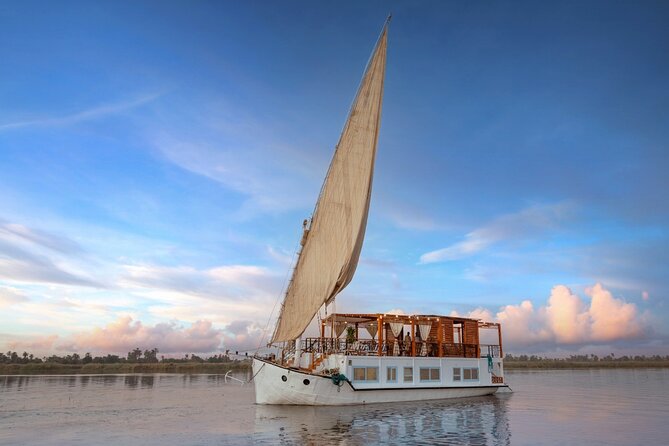
This is where many people decide if a cruise is “worth it” or “not worth it.” The good news is that this Dahabiya experience seems to deliver on the boat part, not just the tour part.
You get full board: breakfast (3), lunch (3), dinner (3). Tea and coffee are included, and there is natural water. That matters because it keeps you from constantly thinking about meals during a tight schedule of temples.
Food gets described as traditional and very good, with staff that stays on top of details. There is also evidence of dietary care, including a vegan-friendly setup in at least one experience, where the onboard chef handled special needs.
The crew gets praise for being friendly, discreet, and focused on making the day run well. On a small boat, that makes a bigger difference. You notice the small things, like how quickly you are taken care of and how smoothly the ship transitions between sailing and sightseeing.
Finally, many people love the way the boat lets you watch the Nile close up. You might see birds, watch large cruise boats pass, and enjoy sunsets without feeling stuck in a packed crowd.
Price and value: what $1,123 covers and what to plan for
At $1,123 per person for 4 days and 3 nights, you are not just paying for a hotel. You are paying for a guided temple circuit plus accommodation onboard plus meals plus most admissions.
Included value here is strong:
- 3 nights onboard on a full board basis
- Professional Egyptologist guide during the tours
- Entrance fees for the sites listed in the itinerary
- All transfers by modern air-conditioned deluxe vehicle, plus transfer from Esna to Luxor
- Meals and drinks basics (tea, coffee, natural water)
What is not included is straightforward: tipping and personal expenses. That means you should budget a bit for gratuities and any extras like souvenirs or drinks beyond what is included.
Is $1,123 “cheap”? No. But given the number of major temples, the fact that guides and admissions are included, and the fact that you get the Nile experience as your transport bed, it reads as fair value for a first-timer who wants the highlights without building the route themselves.
One more value angle: this tour gets booked about 30 days in advance on average. That suggests people plan this trip as a priority, not as an afterthought. If you have fixed dates, book earlier rather than later.
How to make the most of it, packing and timing tips
You will spend a good amount of your day walking in temple areas and moving between sites. Your checklist should be simple:
- A hat, sunscreen, and sunglasses, since the sun can hit hard during open courtyards
- Comfortable shoes for uneven stone floors and steps
- A light layer for early mornings and tomb interiors that can feel cool
- A small day bag for water and essentials
On a Dahabiya, you also benefit from simple deck habits:
- Take advantage of sunrise time if you can. It is one of the smoother memories of the whole trip.
- Keep your camera ready after meals and during sailing windows, since the boat view can be calm and surprisingly lively.
- Bring patience for schedule flow. Temples, sailing, and transfers have their own timing, and a small boat keeps you close to the natural pace of the river.
If you care about food timing, note that meals are onboard and included, so you will not be scrambling for lunch near each stop.
Who this cruise suits best
This Dahabiya route fits best if you want:
- A balanced blend of temple time and downtime on the Nile
- Big-name Luxor sights plus key stops that explain the river corridor
- A quieter alternative to huge cruise boats, where the day can feel less rushed and more personal
- A guided experience where you can ask questions and learn what you are looking at
It also helps if you like the idea of waking up on the water. Even if you come for the temples, the boat nights change how you remember the trip.
If you are the kind of traveler who only wants museums with timed entry tickets and nothing else, you might feel the itinerary is still “too broad.” But if you want Egypt in motion, this fits.
Should you book this Dahabiya Nile Cruise Aswan to Luxor?
I think you should book if you want a classic Nile highlight route done in a small, calmer way. The strongest reason is the combination of major temples on both sides of Luxor with an onboard base that includes meals and real downtime. You get guides, admissions, and transfers handled, so you spend your energy on soaking it all in.
I would not book if your top priority is long, open-ended sailing time with zero variation in how the boat moves. Since the Nile can dictate how sailing works, expect some days to feel more like cruising with added logistics than pure open-water rowing fantasy.
My honest call: if you want a high-value, structured Aswan to Luxor experience that still feels human in scale, this Dahabiya itinerary is a smart choice.
FAQ
What is the duration of the Dahabiya Nile cruise from Aswan to Luxor?
It runs for 4 days and 3 nights.
Where does the tour start and end?
It starts in Aswan (pickup from Aswan airport, station, or hotel) and ends in Luxor with drop-off available around the Luxor corniche area and other choices in Luxor.
How many tombs do you visit in the Valley of the Kings?
You visit 3 tombs, excluding the Tomb of King Tutankhamun.
Which temples are included during the trip?
The included visits are Philae Temple, Temple of Kom Ombo, Temple of Horus in Edfu, El Kab (Nekheb), Valley of the Kings, Temple of Queen Hatshepsut at Deir el Bahari, Colossi of Memnon, and Karnak Temple.
Is pickup included?
Yes. Pickup is offered from your hotel, station, or Aswan airport.
Are entrance fees included?
Yes. Entrance fees are included for the sites listed in the itinerary.
What meals are included while onboard?
Breakfast, lunch, and dinner are included for the 3 days noted in the itinerary, with tea and coffee and natural water also included.
Is the tour private or shared?
It is described as private, with only your group participating.
What costs extra besides the tour price?
Tipping and personal expenses are not included.
Can I cancel and get a refund if plans change?
You can cancel up to 6 days in advance for a full refund. Shorter timelines reduce the refund amount, and canceling less than 2 days before does not get refunded.
Reviewed most recently around Aswan
- Private Day Tour to Abu Simbel Temples and Nubian Village From Aswan★ 5.0 · 20 reviews
- 4 Days 3 Nights Cruise Aswan To Luxor, Abu Simbel and Air Balloon★ 5.0 · 20 reviews
- Private Day tour to High Dam&Unfinished Obelisk&Philae From Aswan★ 5.0 · 20 reviews
- Private Tour in Aswan : Nubian Village and Felucca★ 5.0 · 20 reviews
- Best Half Day Private Tour of Aswan★ 4.5 · 21 reviews
- Abu Simbel Excursion Day Trip from Aswan (Sharing Bus without Guide)★ 4.0 · 21 reviews
- Aswan to Luxor via kom ombo and EDFu temples★ 4.5 · 21 reviews
- Aswan : Private Tour to Unfinished Obelisk, High Dam and Philae Temple by BOAT★ 4.5 · 22 reviews
Nile Cruises, compared.
4-Days Nile Cruise From Aswan To Luxor including Abu Simbel and Hot Air Balloon
Read our review →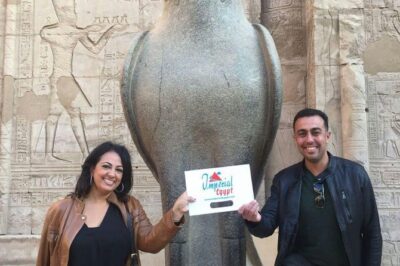
4-Day 3-Night Nile Cruise from Aswan to Luxor&Abu Simbel+Balloon
Read our review →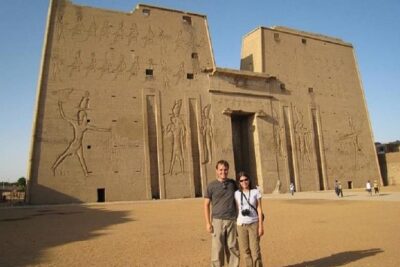
4-Day 3-Night Nile Cruise from Aswan to Luxor including Abu Simbel, Air Balloon
Read our review →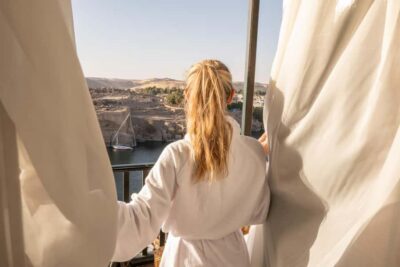
4-Day Nile Cruise from Aswan to Luxor with Guide
Read our review →4-Days Nile Cruise From Aswan To Luxor including Abu Simbel and Hot Air Balloon
Read our review →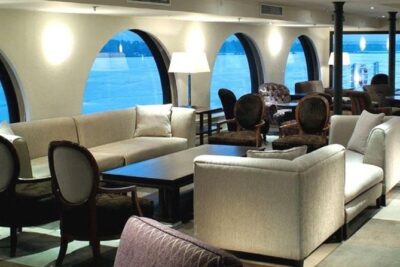
4-Day 3-Night Nile Cruise from Aswan to Luxor – Private Tour
Read our review →4 Days Nile Cruise from Aswan to Luxor including Abu Simbel and Hot Air Balloon
Read our review →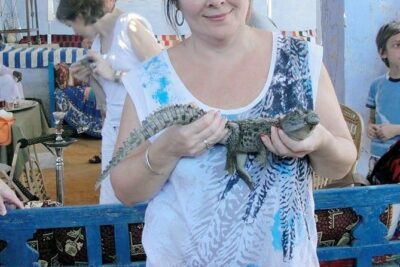
4-Day 3-Night Nile Cruise from Aswan to Luxor With Balloon and Abu Simbel
Read our review →Browse the lists this tour appears in