
Reviewed · PRIVATE
Cairo Private Day Tours: Discover Islamic and Coptic Cairo
This private day tour is interesting because you shift from Coptic Cairo to Islamic Cairo in one smooth circuit, seeing how Egypt’s religious life unfolded over centuries. I love the door-to-door private transfers from places across Cairo and Giza, and I love how the route strings together landmarks people actually talk about, like the Hanging Church and Khan el-Khalili. One possible drawback is that the day can feel more or less satisfying depending on whether you add a guide and the right entry tickets.
You can go “easy mode” with pickup, an A-C car, bottled water, and a mobile ticket, or upgrade for a guide, entry fees, and lunch at a local restaurant (often koshari). If you land with a strong guide such as Menna or Rania, the stories behind the churches and mosques get much more human and less like reading signs.
The core time frame is about 6 hours, and you’ll get chances to enter three mosques as part of the Islamic Cairo half. Just keep in mind Cairo traffic can slow things down, so timing and pace are part of the experience.
Key highlights you should care about
- A private, religious-history loop across Coptic Cairo, Islamic Cairo, and Khan el-Khalili
- Private pickup and drop-off using an A-C car, including addresses across Cairo and Giza
- Upgrades that actually change the experience (guide, tickets, and lunch options)
- Big monuments with real context, from the Hanging Church to the Citadel
- Early Islamic to Mamluk-era stops through Amr Ibn Al-As Mosque, Sultan Hassan, and more
- Shopping time in Khan el-Khalili without having to manage the logistics yourself
What You Really Get in a 6-Hour Private Day
This is a private day tour, so it is only your group in the car. That matters in Cairo, where a driver and schedule can mean the difference between seeing the sites up close versus spending half the day in traffic with strangers.
The base package is priced at $8 per person, but the value is not only in the places you see. It is also in the “friction removed” parts: hotel pickup and drop-off, A-C private transport, and bottled water. If you choose the upgrade options, the day becomes more complete because entry fees and lunch get handled, and a guide can connect the dots between Coptic, Jewish, and Islamic sites.
At about 6 hours, you are not doing a sightseeing marathon. The trade-off is that each stop is timed, so you will want to walk with purpose. If you prefer long museum-style pacing, you might want to add extra time on a separate day.
More of Coptic Cairo:
- Old Cairo: Full-Day Islamic and Coptic Cairo Tour with Lunch
★ 4.6 · 688 reviews - 4-hours private Tour Islamic Mosque,Coptic Cairo &Khan el-Khalili
★ 5.0 · 489 reviews - Half-day Tour in Churches of Cairo
★ 5.0 · 207 reviews
Starting in Coptic Cairo, Where Old Cairo Feels Personal
Coptic Cairo is the heart of Old Cairo’s Christian legacy, and this tour starts there on purpose. You are in an area tied to traditions that include the Holy Family visiting the region, and you also get linked to the long story of Christianity in Egypt.
You do not just pass by churches and call it a day. The Coptic Cairo area includes major historical points like the Babylon Fortress area and church sites clustered within the Old Cairo district. That clustering is why this half works so well in a single outing, especially if you are seeing Cairo for the first time and want context fast.
One practical tip: this is a sacred-history day, so bring a calm mindset. Some churches and indoor spaces can have quiet rules and limited areas for photography. Dress for respect, and keep your questions ready for the guide if you upgrade.
The Hanging Church, aka El Muallaqa, with Icon and Fresco Power
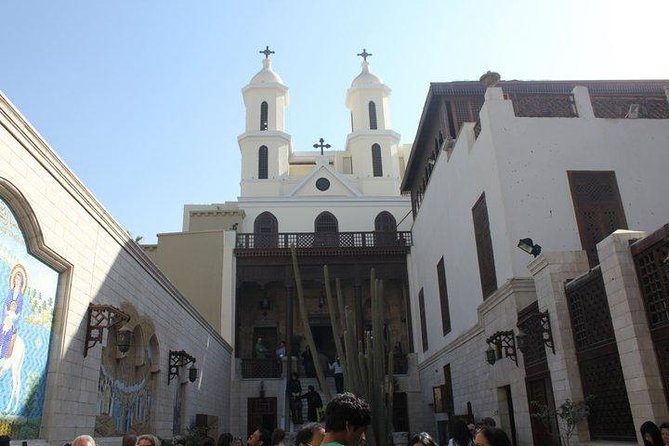
The Hanging Church, also known as El Muallaqa (and sometimes called the Suspended Church), is one of those stops that feels like it has a “hold on the room.” It is elevated, with woodwork details and a distinctive interior that includes biblical frescoes and ornate icons.
Even if you are not the type who studies architecture, this is the kind of place that makes you slow down. The setting is unusual, and the building’s visual details reward attention. If you have a guide, this is where a good one can explain why the design and artwork mattered to worship and memory in the Coptic tradition.
If you do not have a guide, you can still enjoy it. The risk is that your experience may become more about the photos and less about the meaning. That is exactly why many people opt into the upgrade when they want the day to feel like a guided story instead of a photo walk.
Ben Ezra Synagogue and the Cairo Geniza Story
Next comes a site that broadens the story: Ben Ezra Synagogue, an Old Cairo landmark sometimes linked with the legend of baby Moses being found. What makes this stop especially compelling is not just the building itself, but the famous manuscript history connected to its geniza.
The Ben Ezra area is tied to the discovery, in the 19th century, of the Cairo Geniza, a storeroom that held a treasure of abandoned Hebrew, Aramaic, and Judeo-Arabic materials. Those documents were later distributed among academic libraries, with a major portion going to Cambridge.
This stop is a reminder that Cairo’s history is layered, not single-track. It also works for visitors who want more than Christian-and-mosque stops. Just be ready for a shorter time window here. The value is in what you learn, not in how long you linger.
More of Islamic Cairo:
- Full Day Tour Visiting Coptic and Islamic Cairo
★ 4.5 · 203 reviews - VIP Private tour Egyptian museum hanging church Islamic mosque
★ 5.0 · 113 reviews - Cairo: All-Inclusive Coptic & Islamic Cairo Tour with Lunch
★ 4.1 · 110 reviews - Cairo private guided tours visit Islamic and Coptic Cairo
★ 5.0 · 100 reviews
Abu Serga and St. Barbara, a Coptic Anchor in Old Cairo
The Church of St. Sergius and Bacchus, often associated with Abu-Sergah (and St. Barbara), is another anchor point in Coptic Cairo. This is a historical church site with architectural detail and religious significance that links it to Egypt’s older Christian past.
The short time at each stop can feel like a “hit and run” to some travelers, but it works if you pick your priorities. Abu Serga is a great choice if you want a deeper sense of where religious traditions took root in Cairo and how worship sites became landmarks over time.
If you like asking questions, this is a strong moment to do it. The best guides tend to connect the building you are standing in to the broader religious landscape, including what changed after the Islamic era and why certain sites became especially meaningful.
Sultan Hassan and the Citadel, Islamic Cairo in Big Stone
Once you move into Islamic Cairo, the scale shifts. You go from church interiors and frescoes to monumental Islamic architecture and fortress history.
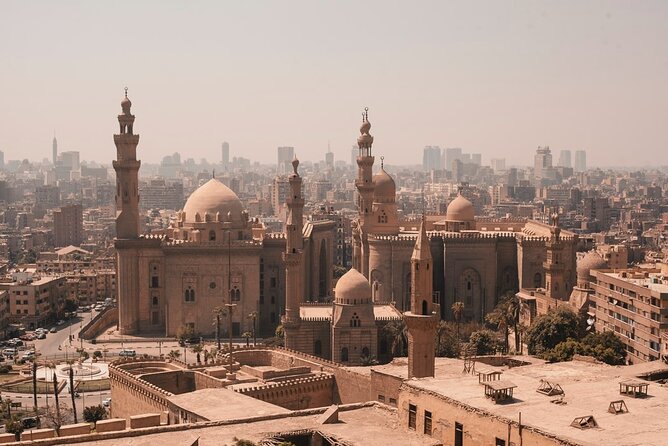
You get a chance to enter the Mosque-Madrasa of Sultan Hassan, a Mamluk-era complex built between 1356 and 1363. It is paired in feel with Al-Rifa’i Mosque, a royal mausoleum area tied to Muhammad Ali’s family. You can stand in the shadow of one grand structure while looking toward another, and the contrast helps you understand how Cairo’s power centers expressed themselves through architecture.
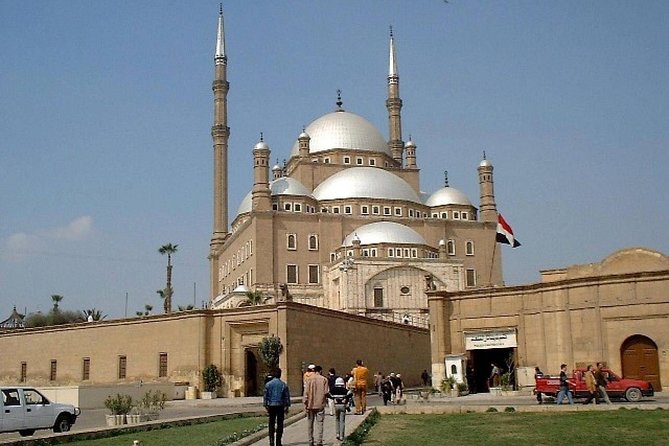
Then you hit the Cairo Citadel, also called the Citadel of Saladin. This medieval fortification became the seat of government for Egypt for nearly 700 years, from the 13th to the 19th centuries. That is a mind-bending span. Even if you do not memorize dates, the citadel setting helps you grasp why these locations matter.
Wear shoes that handle uneven stone and keep an eye on your time. Citadel views can tempt you to stay longer, but this is still a timed, single-day route.
Al-Rifa’i Mosque and the Art of Royal Contrast
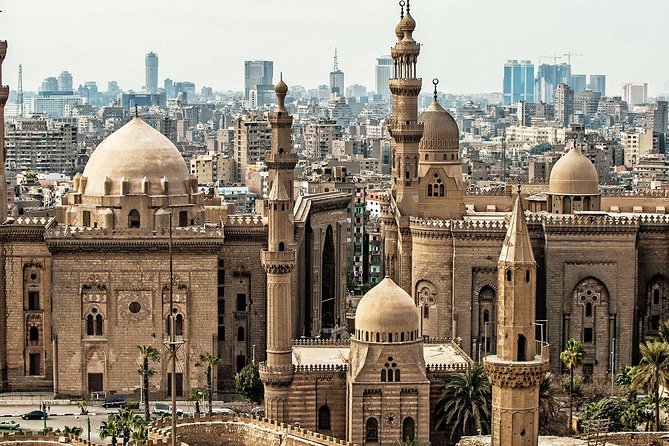
Al-Rifa’i Mosque sits near the Cairo Citadel area, in Midan al-Qal’a. It is architecturally positioned as a complement to the older Sultan Hassan structure, and it also functions as a royal mausoleum for Muhammad Ali’s family.
That “royal contrast” is what I like most here. You are seeing how different dynasties used sacred and public buildings to announce their place in history. If you have a guide, this is a good moment to ask how Ottoman-era rule and later power structures related to the earlier Mamluk era you just saw.
This stop is shorter, so focus on what you came for: the building context, the scale, and the way it fits into the skyline of Old Cairo’s monumental district.
Mosque of Amr Ibn Al-As and Early Islamic Cairo
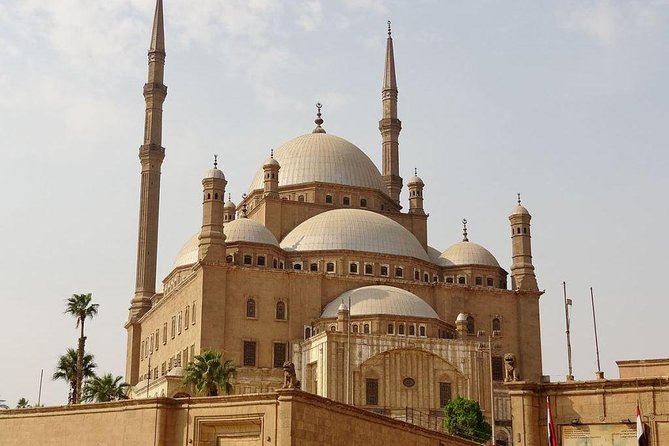
The Mosque of Amr Ibn Al-As is tied to early Islamic Cairo, connected with Amr ibn El-As and the founding era around 641 A.D. You also get the chance to enter the mosque built in 642 A.D. in the area of El Fustat.
This is a great stop when you want the story to feel chronological, not random. You are seeing the roots of Islamic Cairo, then moving through later periods at Sultan Hassan and the Citadel.
Because your time here is about half an hour, do not overthink it. Look up, notice details, and then let your mind connect it to what you saw in Coptic Cairo. Cairo does not switch eras politely. It stacks them.
Khan el-Khalili, Shopping with a Plan
Khan el-Khalili is the classic bazaar stop, a historic souq in Cairo’s center. It traces back to trade activity in the Mamluk era and includes caravanserai history connected to the name.
This is your chance to browse for souvenirs, spices, or small gifts while still keeping the day structured. Many people enjoy this portion most when their guide knows how to manage shopping time without turning it into a full-time detour.
In a good situation, you also get practical pointers for bargaining and navigation. In less ideal situations, shopping can start to feel like the main event. My advice is simple: decide what you want before you walk in, set a rough budget, and keep your eyes on the clock so you still enjoy the monuments you already paid for.
If your day falls during Ramadan or another major holiday rhythm, your timing might shift, sometimes bringing the bazaar earlier. That can be great for photos and a calmer start, but it may change how you feel about shopping later in the day.
Price and Logistics, Where the Extras Show Up
The headline price is $8 per person, and that is the hook. The real question is what that price gets you when you want full access.
From the tour options, entry fees and lunch can be included only if you upgrade. A guide is also optional, which means you can end up with a driver and transport only unless you choose the guided package.
So here is the value math I would use: if you want a story-led day and you want the ability to enter sites smoothly, choose the option that includes tickets and a guide. If you are comfortable reading some context yourself and you prefer a lighter experience, you can keep it basic.
What is solid either way: private transfers, an A-C vehicle, bottled water, and hotel pickup and drop-off. Those pieces alone can save time and stress.
Also check how you confirm pickup. Cairo timing can be unpredictable, and the strongest days are the ones where pickup details and meeting points are clear.
Guides Make the Difference, Pick the Style You Want
A big theme here is that guide quality can swing your experience. When you get someone strong, the Coptic and Islamic sides feel connected, not like two unrelated halves.
Some guides named in strong experiences include Menna, Rania, Isaac, Khalaf, Tarek, Fatima, Sayed Admin, Ahmed (as a driver), and Youseff (as a driver). The common thread in the positive stories is that these guides managed pacing, answered questions, and helped people understand what they were looking at.
The caution is that a weaker guide can make the day feel like basic information from signs, or rush through key moments. Some groups also reported confusion about tickets and pricing when a guide was not clearly aligned with what the tour option included.
My practical advice: if you want depth, upgrade to a guide and confirm that entry fees are part of your chosen option. Then, ask one question at the start about the day order, so you do not feel lost when you arrive at each site.
Who This Tour Fits Best
This is a good fit if you want:
- A first-time Cairo overview that focuses on religious monuments and their timelines
- A private schedule that does not require negotiating transport yourself
- A mix of major Christian and Islamic landmarks, plus a Jewish history stop
It can feel less ideal if you:
- Want a slow, museum-style pace
- Expect long time inside each site without timed stops
- Rely on the tour without choosing a guide or without confirming entry coverage
For solo travelers, couples, and small groups who like structure, it is especially appealing because you control your group pace while still getting a clear route.
Should You Book This Coptic and Islamic Cairo Day Tour?
If you want the big names of Old Cairo in one day, this tour is a smart choice, especially for the Coptic Cairo plus Islamic Cairo combo. The private transfers, A-C car, and door-to-door pickup remove a lot of Cairo friction.
I would book it if you are willing to choose the upgrade that includes a guide and entry fees. That is the difference between ticking off monuments and understanding why they matter.
Skip or simplify the plan only if you already know the history well, you do not mind reading signage, and you are fine with a more transport-and-quick-look style day. If that sounds like you, you can still enjoy it. But if this is your key Cairo day, pay for the parts that turn the route into a story.
FAQ
How long is the tour?
The tour lasts about 6 hours.
Is the tour private?
Yes. It is a private tour/activity, and only your group participates.
What’s included with the tour price?
Your package includes hotel pickup and drop-off, private A-C transportation, and bottled water. You also receive a mobile ticket. Some options may add more.
Are entry fees included?
Entry fees depend on the tour option you choose. They can be included if you upgrade.
Can I add a guide?
Yes. A guide is optional, and you can upgrade to include a guide.
Is lunch included?
Lunch is optional. When included, it is described as lunch at a local restaurant, often koshari.
Do you pick up from hotels around Cairo and Giza?
Pickup is offered from addresses across Cairo and Giza, with hotel pickup and drop-off included.
How many mosques will I be able to enter?
The tour description notes that you’ll have the opportunity to enter three mosques during the Islamic Cairo portion, depending on the option you select.
What is the cancellation policy?
Free cancellation is available up to 24 hours in advance for a full refund. If you cancel less than 24 hours before the start time, the amount paid is not refunded.
Reviewed most recently around Cairo
- Pyramids of Giza half-day tour★ 5.0 · 45 reviews
- Private Giza Pyramids & Sphinx Day Tour with Lunch from Cairo★ 4.5 · 45 reviews
- Private Tour to Old Coptic Cairo & the Cave Church of St. Simon.★ 5.0 · 45 reviews
- Private Day Tour To Luxor from Cairo by Plane,Tours,Sailing Felucca,Camel&Lunch★ 5.0 · 45 reviews
- Overnight camping black and white desert.★ 5.0 · 45 reviews
- Private Half Day Giza Pyramids Tour with camel & Lunch★ 5.0 · 46 reviews
- Private Tour to Giza Pyramids with 30 Minutes Camel Ride and Lunch★ 4.5 · 46 reviews
- Discover The Palaces of Cairo★ 5.0 · 46 reviews
Private, compared.

Pyramids & Great Sphinx Private Tour with Camel Ride
Read our review →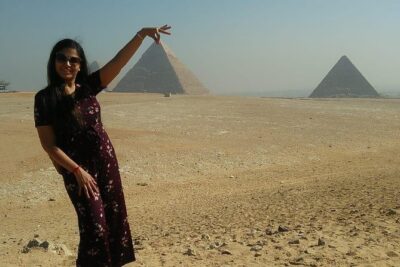
Cairo 8 Hour Private Tour of Pyramids, Egyptian Museum and Bazaar
Read our review →
Private ViP all-inclusive Giza Pyramids,Sphinx,Inside Pyramid
Read our review →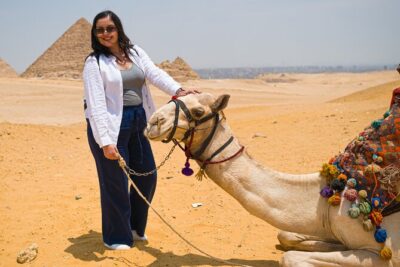
Private guided tour to Giza Pyramids, and Great Sphinx
Read our review →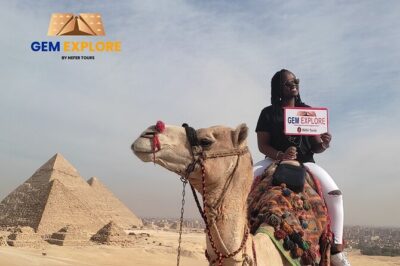
Half Day Tour Giza Pyramids &Great Sphinx with Private Tour Guide
Read our review →
Private tour to Giza Pyramids,Sphinx,Egyptian Museum with Local Lunch
Read our review →
Cairo Airport Private Arrival/Departure Transfer to any address/hotel in Cairo
Read our review →
Giza Pyramids and Sphinx: Half-Day Private or Group Tour
Read our review →Browse the lists this tour appears in