Reviewed · PRIVATE
Private Tour 3-Days in Cairo, Giza & Luxor
A private, 3-day run through Cairo, Giza, and Luxor is interesting because you get the full Egypt “mix” without the constant logistics headaches. You start with the pyramids sites around Cairo, then shift to Coptic Cairo and the Citadel, and finally fly south to see Luxor’s temples and royal tombs at a good pace for a short trip.
I really like the way this itinerary is built around an Egyptologist guide who explains what you’re seeing, not just where to stand for a photo. I also like that the tour includes the practical stuff that usually makes DIY harder, like hotel pickup and drop-off, air-conditioned transport, and lunch every day.
The main drawback to consider is simply time and intensity. You start early (7:00 am) and pack in multiple major sites each day, so if you hate crowds, long walks, or heat, you’ll want to plan your pace and breaks carefully.
Key highlights at a glance
- Dahshur to Saqqara to Giza in one trip, with the Bent Pyramid’s modern restoration story built into the stop
- Egyptologist guidance that helps you connect the dots (including guides who explain clearly and even sketch concepts)
- Old Cairo focus with Roman-era, Christian, and Jewish landmarks, plus cave tradition tied to the Holy Family
- Luxor by flight so you get Karnak and the Valley of the Kings without spending the whole day stuck on transit
- Daily lunch and snacks included, which keeps the day from derailing when hunger hits
A 3-Day Hit List for Cairo, Giza, and Luxor, Done in Private Comfort
This is the kind of tour that works when you want “big Egyptian names” but you also want real context. Instead of bouncing between sites on your own and trying to make sense of names like Snefru, Zoser, and Amon from scratch, you get an Egyptologist guiding the story as you go. That matters because Egypt’s sites are not random landmarks. They connect through time, purpose, and how the Egyptians understood kingship, the afterlife, and the gods.
You’re traveling in an air-conditioned vehicle in Cairo, with hotel pickup and drop-off, plus snacks to help you handle long days. You also get the convenience of having the trip structured so you’re not constantly asking, Where do we go next? What ticket do I need? How long should I budget?
The other smart element is the flight to Luxor, which protects your time. Cairo and Luxor are far enough apart that taking your time can turn into losing whole days. Here, Luxor is treated like a full, separate day with major sights.
Other Cairo days people put in the same week:
- Cairo: Pyramids & Great Sphinx Private Tour with Camel Ride
★ 4.9 · 6,335 reviews - Tour to Giza Pyramids and The Egyptian Museum
★ 5.0 · 6,016 reviews - VIP All inclusive Best of the best Giza Pyramids,Sakkara,Memphis
★ 5.0 · 3,164 reviews
Day 1: Dahshur’s Bent Pyramid Story, Saqqara’s Stone Masterpieces
Day 1 is built as an “Old Kingdom arc,” starting with Dahshur and then moving to Saqqara. That’s a good choice because it takes you through early pyramid experiments and then to the moment pyramid-building becomes more standardized.
Dahshur: Red Pyramid and the Bent Pyramid
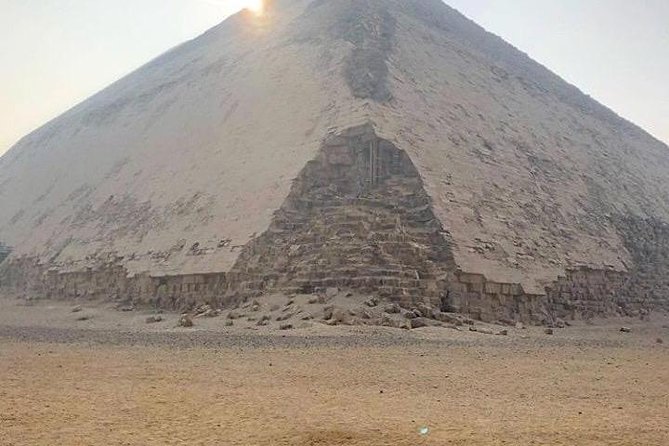
Your day starts at Dahshur, with the Red Pyramid and the Bent Pyramid linked to King Snefru. This is where the pyramid story gets interesting fast. The Red Pyramid is often treated as the first true pyramid conceptually, while the Bent Pyramid shows an early attempt to nail the engineering and angle.
There’s also a specific detail worth knowing before you go: the Bent Pyramid was closed for restoration work until 1960, then it reopened after restoration in 2019. That means your visit is part of the modern era of access, so you’re not only seeing a structure, you’re also seeing the results of long-term preservation.
Saqqara: The Step Pyramid Complex and texts inside
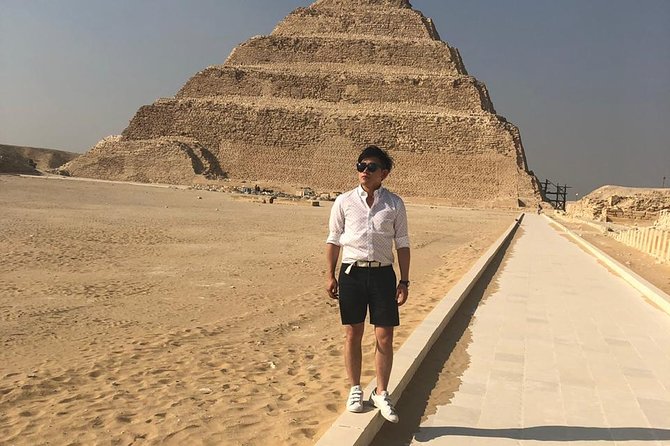
Next comes Saqqara, centered on the Step Pyramid Complex of King Zoser, described as the oldest complete stone building. It’s a strong counterpoint to the later pyramid shapes because it shows how Egyptian royal architecture evolved step-by-step.
You’ll also see several key Saqqara elements tied to the afterlife tradition. The stop includes:
- the Pyramid of Unas, known for being the first pyramid with texts inside
- the causeway of Unas
- other royal pyramids like Userkaf and Teti
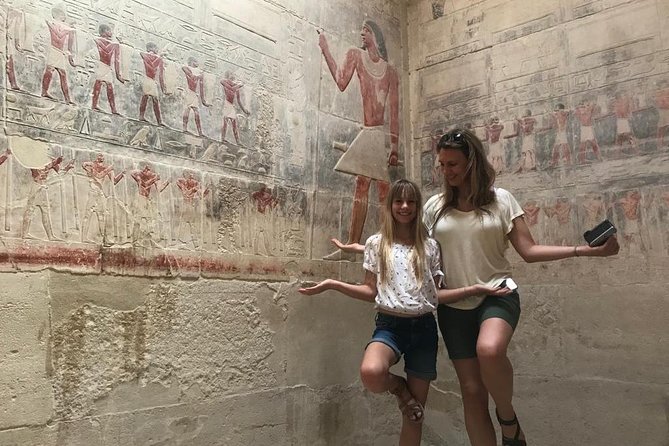
- and the tomb of Kagemni, a noble of the Old Kingdom (around 2200 B.C.)
Practical tip: this is the day when your guide’s explanations matter most. If you ask how the texts relate to beliefs about death and kingship, the whole site starts to make more sense, and photos become more meaningful.
A different kind of day out of Cairo:
- From Cairo: Pyramids of Giza, Sphinx, Saqqara & Memphis Tour
★ 4.7 · 3,110 reviews - Cairo 8 Hour Private Tour of Pyramids, Egyptian Museum and Bazaar
★ 5.0 · 2,931 reviews - From Cairo: Half-Day Tour to Pyramids of Giza and the Sphinx
★ 4.6 · 2,891 reviews - Cairo: Pyramids, Sakkara & Memphis Tour with Lunch
★ 4.6 · 2,493 reviews
Giza and the Sphinx: See the Big Three, Plus Valley Temple
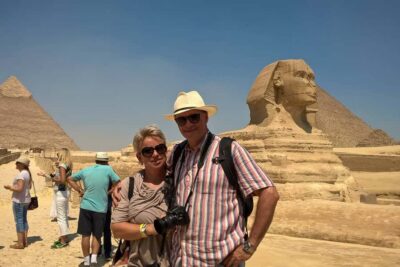
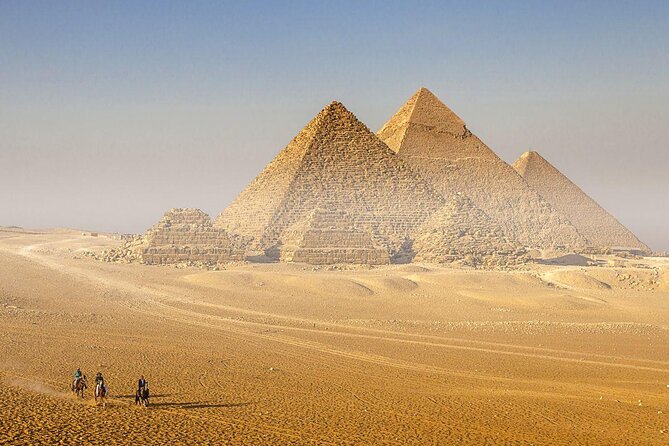
After Dahshur and Saqqara, you land in Giza to see the famous trio: Khufu (Cheops), Khafre (Chephren), and Menkaure (Mycerinus). The pyramids are impressive even if you’ve seen photos for years, but the real advantage of a guided stop is timing and interpretation. You learn how the Valley Temple and the Sphinx fit into the bigger picture.
The Valley Temple and what mummification means here
You also visit the Valley Temple, described as the place where the king’s body was prepared through mummification. This connection is huge. It shifts the pyramids from “giant rocks” into part of a ritual system tied to beliefs and ceremony.
The Great Sphinx at Chephren’s time
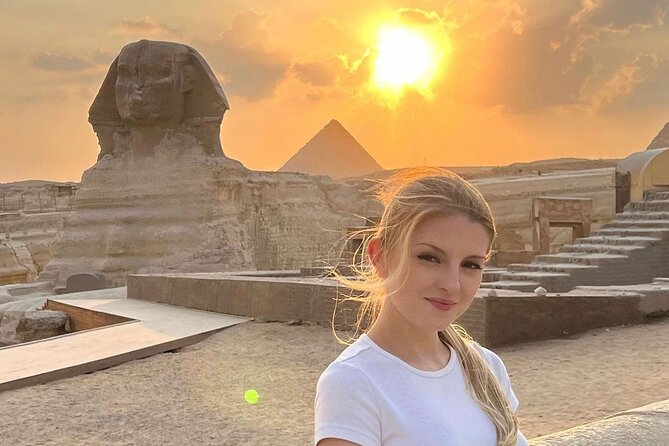
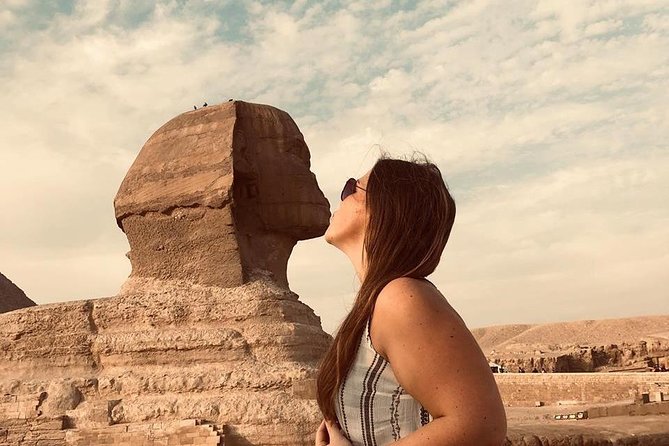
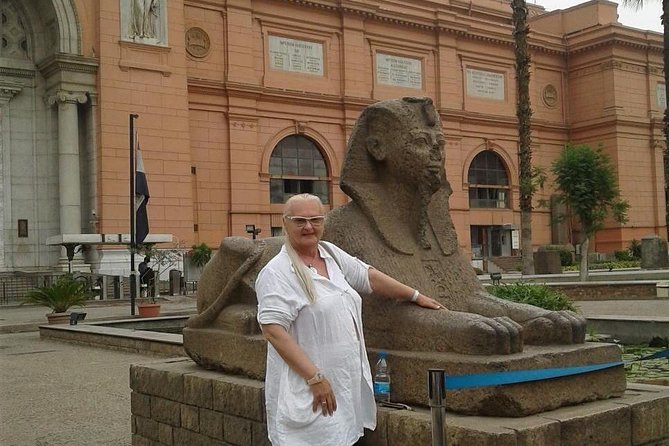
Then you get a closer look at the Great Sphinx, described as the biggest and oldest sphinx carved in Ancient Egypt, associated with Chephren’s time (around 2550 B.C.).
If you’re expecting the Sphinx to feel like a single statue, you might be surprised by how much it connects to the wider Giza setting. Spend a moment looking beyond the face and thinking about how it was positioned in relation to the rest of the complex.
Lunch on Day 1
Lunch is included at a nice restaurant, which is a relief on Day 1. After pyramids all morning, you want food that won’t slow you down with a long wait, and you want time to cool off.
Day 2: Egyptian Museum, Coptic Cairo, Citadel Views, and Khan el-Khalili
Day 2 is all about “layered Cairo.” You’re not just doing one museum or one neighborhood. You’re moving from ancient Egypt artifacts to later religious history, then ending with one of Cairo’s most famous markets.
Egyptian Museum: Animal Mummies and King Tut highlights
You start with the Egyptian Museum for about two hours. This is a smart block of time because the museum’s major draws can otherwise feel random.
The included sights include:
- the Animal Mummy room
- mummy portraits
- and King Tutankhamen’s jewelry
Those pieces help you see that ancient Egypt wasn’t only about kings and pyramids. It was also about everyday and symbolic religious practices, including how animals had meaning in the broader belief system.
Old Cairo: churches, synagogues, and the Hanging Church
Next is Coptic Cairo, where you’ll see Roman-era and later Christian landmarks. The itinerary includes the Roman Fortress of Babylon, the Hanging Church, Abu Serga, and the Church of Saint George, plus the Jewish Synagogue of Ben Ezra.
It also includes the cave tradition connected with the Holy Family sheltering in Cairo. Even if you’re not religious, this stop helps you understand how Cairo’s streets kept rewriting themselves over centuries.
Citadel of Saladin and Mohammed Ali Mosque
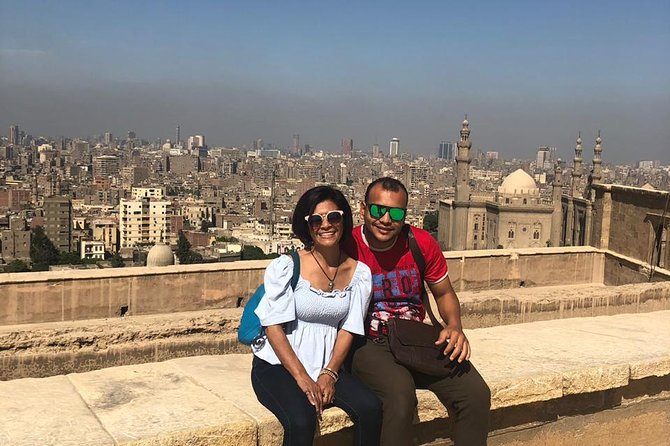
Then you move to the Cairo Citadel area. You’ll explore the Citadel of Saladin, get photo time for a panorama of the Citadel, and then visit the Mosque of Mohammed Ali Pasha, built in 1848.
The tour notes that the mosque is a copy of the Hagia Sophia in Istanbul, and that detail helps you look at architecture with a sense of continuity and influence rather than treating each building like an isolated style.
Khan el-Khalili: How to Enjoy the Market Without Getting Tired Too Early
Day 2 finishes at Khan El Khalili Bazaar, Cairo’s biggest market, for about two hours. The tour gives a fascinating origin story tied to Mamluk rule: it was founded in the 14th century by sultan Barqouq, who gave land to Jahrkas El Khalili, and construction involved clearing a cemetery of the Fatimins.
That historical note helps. Markets like this are often treated as pure browsing, but they have deeper roots in how power, trade, and communities developed.
Practical advice: go with a “one thing” plan. Maybe you want one souvenir, one snack, and one stop to people-watch. If you try to do everything, Khan el-Khalili can drain you fast, especially after museums and churches.
Day 3: Fly to Luxor for Karnak, Hatshepsut, and the Valley of the Kings
Day 3 is the big payoff day for many people because Luxor is where Ancient Egypt feels most concentrated. You’ll fly from Cairo to Luxor, then meet your guide and start seeing the main temple sites.
Karnak and Amon: the Hypostyle Hall effect
The day starts at Karnak Temple, including the Temple of Amon and the famous Hypostyle Hall. This is the kind of place where the scale hits you even if you’ve seen it online. The columns and the space can make it feel like time stops.
A good guide helps you understand what you’re looking at so you’re not just counting columns. You’re learning what the setting says about the god’s role and the power of the temple complex.
Avenue of Sphinxes and Hatshepsut at Deir el-Bahari
Next comes the Sphinxes avenue, then Queen Hatshepsut’s temple at Dair El Baharey. Hatshepsut’s story is one of Egypt’s best because she’s associated with major building and a clear push for legitimacy as a female ruler in a male-defined system.
Again, the value of an Egyptologist guide is that you leave with more than a postcard memory. You understand why her temple placement and design mattered.
Valley of the Kings and Luxor Temple
Later you’ll see the Valley of the Kings and Luxor Temple, plus the two statues of Memnon. The Valley of the Kings stop makes sense after Hatshepsut because it connects rulers, power, and afterlife planning across time.
The itinerary then includes lunch and time to head back to the airport to catch your flight to Cairo.
What Your $1,000 Price Includes, and What It Does Not
At $1,000 per person for a 3-day private tour, you’re paying for convenience, guidance, and a lot of included items. Here’s what stands out.
Included in the price:
- Entrance fees to the listed sites
- Hotel pickup and drop-off
- Air-conditioned vehicle transport in Cairo
- Qualified Egyptologist guide
- Snacks
- Luxor flight ticket
- Lunch (3), one each day
Not included:
- Accommodation
When you compare value, the flight and entrance fees do a lot of heavy lifting. Luxor flights between Cairo and Luxor are often one of the easiest ways to lose time if you book yourself, and entrance fees can add up quickly across major sites.
The biggest “value risk” is accommodation. If you book a hotel that’s far from pickup routes or you wait to book where you sleep, you could end up with extra transfers on your own, which undermines the whole point of hassle-free pickup. Choose lodging with pickup in mind.
How to Prepare, and How to Get the Most From Your Egyptologist
Because this tour compresses a lot into a short timeline, your prep can make or break the experience.
First, plan for walking and sun. Even though you have air-conditioned vehicle time, you’ll still spend chunks of the day outdoors at pyramids and temples. Wear comfortable shoes and bring sun protection you’ll actually use.
Second, use your guide like a tool. The Egyptologist explanations are a core part of the tour’s appeal, and the included sites are perfect for questions. Ask about:
- how pyramid design changed from Dahshur to Giza
- what the pyramid texts are doing inside the story
- why Old Cairo includes so many different religious landmarks in the same area
- how Karnak and Luxor Temple connect through Amon and royal ideology
Finally, choose your energy strategy. This itinerary gives lunch daily and snacks, which helps you stay steady. When you arrive at a major site, take 5 minutes for a slow scan before you start chasing angles. You’ll get better photos, and the explanations will stick.
One more helpful note from what I’ve seen mentioned with this operator: guides like SugarQueen, also referred to as Hala, and guides such as Muhammad, Mark, Dr. Mo, and Muhammad Raki are praised for strong English and clear ways to explain. Some have even been described as using sketches to make complex ideas easier. If your guide has that style, let them use it. You’ll learn faster.
Should You Book This Private 3-Day Cairo, Giza and Luxor Tour?
I’d recommend booking this tour if you want a smart, time-saving way to see Cairo and Luxor without building a plan from scratch. It’s especially good for first-timers who want the major sites, plus the context that makes those sites feel connected instead of random.
This is also a great fit if you value included logistics. The combination of hotel pickup, air-conditioned transport, entrance fees, daily lunches, and a Luxor flight ticket means fewer decisions, fewer long waits, and fewer surprise costs.
Skip it, or at least think hard, if you know you hate fast schedules or you’re sensitive to heat and crowds. The days are full, and the start time is early. You’ll want to be the type who enjoys structure, not the type who wants to wander freely without a plan.
If you do book, pick your hotel carefully in Cairo so pickup and drop-off are truly easy. Then, show up on time, bring comfortable shoes, and ask your Egyptologist questions. That’s where the value of a private guide really shows.
FAQ
What does the tour include?
It includes entrance fees, hotel pickup and drop-off, private transportation in an air-conditioned vehicle, a qualified Egyptologist guide, snacks, lunch three times, and the Luxor flight ticket.
Is accommodation included in the price?
No. Accommodation is not included.
Where does the tour take you?
You’ll visit Cairo and Giza sites in Day 1 and Day 2, then fly to Luxor for Day 3, including Karnak, Hatshepsut, the Valley of the Kings, and Luxor Temple.
What time does the tour start?
The start time is listed as 7:00 am.
Is this a private tour?
Yes. It’s a private tour, and only your group participates.
Are entrance tickets included?
Yes. The tour includes entrance fees, and admission tickets are noted as included for the Day 1 sites and for the Cairo museums and landmarks.
What is the cancellation policy?
You can cancel for a full refund up to 24 hours in advance. If you cancel less than 24 hours before the experience’s start time, the amount paid is not refunded.
Reviewed most recently around Cairo
- Giza pyramids, Saqqara and Dahshur day tour★ 5.0 · 20 reviews
- Cairo Stopover Tour with Giza Pyramids, Sphinx, Egyptian Museum, and Old Cairo★ 5.0 · 20 reviews
- Pyramids of Giza, Sphinx and Egyptian Museum Day Tour★ 5.0 · 20 reviews
- Private Experienced Tour for Camel ride during the sunset with Local Bedouin Dinner★ 4.0 · 20 reviews
- Discover Cairo by night★ 3.5 · 20 reviews
- Luxor East and West Bank: Valley of the kings, Habu Temple,Karnak&Luxor Temples★ 5.0 · 20 reviews
- Private Day Tour to Giza Pyramids, Sphinx, Coptic Cairo and Saint Simon Church in Cairo★ 4.5 · 20 reviews
- 10 Day Treasures of Egypt Tour Giza Pyramids & Cairo & Nile Cruise & Abu Simbel★ 5.0 · 20 reviews
Private, compared.
Pyramids & Great Sphinx Private Tour with Camel Ride
Read our review →
Cairo 8 Hour Private Tour of Pyramids, Egyptian Museum and Bazaar
Read our review →
Private ViP all-inclusive Giza Pyramids,Sphinx,Inside Pyramid
Read our review →
Private guided tour to Giza Pyramids, and Great Sphinx
Read our review →
Half Day Tour Giza Pyramids &Great Sphinx with Private Tour Guide
Read our review →
Private tour to Giza Pyramids,Sphinx,Egyptian Museum with Local Lunch
Read our review →
Cairo Airport Private Arrival/Departure Transfer to any address/hotel in Cairo
Read our review →