
Reviewed · PYRAMIDS OF GIZA
Private Tour Pyramids of Giza and Sphinx from Giza
Giza is one of those places that can feel either magical or exhausting, depending on how you handle the logistics. This private-guided, small-group route is built for a clear, paced visit to the Great Sphinx and the pyramids plateau. I especially like that hotel pickup and drop-off are handled for you, and that you get an Egyptologist guide who turns the sights into a story you can actually follow.
The main thing to consider is timing and options: the classic photos are included, but going inside the pyramids is extra. If you want a camel ride, that is also an add-on, so you should plan a bit of cash for the choices you make once you are there.
Key highlights worth your attention
- Small group, max 15 travelers, so questions do not get swallowed by the crowd noise
- Hotel pickup and drop-off from Giza or Cairo, which saves you from wrestling with taxis early
- Entrance fees are included for the stops on this route
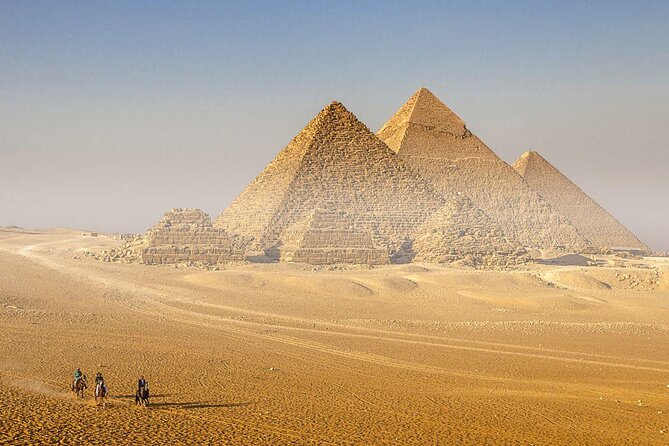
- Great Sphinx close-up time plus photo stops that frame all three pyramids
- A qualified Egyptologist guide, and several guides are praised by name, including Henry, Galal, Ahmed, and Yasser
- Papyrus institute visit gives context for an ancient Egyptian craft and everyday life
Why a 5-hour Giza morning feels the right pace
A half-day in Giza can go two ways. You either rush, or you get stuck waiting. This tour is designed around a realistic flow through the main hits, starting at 8:00 am and running about 5 hours. That early start matters. You get to the Sphinx and pyramid zone while the day is still awake, and you keep your energy for the parts that need standing, walking, and looking up.
I like that the schedule is built around key landmarks in a sensible order. You start at the Sphinx, then move through the pyramid area, then end with plateau time for photos, and a papyrus institute demo. It feels like a tour, not a sprint.
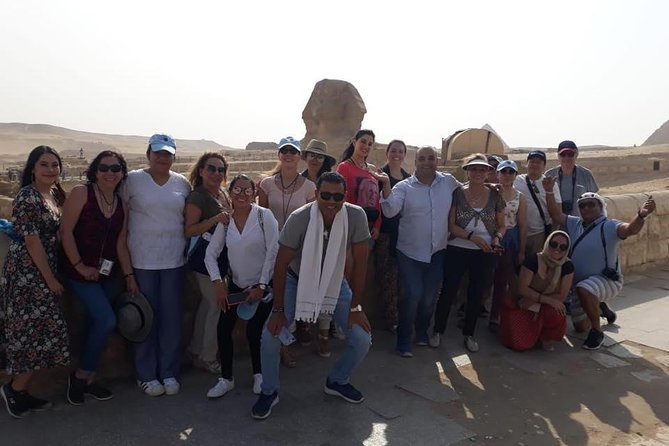
And because it is a small group with a qualified Egyptologist, you can ask direct questions without yelling. In the reviews, guides like Henry are specifically praised for linking history together, and that kind of pacing helps you remember what you saw after you leave.
More ways to see the pyramids:
- From Cairo: Half-Day Tour to Pyramids of Giza and the Sphinx
★ 4.6 · 2,891 reviews - Private guided tour to Giza Pyramids, and Great Sphinx
★ 5.0 · 1,755 reviews - Giza Pyramids and Sphinx: Half-Day Private or Group Tour
★ 4.4 · 1,424 reviews
Price and what you really pay for at $47.06
$47.06 per person sounds like a bargain, and the value comes from what is bundled. Your tour includes entrance fees, hotel pickup and drop-off, bottled water, and transport by a deluxe air-conditioned coach. You also get an Egyptologist guide, and that is the part that often costs more when you book separately.
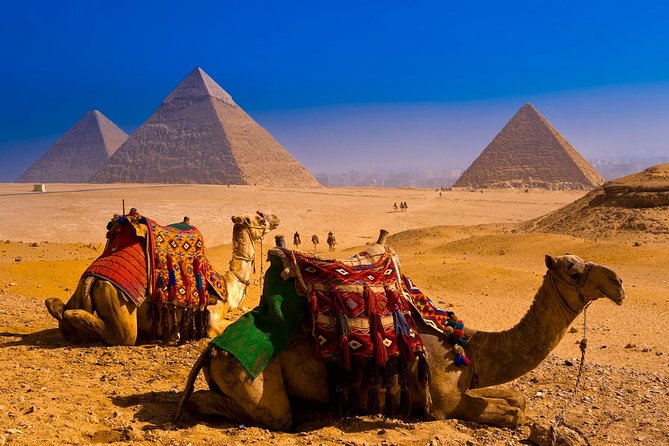
There are two clear extras to be aware of. Going inside the pyramids is not included, and a camel ride is also additional. The tour does give you free time and options around those choices, but your guide cannot accompany you inside if you decide to enter the pyramid.
So the real question is not just price. It is whether you want the included experience, or whether you will spend more for the inside-entry option and the camel ride. If you are happy with close-up viewing and great plateau photos, this is strong value for a guided morning.
Pickup from Giza or Cairo, and how the transport affects your day
The practical win here is simple: you are picked up at your hotel in Giza or Cairo and dropped back after the tour. That means you do not have to negotiate rides while you are already thinking about pyramids, heat, and timing.
The tour uses an air-conditioned vehicle, described as a deluxe coach in the inclusions. In at least one account, a guest noted a newer AC minivan for their pickup. Either way, the goal is the same: get you from point A to the Giza plateau efficiently and comfortably.
Also pay attention to what that implies for your morning. If you want photos and you want to avoid rushing, plan to be ready at pickup time. You are starting at 8:00 am, and the tour is built for that flow.
Great Sphinx Stop: close-up views and how to use your time
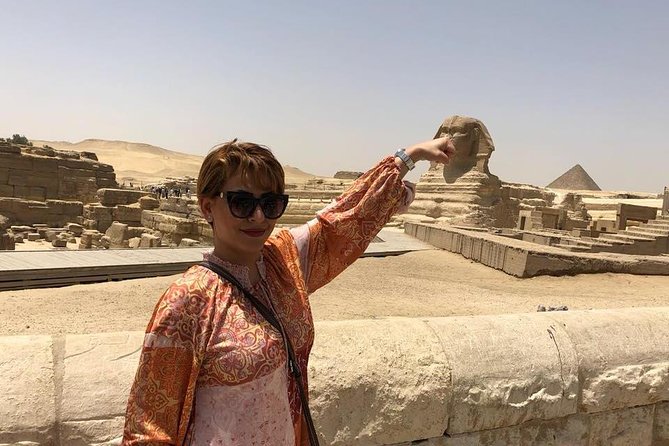
The first stop is the Great Sphinx, with admission included and about 30 minutes on site. This is the moment where Giza stops being distant in your mind and becomes real in front of you. You will see it up close as you move down the valley area, which helps you get a sense of scale before you head toward the pyramids.
Your guide will explain what the Sphinx is thought to represent, with the idea that it relates to King Chephren. The mix is what makes this stop work: the Sphinx is part lion body, part human head, and it is also tied to strength and wisdom in the common interpretation your guide will share.
30 minutes is enough if you do two things. First, look, then look again. Second, ask for one quick orientation tip from your guide before you move deeper into the area. In the reviews, Henry is praised for giving practical navigation tips, and that kind of guidance makes a big difference around the Sphinx zone where people, vendors, and pathways can feel chaotic.
One more small practical note: expect to deal with sellers in the wider area. Your guide can help you understand the flow and how to keep moving without turning it into a distraction.
A different kind of day out of Giza:
- Pyramids of Giza: 1-Hour Quad Bike Desert Safari
★ 4.5 · 930 reviews - VIP Giza Pyramids,Sphinx,ATV bike,CamelRide,Shopping&DinnerCruise
★ 5.0 · 704 reviews - From Hurghada: Pyramids and Egyptian Museum Tour & Boat Ride
★ 4.4 · 381 reviews - Egyptian Museum in Cairo: Private Guided Tour
★ 5.0 · 316 reviews
Khafre’s Pyramid stop: a calmer lead-in to Cheops
After the Sphinx, you move to Khafre’s Pyramid, also around 30 minutes with admission included. This stop is shorter than the Great Pyramid area, but it is not filler. It gives you a benchmark for what you are seeing, especially if this is your first time at Giza.
Khafre’s pyramid sits a relatively short distance from the main cluster, and it helps you compare proportions and location. It is also a useful pause to let your guide continue stitching the story together, moving from the Sphinx symbolism to the idea of pyramid building, royal legacy, and the layout of the necropolis.
If you are the type who likes structure, this stop is your reset button. Do not rush it. Take 2 minutes to step back, then 2 minutes to look closer, then 2 minutes to take photos from a spot your guide suggests. Those small choices make your pictures look less like snapshots and more like a memory of place.
Great Pyramid of Khufu (Cheops): photos now, optional entry later
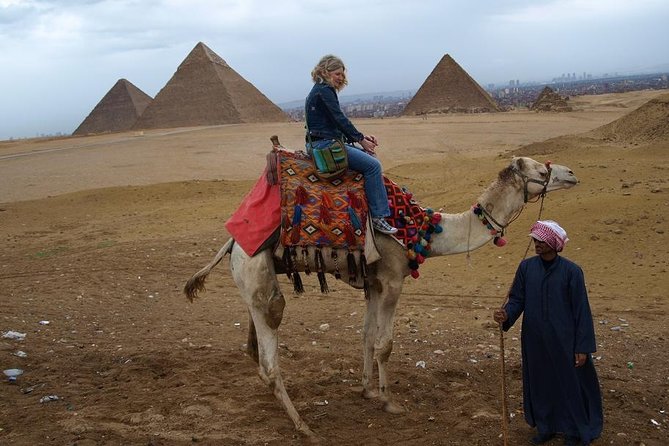
The Great Pyramid of Cheops, also called Khufu, is where the tour earns its reputation. You get about 1 hour here, with admission included for the visit area. You may also have free time to choose an optional add-on: entering inside one of the pyramids is extra, and camel rides are also extra.
A key detail for planning: your guide is not permitted to enter the pyramids with you. That means you should use your guide’s advice before you go in. Ask about the timing, the best way to manage the inside entry option, and how to avoid feeling rushed once you step off the main path.
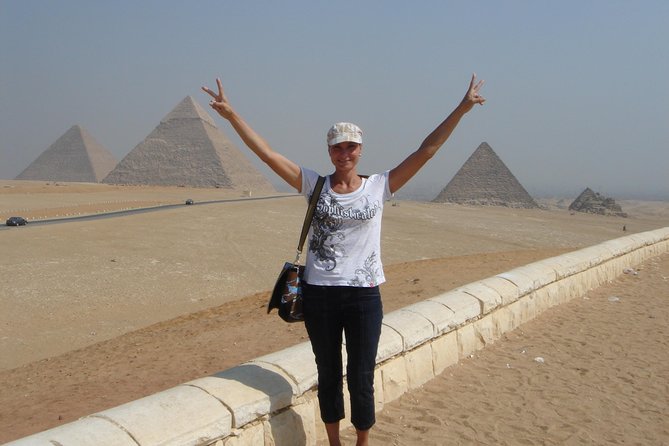
If you skip entry, do not feel like you missed the moment. The tour is built for the “big view” experience too. After visiting the pyramid area, you have an opportunity for photos at the plateau with the three pyramids in the background. That is the photo most people come for, and it is included as part of the time at the top.
If you do want the inside entry, treat it like an experiment. You might love it, or you might prefer spending more time outside. Either way, 1 hour gives you flexibility without dragging the day longer than it needs to be.
Plateau photo time and the papyrus institute demo
After you tour the main pyramid area, you get Gizeh Plateau time for about 20 minutes. This is your “three pyramids in one frame” window. The tour experience is set up so you end up with a memorable view where the three pyramids can sit behind you, which is harder to pull off if you wander randomly.
Then there is the papyrus institute stop. Instead of only focusing on stone monuments, you get a demonstration of how ancient Egyptians used papyrus. It is a small detour, but it helps you see the broader culture, not only the engineering marvel.
If you are a history buff, you’ll appreciate how the papyrus demo adds everyday context. If you are not, it still works because it slows you down and gives you a change of pace after the intense visual impact of the pyramids.
This part is also useful if you want a souvenir-free moment. You can leave feeling like you learned something tangible about daily materials and crafts, not just saw statues and walls.
The guide matters: Henry, Galal, Ahmed, Yasser, and what they do well
In a place like Giza, your guide can turn a crowded zone into something manageable. Several guides are praised by name in the accounts, including Henry, Galal, Ahmed, and Yasser. The consistent thread is how they explain what you are looking at and how they help you handle the area.
One recurring theme is practical advice on navigating and avoiding sellers. That is not just about being polite. It is about protecting your time so you spend it looking at the Sphinx and pyramids, not negotiating the next step.
Another theme is making the history feel connected. Henry is singled out for linking the history so it makes sense, and that is a big deal when you are surrounded by ruins, not a museum with labels. It is easier to remember what you saw when your guide gives you a simple framework.
There is also evidence of accommodations for different language needs, including a mention that a Spanish-speaking guest was handled with ease. If you care about language comfort, it is still smart to mention your preferred language when you book, since the tour data does not guarantee a specific language.
What to expect during the day (and how to prepare)
This tour is about close viewing, photos, and explanation. It is not a slow, sit-down museum day. You should expect some walking on uneven ground and standing for views, especially around the Sphinx and plateau areas. The tour notes mention moderate physical fitness, which is a fair heads-up.
Plan your clothing like you are going to be outdoors for hours. Wear comfortable shoes with grip. Bring sun protection. You will have bottled water provided, which helps, but you should still take your time between stops.
Also, keep your expectations clean and realistic. You are getting a focused tour of the main landmarks, but you are not doing every possible museum and side site in Cairo. That is why it works as a half-day plan. You choose your priorities and you get out with your brain intact.
Who this tour is best for
This tour fits you best if you want the big Giza hits without getting lost in logistics. It is great for first-timers who want hotel pickup, an Egyptologist guide, and a clear set of stops: Sphinx, Khafre’s Pyramid, Khufu’s Great Pyramid area, plateau photos, and a papyrus institute demonstration.
It is also a good pick if you dislike spending your limited vacation hours fighting with taxis or figuring out which entrance is which. The tour does that part for you, so you can focus on what you came for.
If you travel with kids, children must be accompanied by an adult. The tour is still fairly active, so keep that in mind when deciding whether it suits your family’s pace.
Should you book this Private Tour Pyramids of Giza and Sphinx?
Book it if you want a well-paced, guided Giza morning that includes what matters most: hotel pickup, small group size, entrance fees, and photo time at the plateau. The added papyrus institute demo is a nice bonus when you want more than stone monuments.
Skip or adjust expectations if you strongly prefer to customize every minute on your own. Your guide helps you navigate, but the route is set around major stops and time blocks. Also remember that inside-pyramid entry and camel rides are extra, so decide those choices before you go in when you get the chance.
If you want the easiest path to a memorable, understandable Giza visit, this is a solid bet.
FAQ
What time does the tour start?
The start time is 8:00 am.
How long is the tour?
The tour duration is about 5 hours.
Where does pickup happen?
You can be picked up from your hotel in either Giza or Cairo, and you are dropped off back at the end.
Are entrance fees included?
Yes. Entrance fees are included for the stops listed in the tour.
Can I go inside the pyramids?
You may have free time to enter a pyramid, but entrance inside the pyramids is not included and costs extra. Your guide is not permitted to enter with you.
Is a camel ride included?
No. Camel rides are not included and would be an additional cost.
What is the group size?
The maximum group size is 15 travelers.
What fitness level do I need?
The tour notes say you should have a moderate physical fitness level.
Reviewed most recently around Giza
- Real Cairo Food Tour Experience (Eat like a local)★ 4.5 · 46 reviews
- Half day tour in Giza pyramids , sphinx , panorama★ 5.0 · 46 reviews
- Half day tour at the Pyramids★ 5.0 · 47 reviews
- Private Tour: Giza Pyramids, Museum, Bazaar & Lunch Included★ 5.0 · 47 reviews
- Giza Pyramids and The Sphinx Walking Tour★ 5.0 · 48 reviews
- Cairo Dinner Cruise on River Nile with Belly Dancing Show★ 5.0 · 48 reviews
- Giza pyramids and sphinx★ 5.0 · 49 reviews
- Discover Alexandria’s Wonders: Full-Day Private Tour from Cairo★ 5.0 · 50 reviews
Pyramids of Giza, compared.
Pyramids & Great Sphinx Private Tour with Camel Ride
Read our review →
Tour to Giza Pyramids and The Egyptian Museum
Read our review →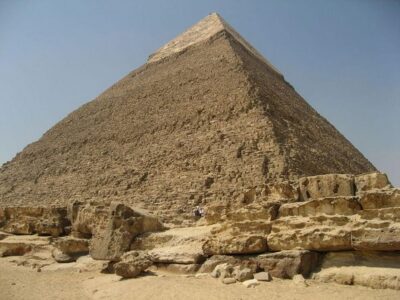
VIP All inclusive Best of the best Giza Pyramids,Sakkara,Memphis
Read our review →
Pyramids of Giza, Sphinx, Saqqara & Memphis Tour
Read our review →
Cairo 8 Hour Private Tour of Pyramids, Egyptian Museum and Bazaar
Read our review →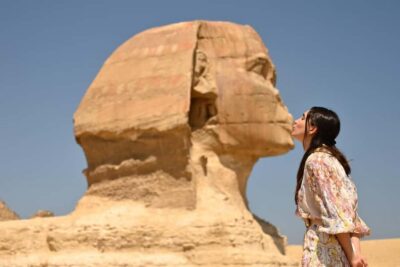
Half-Day Tour to Pyramids of Giza and the Sphinx
Read our review →
Private ViP all-inclusive Giza Pyramids,Sphinx,Inside Pyramid
Read our review →Browse the lists this tour appears in