
Reviewed · NILE CRUISES
Nile cruise between Luxor and Aswan: Sail the best temples in Egypt
A Nile cruise between Luxor and Aswan is one of the most satisfying ways to see Egypt, because your days are planned around the big temple moments while your ship keeps the pace calm. You start with Luxor’s classics, then move temple by temple downriver, finishing in Aswan with a little breathing room.
What I love most is the combination of major sites, guided in a way that actually helps you understand what you’re looking at. I also like that you get real downtime on the river, including pool time and navigation between stops, so the days do not feel like a nonstop sprint.
One possible drawback: you will spend a lot of time on your feet at the temples, and Egypt can be hot. If you hate early starts, you might feel it, since the trip begins around 6:00 am.
Key things to know before you sail Luxor to Aswan
- 4 nights on the cruise with meals included, so you are not constantly changing hotels
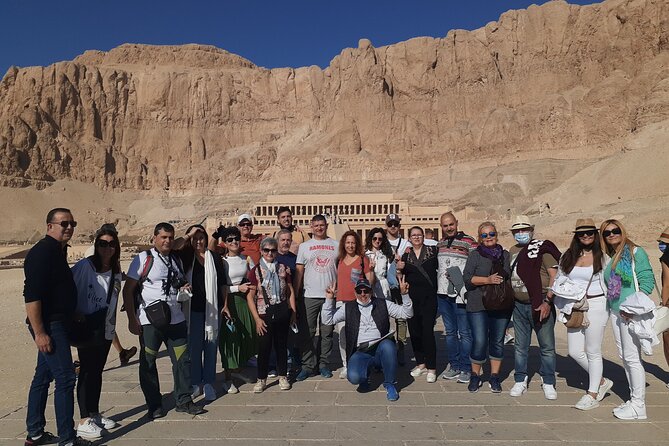
- Small-group feel with a maximum of 30 travelers
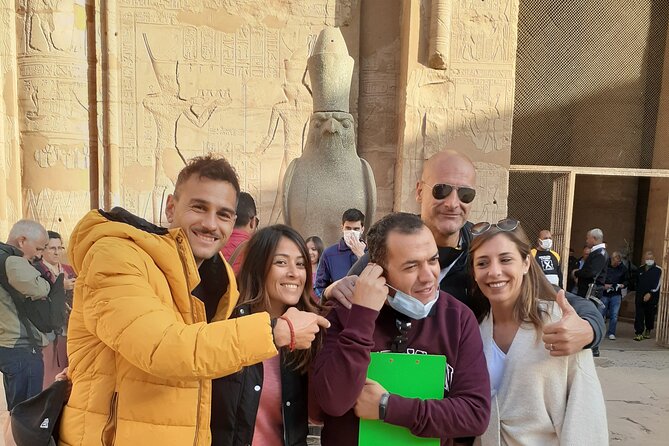
- Temple guidance that sticks, led by Mohamed Gaber (Moha), who explains history in an easy, engaging way
- Valley of the Kings entry with choice of tombs, plus Deir el Bahari and Karnak on the same big day
- One optional upgrade worth considering: Abu Simbel, plus an optional Nubian village stop
- Philae and river time include boat access to the island temple and a felucca ride to slow things down
Why this Luxor to Aswan Nile cruise works so well
The best part of this cruise is not just that you see famous monuments. It’s that the schedule connects the dots for you, moving from royal tombs to temple worship to life along the Nile. You’ll feel the difference between each location, even though the theme is always Ancient Egypt.
Another reason this itinerary plays well is balance. Most of the day is focused on visiting, then the ship time gives your brain a rest. That matters, because temple days can be heavy. A cooler hour on the pool deck or a gentle sail between ports helps you keep your energy.
The guiding style also makes a difference. In the reviews, Mohamed Gaber, often called Moha, comes up again and again. People describe him as attentive, organized, and fun, and they highlight his ability to explain temples so you can understand them, sometimes with a playful approach that helps the group stay engaged.
More Nile Cruises in Luxor
- From Luxor: 3-Night Nile Cruise to Aswan and Hot Air Balloon
★ 3.7 · 297 reviews - 5 Days Private Guided Nile River Cruise Tour from Luxor to Aswan
★ 5.0 · 229 reviews - Historia Hotel Nile Cruise, Mon. from Luxor 4 nts inc. Excursions
★ 5.0 · 185 reviews
Day 1 in Luxor: pickup, ship check-in, and a free afternoon
Day 1 starts with pickup in Luxor, meaning you can be collected from your hotel, the airport, or the train station based on what you tell the provider. After that, you head to the boat, settle into your room, and start eating according to the onboard schedule.
Then you get a free day chunk. That’s a smart choice. If you arrive a day early, you can rest. If you’re already in Luxor, you can wander Luxor Temple area streets on your own, or just stay relaxed and use the pool. Since you’re not locked into a full guided circuit on Day 1, you control how jet-lagged you feel.
There’s also a practical benefit: you are not rushing into the first big monuments with no buffer. On temple-heavy trips, this kind of breathing room can make the rest of the itinerary feel smoother.
Day 2: Valley of the Kings, Deir el Bahari, Karnak, and Luxor Temple
This is the day that sets the tone. You hit multiple layers of Egypt in one go: royal burials, a queen’s legacy, and the power of the temple complex system.
Valley of the Kings tombs with a choice
You start at the Valley of the Kings, the necropolis where New Kingdom pharaohs were buried. The key detail here is that you can enter 3 tombs of your choice. That choice matters, because different tombs focus on different themes and art styles. It also helps you pace yourself. If one tomb feels crowded or tiring, you can switch your priorities for the next one.
Expect this to be one of the more emotionally intense stops, not because it is scary, but because tombs make you face the fact that these buildings were built with eternity in mind.
More Nile cruises:
- From Luxor: 5-Day Nile Cruise to Aswan with Balloon Ride
★ 4.2 · 168 reviews - 4 Days Aswan and Luxor Nile cruise&Abu Simbel by plane from Cairo
★ 5.0 · 155 reviews - 4 Nights Luxor to Aswan Nile cruise with Abu Simbel&Air Balloon
★ 5.0 · 155 reviews - From Luxor: 3-Day Nile Cruise to Aswan with Private Guide
★ 4.2 · 147 reviews
Temple of Hatshepsut at Deir el Bahari
Next comes Deir el Bahari, home to the Temple of Hatshepsut. This site is famous for its dramatic setting, and it connects you to a rare story, the rule of a major queen in Egypt’s royal line. The visit is one hour, which is usually enough time to grasp the design and key points without feeling rushed.
If you like architecture and power symbolism, this is one of your anchor moments for the whole cruise.
Colossi of Memnon quick stop
Then you get the Colossi of Memnon, two enormous stone statues tied to Pharaoh Amenhotep III. This is a short photo and viewpoint stop, around 15 minutes. Since it is brief, it works as a reset between heavier visits.
Karnak Temple complex and Luxor Temple
Later, the cruise includes Karnak Temple, built over time by different pharaohs. You’ll see major features like the avenue of sphinxes, the hall of columns, and the avenue of the rams. If you’ve ever wondered why Egyptian temples feel like they take over the landscape, Karnak explains that feeling.
The day ends with Luxor Temple, associated with Amun Ra. It’s a good way to close the loop, because you start the day with royal burial and end with a living religious center tied to kingship.
Afternoon navigation: Luxor to Edfu
The rest of Day 2 shifts into river mode with afternoon navigation from Luxor to Edfu. This is where the cruise format really earns its keep. You can rest on the ship, enjoy the pool edge, and watch the Nile move by at a gentler pace.
Day 3: Edfu Temple and Kom Ombo’s dual-god design
If Day 2 is the giant temple marathon, Day 3 is the quality-day rhythm. You get two major temples, without feeling like the day is endlessly repeating the same shapes.
Edfu Temple, one of Egypt’s best preserved
At Edfu, you visit the temple dedicated to Horus. Edfu is widely known for being well preserved, and the visit time of about two hours is perfect. You have enough time to take in the reliefs and layout without feeling like you’re staring at details too long.
When a temple is in good condition, your brain reads it faster. It helps you connect what you saw earlier in Luxor to what you’re seeing now in Upper Egypt.
Kom Ombo: two gods, one temple
Then you go to Kom Ombo Temple, designed for two gods: Sobek and Haroeris. This dual dedication gives the place a different feel than single-deity temples. It’s also a good reminder that Egypt’s religious world was structured, not random. You’re not just seeing buildings, you’re seeing systems of belief and organization.
The visit is about one hour, which fits the day. You’ll have time to regain energy before the optional excursion on Day 4.
Day 4: Abu Simbel option, Philae by boat, and a felucca ride
Day 4 is where this cruise turns from classic to special, because you have choices and a couple of add-ons that change the vibe.
Abu Simbel is optional, but it’s the big call
An optional excursion to Abu Simbel is offered, and the information given with the trip frames it as a must-see. The temples were carved from rock during the reign of Pharaoh Ramses II, built as a monument to him and his wife Nefertari.
Even if you do not know the details, Abu Simbel has a way of knocking loose that mental checklist approach. It’s huge, dramatic, and intensely intentional. Since it is optional, you can weigh it based on your stamina and schedule comfort.
Philae Temple on an island, reached by boat
Next you visit Philae Temple, dedicated to Isis. The temple sits on an island, and the itinerary includes a boat ride to get there. That boat element matters. It changes how you arrive, and it makes the temple feel like a destination rather than a stop.
You’ll spend about one hour there, long enough to see the main areas and get the key story points without getting exhausted in the heat.
Felucca ride on the Nile
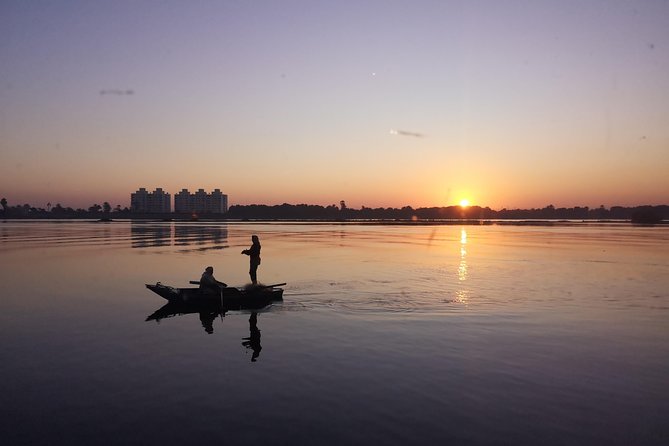
Then you get a felucca ride, about one hour. The goal is to admire Egyptian life from another perspective. This is not about ticking a box. It’s about slowing down. On a ship, you already have river views, but a felucca makes you feel closer to everyday movement on the water.
Optional Poblado Nubio
There is also an optional stop related to a Nubian village area, described as a chance to meet communities with their traditional way of life. The plan includes passing through a place on the Nile where you can bathe if you dare.
This is the kind of add-on that can be great if you enjoy meeting locals, but skip it if you want to keep things low-key or if you prefer to stay in town for more cultural time.
Day 5: Aswan free time and a smooth transfer out
After breakfast, you check out and get free time in Aswan. This is one of the nicer touches in a cruise like this. Instead of forcing another long guided circuit, you can explore at your own pace.
Then you get transferred to where you need to go, based on your request: hotel, airport, or train station. The itinerary says the provider will take you there when you need it, which helps avoid end-of-trip stress.
Aswan is a good ending point because it feels different from Luxor. You finish with a calmer day and the ability to choose your own pace, rather than ending with another packed temple schedule.
Price and value: what $625 buys you in the real world
At $625 per person, you are paying for more than the cruise bed. You’re also paying for organized temple visits with included tickets, plus accommodation for 4 nights on the cruise, and onboard meals.
From a value perspective, the key is that the trip bundles:
- multiple major temple sites across multiple days
- guided time to help you understand what you’re seeing
- meals, with lunch included 5 times and dinner included 4 times
- pickup in Luxor and a transfer out in Aswan
- a capped group size, listed as max 30 travelers
Drinks and tips are not included, so you’ll budget for that separately. But if you compare this to paying for tickets, private guide time, and transport piece by piece, this package usually makes more sense. You’re buying convenience, time savings, and a coherent route that does not require you to manage logistics between cities.
The guide makes it feel personal, not just scripted
One theme from the reviews is the guide, Mohamed Gaber (Moha). People highlight his professionalism, his attentiveness to the group, and his ability to teach Egyptian history and culture in a way that feels clear and fun.
They also mention he stays focused on making the experience safe and easy, even helping with practical worries like internet and exchange tips. That kind of support can be surprisingly valuable on a first trip to Egypt, where small logistics can otherwise steal your attention from the monuments.
In short, you’re not just following a checklist. You’re getting help reading the temples.
Practical tips so you enjoy every temple day
A few practical notes based on how this itinerary is structured and how temple days feel in Egypt:
- Wear comfortable shoes with decent traction. Stone floors and steps add up fast over multiple days.
- Plan for warm to hot conditions. Even with time limits at each site, midday heat can drain you.
- Bring a small day bag for water, sunscreen, and any basic essentials. You’ll be moving between stops.
- Use the ship time. The pool and quiet navigation are part of the value, not just a bonus.
- For optional stops, decide early. If you feel unsure about Abu Simbel or the Nubian village segment, make the choice based on your energy level, not last-minute pressure.
Should you book this Luxor to Aswan Nile cruise?
If you want one trip that connects the biggest temple highlights, plus actual rest time on the Nile, this is a strong match. The itinerary gives you Luxor’s core monuments, then temples downriver in a logical order, and it ends with free time in Aswan instead of another forced schedule.
I’d skip or rethink it if you hate walking, you can’t handle early starts, or you only want a quick hit of highlights. Also, if optional excursions do not interest you at all, the overall value still works, but your “wow” moments might feel more concentrated around the included days.
For most people, the decision comes down to this: do you want guided understanding paired with river downtime? If yes, book it and plan to save energy for the big temple mornings.
FAQ
What cities are included on this Nile cruise?
The cruise runs between Luxor and Aswan, with temple visits across the way.
How long is the experience?
It is listed as 5 days (approx.).
What time does the trip start in Luxor?
The start time is listed as 6:00 am.
Where does pickup happen?
Pickup is offered in Luxor from the airport, train station, or your hotel, depending on what you indicate.
What is included in the ticket and visits?
All visits mentioned in the itinerary are included, along with admission tickets to those places.
Are meals included?
Yes. Lunch is included 5 times and dinner is included 4 times. Drinks are not included.
What optional excursions are available?
Abu Simbel is optional. There is also an optional Poblado Nubio visit.
How do you visit Philae Temple?
Philae is on an island, so the itinerary includes a boat ride to reach the temple.
Is there a river boat ride included?
Yes. The itinerary includes a felucca ride on the Nile, about one hour.
What is the cancellation policy?
You can cancel up to 3 days in advance of the experience for a full refund. If you cancel less than 3 days before, the amount paid is not refunded.
Reviewed most recently around Luxor
- Private Full Day Tour of Luxor West and East Bank Tombs & Temples★ 5.0 · 45 reviews
- Luxor Private Transfer To Hurghada With visit Dendera Temple★ 4.5 · 45 reviews
- FULL Day Tour:Valley of the Kings &Queens &Hatshepsut Temple&more★ 5.0 · 46 reviews
- Private Sailing Traditional Egyptian Boat in Luxor★ 5.0 · 46 reviews
- Dendara and Abydos Temples Day Tour from Luxor★ 5.0 · 46 reviews
- Private Full-Day Luxor Tour to East and West Banks★ 5.0 · 47 reviews
- Private Full-Day Tour to West and East Banks of Luxor★ 5.0 · 48 reviews
- Private Tour: Luxor East and West Banks Full Day Tour★ 5.0 · 49 reviews
Nile Cruises, compared.
4-Days Nile Cruise From Aswan To Luxor including Abu Simbel and Hot Air Balloon
Read our review →
4-Day 3-Night Nile Cruise from Aswan to Luxor&Abu Simbel+Balloon
Read our review →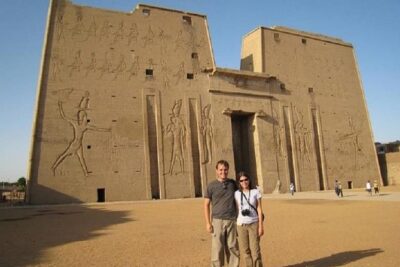
4-Day 3-Night Nile Cruise from Aswan to Luxor including Abu Simbel, Air Balloon
Read our review →
4-Day Nile Cruise from Aswan to Luxor with Guide
Read our review →4-Days Nile Cruise From Aswan To Luxor including Abu Simbel and Hot Air Balloon
Read our review →
4-Day 3-Night Nile Cruise from Aswan to Luxor – Private Tour
Read our review →4 Days Nile Cruise from Aswan to Luxor including Abu Simbel and Hot Air Balloon
Read our review →
4-Day 3-Night Nile Cruise from Aswan to Luxor With Balloon and Abu Simbel
Read our review →Browse the lists this tour appears in