
Reviewed · HISTORICAL TOURS
Explore the history and treasures of Luxor on a full-day tour
Luxor can feel like a blur if you try to do it on your own. This full-day private tour is interesting because it stitches together the big East Bank and West Bank highlights into one logical route. I like that the pace is built around site time, not just driving time, so you can actually look closely at the carvings.
I also like the door-to-door comfort: private A/C vehicle, bottled water, and pickup and drop-off at your Luxor hotel. One consideration is that entry fees and lunch are not included, so you’ll want a realistic plan for ticket costs once you’re there.
Key things to know before you go
- East Bank to West Bank in one day, so you don’t lose half a day between crossing points.
- Karnak Temple Complex gets real attention, with major highlights like the Hypostyle Hall area and the cult-temple layout.
- Hatshepsut’s mortuary temple at Deir el Bahari is included, which adds a totally different feel from the royal tombs.
- Multiple Valley of the Kings tomb stops (KV11, KV6, KV8, plus Tutankhamun’s tomb) lets you compare styles quickly.
- Private guide time with a qualified Egyptologist and flexibility for photos.
- Admission tickets are not included, so bring extra budget and patience at ticket counters.
Price and logistics that actually matter
This tour lists a price of $15 per person, and it’s offered as a private tour for your group. That is a standout value if you also care about comfort, because the package includes private A/C transfers and hotel pickup and drop-off in Luxor, plus bottled water and a qualified Egyptologist guide.
The catch, and it’s a common one in Egypt, is that entry fees are optional and not included. On top of that, lunch is not included (it’s optional), and a hot air balloon is also optional. So the real cost of the day depends on how many paid tombs or sights you want to enter, plus whether you add lunch.
Time-wise, you’re looking at 9 to 10 hours, which is long enough to cover real highlights but not long enough to wander. The advantage of this format is that you spend your energy on the places themselves, not on figuring out transport and logistics.
If you’re short on time in Luxor, this structure is exactly what you want: pick the sites that define the region, then let someone else handle the routing.
More Full-Day Tours in Luxor
- Luxor: Shared Full-Day Tour to Luxor West and East Banks
★ 4.5 · 1,812 reviews - Full Day Tour to East and West Banks of Luxor
★ 5.0 · 1,449 reviews - Luxor : Full Day Tour to Luxor West and East Banks & Lunch
★ 5.0 · 870 reviews
Your day starts with private A/C pickup and a real guide
Luxor days can get hot, crowded, and slightly chaotic, even when you try to plan well. The tour’s biggest practical win is the latest-model private vehicle and hotel pickup and drop-off, which means you start moving with less friction.
Then there’s the guide. The tour includes a qualified Egyptologist guide, and in the reviews, one guide named Mohamed gets called out for being flexible with photos and making sure the group hits all scheduled stops. That matters because it’s easy to “skip ahead” at ancient sites if you’re rushed. Here, the day is arranged so you can still pause, look, and take pictures without feeling like you’re being dragged through.
Also, this is described as a private tour activity, so it’s only your group. Even if you’re traveling solo or as a couple, you should expect a more controlled experience than big group bus tours.
What to keep in mind: your comfort depends on you bringing the right basics, especially if you’re going in warmer months. The tour provides bottled water, but the sun and walking time are still yours.
Karnak Temple Complex: the fortified village of Amun
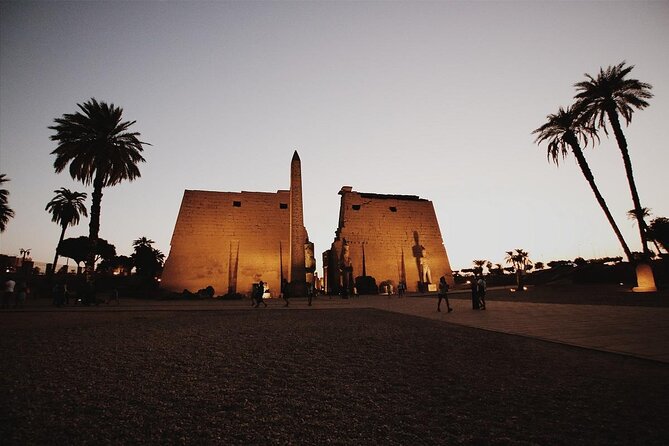
Karnak Temple Complex is the first stop for a reason. It’s not just one temple, it’s a whole temple world made up of temples, chapels, and related structures laid out like a fortified village. That Arabic meaning for Karnak, tied to the idea of a fortified village, actually helps you understand why the complex feels so spread out.
Karnak dates back from around 2055 BC to around 100 AD, with construction evolving across eras. It began as a cult temple dedicated to Amun, Mut, and Khonsu, and it was designed for religious use on a massive scale. The tour gives you about two hours here, which is enough time to appreciate how the space is organized and why people keep calling it the largest religious building of its kind.
What you’ll likely notice as you move through:
- The way the complex is structured like different zones and buildings rather than one straight-line monument.
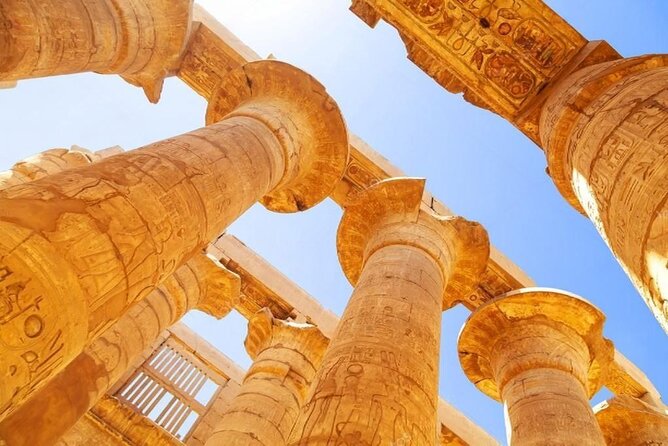
- The sheer scale, especially when you reach areas associated with the Hypostyle Hall concept, known for its giant columns.
- The recurring symbolism, from papyrus and lotus motifs to sacred-lake associations within the complex.
One small drawback: even with a guide, Karnak can feel visually busy. The best way to handle it is to focus on a few features as you go. Spend your best looking time on the places where carvings and column details are easiest to see, and don’t stress about catching every single element.
From Hypostyle Hall vibes to Ramesses III and royal obelisks
After Karnak’s main complex, the day slows slightly with a quick stop associated with Temple of Ramesses III. The tour keeps this portion shorter, around 20 minutes, which suggests the goal is not total exploration again, but targeted viewing and positioning so you don’t lose momentum.
Karnak has many highlights that show up as named features in the day’s flow:
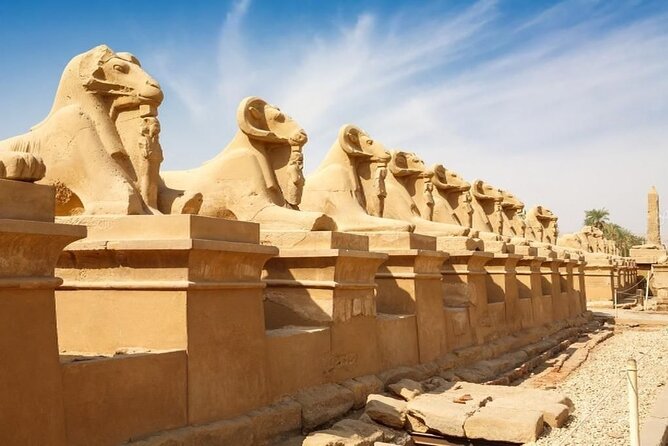
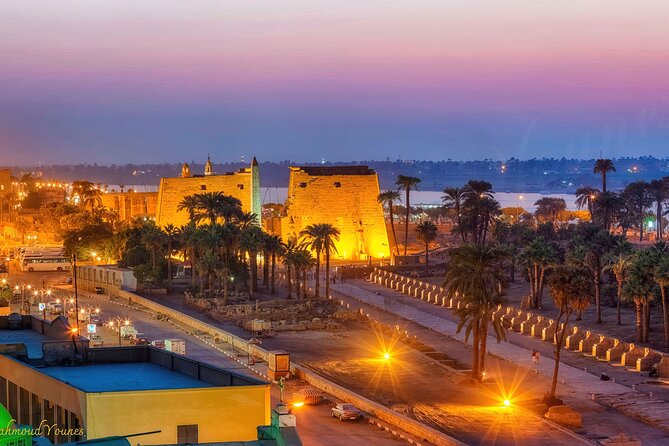
- the Avenue of Sphinxes
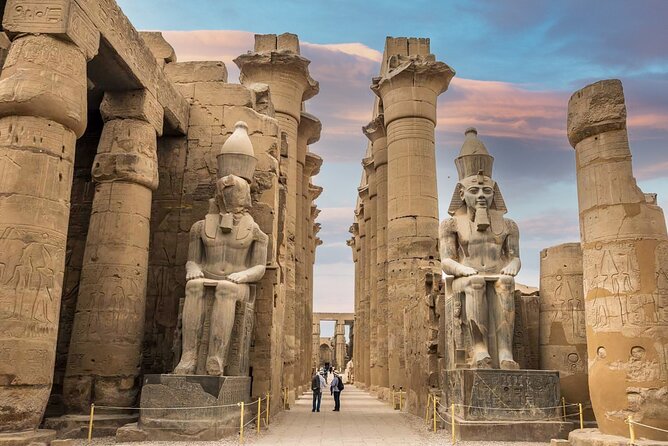
- the Hypostyle Hall with its 134 giant columns
- obelisks associated with Queen Hatshepsut and Tuthmosis I
- the Temple of Amon, with decoration described in lotus and papyrus designs
- and elements tied to Amenophis III, including a granite scarab and the sacred lake.
You also get a separate stop that’s tightly focused on the obelisks of Queen Hatshepsut and Tuthmosis I. This is only about 5 minutes, so treat it like a quick “reset your eyes” moment. Obelisks are easier to read than a complex maze of smaller features. Take that minute to notice inscriptions and proportions. Then keep going.
The trade-off here is time. Some travelers will want longer on obelisks and hall details, but the itinerary protects you by keeping later stops from turning into a scramble.
Tip: if you care about photos, this is the kind of moment when a guide who is open to photos can make a difference. Ask for a quick stop for composition, not a long linger.
More history days in Luxor:
- Sunrise Hot Air Balloon Over the Historical sites in Luxor
★ 5.0 · 697 reviews - 3-Day Luxor Aswan and Abu Simbel Historical Sites Private Tour
★ 5.0 · 34 reviews - From Cairo: Private Full-Day Tour of Historical Alexandria
★ 4.1 · 1,155 reviews - Old Cairo Guided Walk Tour: History, Culture & Street Bites
★ 4.6 · 633 reviews
Colossi of Memnon: big stone faces, quick hit
Next come the Colossi of Memnon, described as the two largest ancient statues in Egypt. They date back to the era of King Amenhotep III. This stop is about 20 minutes, which is realistic because the main point is visual impact and a few angles.
You get that classic “two giant seated figures” feeling right away. Their scale is what makes them memorable. Even in bright light, you can sense their weight and how they were meant to be seen from a distance. They also make a nice contrast after Karnak because the shapes are simpler and the focus is more direct.
One practical note: short stops are great, but only if you’re ready. Wear shoes you can move in, and keep your phone or camera accessible. If you start sorting out gear at the base, you’ll lose the best light window.
If you’re the kind of person who likes to read every sign, this stop may feel fast. If you like looking, judging distance, and snapping a few composed photos, it’s a good use of time.
Deir el Bahari and Hatshepsut’s temple: a calmer kind of power
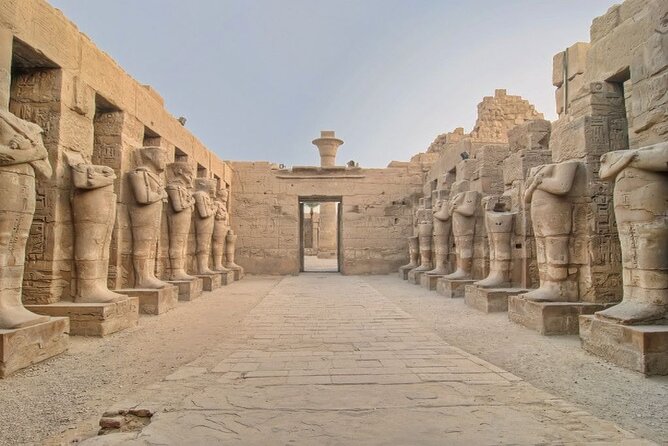
Then you shift into a different vibe at Temple of Hatshepsut at Deir el Bahari. This is a mortuary temple built for Queen Hatshepsut, described as the longest ruling female of Ancient Egypt. The name Hatshepsut is one of those that pops up again and again in Egypt stories, and here you get a full visual context for why she matters.
The tour gives you about two hours here, which is generous enough to explore the decorated spaces. The description emphasizes that the temple is decorated with statues, sphinxes, and reliefs, and that many parts have been meticulously restored over time.
That restoration note matters. Some monuments can feel too eroded to read. Here, the guide time and restoration together give you a better shot at understanding what you’re looking at, rather than only seeing stone blocks.
Drawback to consider: this area often involves uneven footing and steps. Plan for slow movement and a bit of walking. It’s worth it, but it’s not “sit and admire” sightseeing.
If you’re traveling with kids, it can be a good stop because the carvings and figures provide story cues you can spot without needing expert background. For adults, it works well because it mixes architecture with symbolism and royal intent.
Valley of the Kings: why the tomb choices are everything
After Deir el Bahari comes one of the main reasons people plan Luxor in the first place: the Valley of the Kings. The setting across from Thebes, described as a desolate dry river valley, is the backdrop for royal burials from the New Kingdom era.
The tour describes the valley as divided into an East and West Valley. The East Valley is the iconic one, with the West Valley having fewer tombs. In total, you’re told the valley includes over sixty tombs plus additional unfinished pits. That is why “a tomb day” is really about selection, not quantity.
You’ll get about two hours in the valley area, and then the itinerary focuses your time on specific tombs. This structure helps you get contrast between burial chamber designs without turning the day into a rushed museum line.
One consideration: tomb interiors can feel dim. If you expect bright, postcard style interiors, temper that. Also, some tombs are larger than others, so your “time per tomb” is part of how this itinerary stays realistic.
If you want to learn the different styles quickly, this approach works. You’ll see enough detail to notice patterns, then move on before fatigue sets in.
Inside KV11, KV6, KV8, and Tutankhamun’s tomb
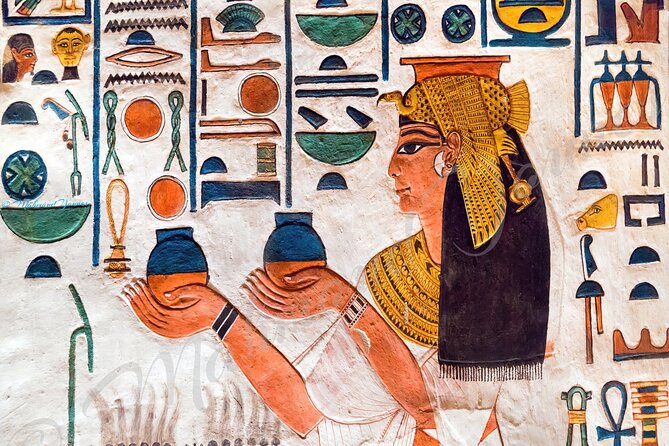
This is where the Valley of the Kings stop becomes more than “we were there.” You move through multiple tombs, each described with its own standout features.
Tomb of Ramses III (KV11)
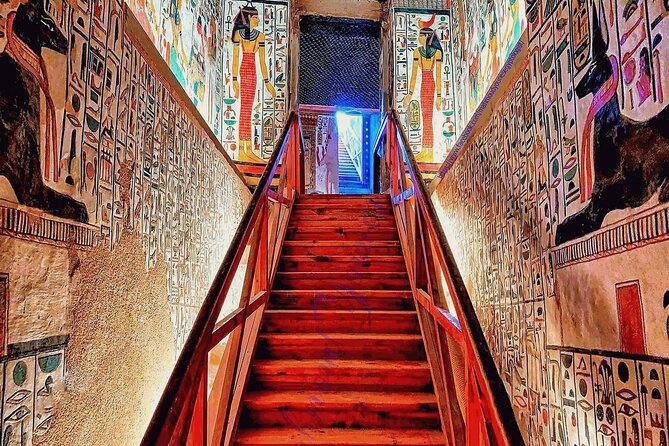
KV11 gets about 30 minutes. It’s noted as a complex system and includes colorful painted sunken reliefs featuring ritual texts like the Litany of Ra and the Book of Gates. Ramses III is also shown before the gods.
What makes KV11 especially interesting in the description is the mix of ritual scenes and unusual secular scenes in side rooms. You’ll see foreign tributes, including detailed pottery imported from the Aegean, royal armor, boats, and the “blind harpists” that gave the tomb an alternative name: Tomb of the Harpers.
This tomb can be a great pick if you like stories beyond the standard king-before-gods theme.
Tomb of Ramses IX (KV6)
KV6 is also about 30 minutes. It’s described as one of the first tombs in the valley and as open since antiquity. The description adds a key detail: archaeological findings suggest it was completed in a hurry, since some corners were cut after Ramses IX’s death.
Structurally, KV6 is described with a total area of 105 meters, a gate with a shallow descending ramp, and corridors with side chambers, but none of the four side chambers are finished or decorated.
This makes KV6 a “work in progress” experience. Instead of expecting perfect finish everywhere, you get a sense of how ancient projects could move fast and still get used.
Tomb of Merenptah (KV8)
KV8 is another 30-minute visit. The highlight here is the burial chamber’s unique setup with niches and four stone sarcophagi mentioned in the description. The tomb’s corridors show scenes from texts like the Litany of Re, the Amduat, the Book of Gates, and the Book of the Dead. The ceiling is described as astronomical scenes.
This is a strong choice if you like structured reading of symbolism. You’ll see how consistent religious themes appear across different tombs, but expressed with different layout choices.
Tomb of King Tutankhamun
The last listed stop in the valley portion is Tomb of King Tutankhamun, with about 30 minutes. This is the “you came to Luxor, you have to see it” moment for many people, partly because Tutankhamun is one of the most recognizable names in Egyptian history.
The itinerary does not add interior feature specifics in the provided info, but the time allocation suggests it’s meant as a focused visit rather than a long, slow study.
In practice, treating each tomb as a separate micro-experience helps. You’re not trying to absorb the entire Valley of the Kings in one go. You’re tasting different royal burial expressions.
Tickets, lunch, and what to plan for during 9 to 10 hours
This tour includes bottled water, and transfers are handled by a private A/C vehicle. That’s a real comfort advantage in Luxor, where heat and sun can turn “just walking” into a bigger effort than you expect.
What’s not included:
- Admission tickets for the sites
- Lunch (optional)
- Hot air balloon (optional)
Because the itinerary includes multiple tomb stops, you should expect that paid entry will play a big role in how the day feels. If you prefer to keep things calm, decide ahead of time which tombs you want to prioritize. The itinerary already chooses specific ones, but tickets still affect how smooth the transitions are once you reach each location.
Also consider clothing. Even though the tour is a full-day highlight run, you’re visiting ancient temples and tombs. Dress in breathable layers and keep a light covering handy. You’ll thank yourself when you’re out in open areas.
If you’re traveling with kids, the longer stops at Karnak and Hatshepsut help, but the tomb schedule means they’ll spend time looking at darker interiors. Bring something to keep them engaged, even if it’s just a game like finding the most visible carved figures.
Who this tour fits best, and who might want a different approach
This private Luxor day works best if:
- you want maximum highlights with minimal planning effort
- you care about comfort (private A/C, hotel pickup and drop-off)
- you want an Egyptologist guide to help you make sense of what you’re seeing
- you are short on time and would rather do fewer sites properly than many sites loosely
It’s also a solid choice for families. One review specifically mentioned a first Egypt trip with two children ages 6 and 8, and the day is designed to cover major sites efficiently rather than dragging on with uncertain transport.
You might consider a different approach if:
- you want totally unstructured time for reading every sign and waiting for the perfect photo moment
- you dislike paying extra for entry fees and optional lunch
- you feel strongly about spending long periods in one tomb, since the itinerary keeps each tomb visit around a focused window
Should you book this Luxor day tour?
If your goal is to see Luxor’s most defining ancient sites in one day without turning the trip into a logistics project, I think this is a strong booking. The inclusion list matters: private A/C transfers, hotel pickup and drop-off, bottled water, and a professional Egyptologist guide. That combo saves energy so you can spend your attention where it belongs, on Karnak’s scale, Hatshepsut’s temple details, and the distinct tomb experiences in the Valley of the Kings.
The main reason to pause is simple: entry fees and lunch are not included, and a long day means you should plan for heat, walking, and time inside tombs. If you budget for tickets and pack smart, the tour format is efficient and confidence-building.
My practical advice: treat this as a greatest-hits day. If you choose that mindset and come ready to move, you’ll leave Luxor feeling like you actually connected with both sides of the Nile.
FAQ
What sites are included in this full-day Luxor tour?
The tour includes Temple of Karnak, a stop at Temple of Ramesses III within the Karnak complex, the Obelisks of Queen Hatshepsut and Tutomosis I, the Colossi of Memnon, the Temple of Hatshepsut at Deir el Bahari, and visits in the Valley of the Kings including KV11 (Ramses III), KV6 (Ramses IX), KV8 (Merenptah), and the Tomb of King Tutankhamun.
How long is the tour?
It runs about 9 to 10 hours.
Is hotel pickup and drop-off included?
Yes. Hotel pickup and drop-off in Luxor are included.
Are admission tickets included?
No. Entry fees and tickets are not included (they are optional).
Does the tour include lunch?
Lunch is optional and not included.
Is bottled water included?
Yes. Bottled water is included.
Is this tour private?
Yes. It is a private tour/activity, and only your group participates.
Can I cancel for a refund?
Yes, free cancellation is offered. You can cancel up to 24 hours in advance for a full refund.
Reviewed most recently around Luxor
- Camel or Horse ride on west bank★ 5.0 · 20 reviews
- Nefertari and King Tut’s Tombs, Hatshepsut and More in Luxor★ 4.5 · 20 reviews
- Private Day Tour of Luxor★ 5.0 · 20 reviews
- Private Transfer from Luxor to Marsa Alam or vice versa★ 5.0 · 20 reviews
- Private Transfer Luxor to Aswan★ 5.0 · 20 reviews
- Private Full Day Tour: Dendera & Abydos Temples from Luxor★ 5.0 · 20 reviews
- 5 Days Nile Cruise from Luxor to Aswan with Hot Air Balloon★ 5.0 · 20 reviews
- Full Day Luxor East and West Banks Tour With Lunch★ 5.0 · 20 reviews
Historical Tours, compared.
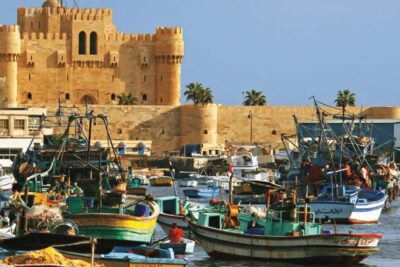
Private Full-Day Tour of Historical Alexandria
Read our review →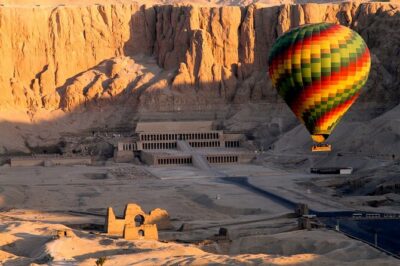
Sunrise Hot Air Balloon Over the Historical sites in Luxor
Read our review →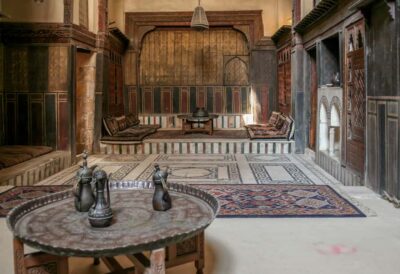
Old Cairo Guided Walk Tour: History, Culture & Street Bites
Read our review →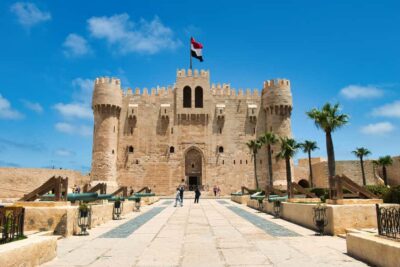
Historical Alexandria Shared Day Tour with Lunch
Read our review →
3-Day Siwa Oasis Tour, Safari, Camp & Historical Site
Read our review →
3-Day Luxor Aswan and Abu Simbel Historical Sites Private Tour
Read our review →Browse the lists this tour appears in