
Reviewed · PYRAMIDS OF GIZA
Giza pyramids, Sphinx, and the big museumum
Cairo is the kind of place where history is not a topic, it is the setting. This full-day outing strings together the big names of the Old Kingdom, from the earliest major pyramid idea to the iconic Giza plateau, then adds a hands-on museum stop. You get the story of the pyramid shape and why ancient Egyptians linked it to the sun god Raa.
Two things I really like about this tour are the way the guide ties each monument to the next step in royal tomb design, and the practical photo help. On one day, guide Morsi was especially good at explaining what you are looking at and setting you up for great shots.
One thing to keep in mind: entrance fees and tipping are not included, and some of the most dramatic stops are the ones that cost extra. Also, it is a long day, so you will want to be ready for a steady pace.
Key Points to Know Before You Go
- A pyramid evolution route from step pyramid experiments toward the bent and red pyramids, then on to the Giza giants
- Great Sphinx plus more than one viewpoint story, including the sun temple idea and what happened to the face over time
- Inside access where available, like an empty royal tomb space in the bent pyramid and cooler interiors in the red pyramid
- A big museum stop that turns the day from monuments into artifacts, with coffins, jewels, gold items, masks, and multiple deities
- Strong guide support and photo time, including standout picture help from Morsi on some departures
- Good value for the included logistics: hotel pickup and drop-off, private transport, and bottled water, with a low base price
Giza in One Long Day, with the Pyramid Story From Step to Red
If you only have limited time in Cairo, this is a smart way to see the headline sites without guessing what matters. The day is built around the idea that Egypt did not go from simple to perfect in one leap. You start with earlier pyramid experiments, then watch how royal tomb concepts evolve until the Giza complex becomes the final statement.
The tour also leans into meaning, not just scale. You hear how the pyramid shape was believed to help the pharaoh reach Raa, the god of creation and sun, and how the design was connected to keeping the mummy safe forever. Whether you treat that as belief or as pure archaeology, it is a useful lens. It makes the monuments feel like a plan, not random stone.
One more nice touch is the mix of outdoors and indoor time. After the harsh brightness of the plateau, the big museum stop gives you a calmer way to absorb what you have just seen.
More ways to see the pyramids:
- Cairo: Pyramids & Great Sphinx Private Tour with Camel Ride
★ 4.9 · 6,335 reviews - Tour to Giza Pyramids and The Egyptian Museum
★ 5.0 · 6,016 reviews - VIP All inclusive Best of the best Giza Pyramids,Sakkara,Memphis
★ 5.0 · 3,164 reviews
Starting Early: 8:00 AM, Pickup Included, and How to Pace an 8-Hour Day
The tour starts at 8:00 am and runs about 8 hours. That is a lot of time, but it is also what makes the plan possible. You are covering multiple major sites and then switching gears to the museum.
Pickup is included, and they also offer pickup, so you should not need to figure out the logistics yourself. You get private transportation plus a guide, which matters here because you are moving between areas and want someone to keep the story straight as you hop from one era to the next. Bottled water is included too, which is practical on a full day.
My advice for this kind of schedule is simple: expect a steady rhythm. You will have enough time to look carefully and take photos, but you should avoid planning extra stops or long detours that eat into the day. Also, bring sun protection. Even when you are mostly walking around stone monuments, the light can be brutal.
Cheops Pyramid on the Giza Plateau: Raa, One Million Stones, and the Big Picture
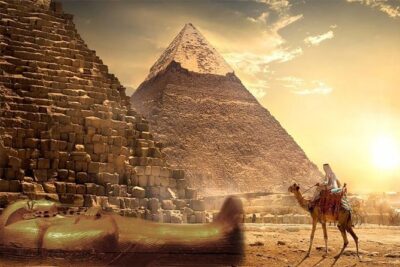
Your day begins at the Giza Governorate area, with the Giza pyramids. The focus here is on the idea of perfection and improvement. The guide explains how King Cheops built his pyramid with a similar foundation idea to his father’s Red pyramid, but improved the pyramid shape. You also get the famous scale numbers, like the one million stones and the tons of stone tied to the symbolism of Raa.
The tour frames another practical mystery that I love hearing out loud: how they managed to move all those blocks from Luxor to Giza on the Nile. No one can give you a step-by-step modern construction guide for a project that old, but the explanation helps you understand the problem builders faced, and why the final result still feels mind-boggling.
A note on cost: this first stop is listed as admission ticket free. So this is a good place to learn without feeling like you are paying every time you step through a gate.
The Great Sphinx: One Stone, a Human Face, a Lion Body, and Erosion Stories
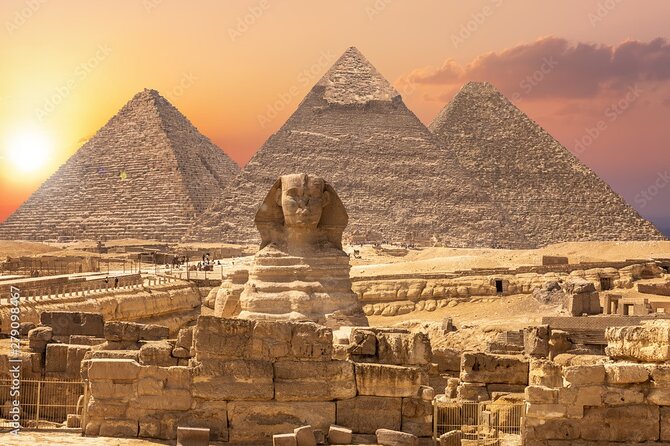
Next up is the Great Sphinx. It is not just the poster image. This stop is built for interpretation. You see the Sphinx as a guard of the pyramids, and you learn it is carved from one piece of stone, with the human face of King Kefren and the body of a lion. The meaning shared is that the king was seen as powerful and smart.
You also hear how time changed the face. The story goes that the Sphinx was once covered by sand, and erosion over time broke the nose and destroyed much of the long beard. Standing there with that explanation in your head changes the way you look at the damage. It feels less like a problem and more like a timeline.
Then the tour adds nearby context, like the sun temple of King Kefren, tied to praying to Raa at sun set and sun rise. You also get a chance to do something small but fun: a wishing well moment where you throw a little money and make a wish.
This stop is listed as admission ticket not included, so budget for extra entry fees here.
A different kind of day out of Cairo:
- From Cairo: Pyramids of Giza, Sphinx, Saqqara & Memphis Tour
★ 4.7 · 3,110 reviews - Cairo 8 Hour Private Tour of Pyramids, Egyptian Museum and Bazaar
★ 5.0 · 2,931 reviews - From Cairo: Half-Day Tour to Pyramids of Giza and the Sphinx
★ 4.6 · 2,891 reviews - Cairo: Pyramids, Sakkara & Memphis Tour with Lunch
★ 4.6 · 2,493 reviews
Djoser’s Step Pyramid at Saqqara: Imhotep, Experiments, and Why Six Steps Matter
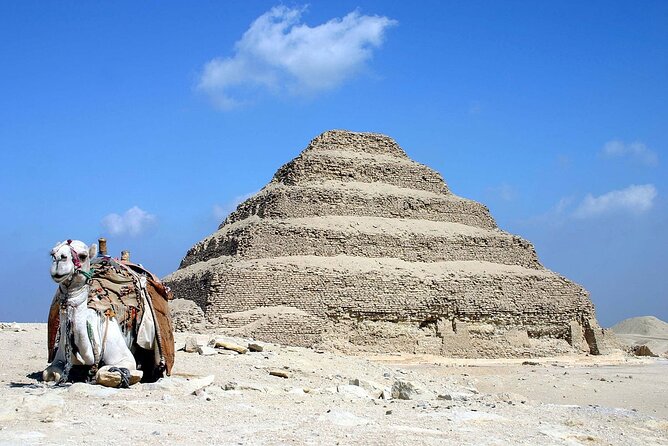
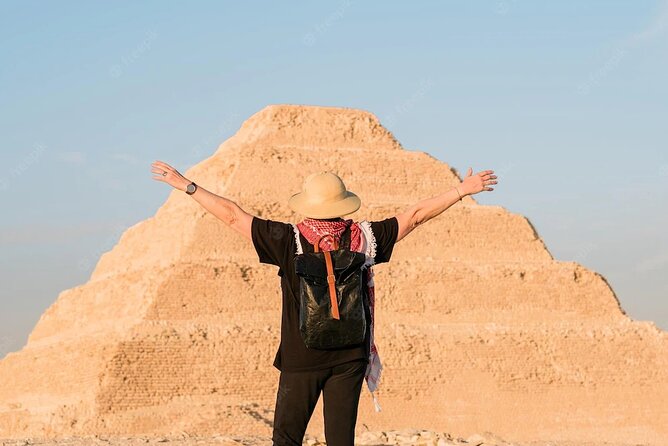
After Giza, the day shifts to the Step Pyramid of King Zoser at Saqqara. This is the moment that helps you understand why the later pyramids were such a leap. You see the first and oldest step pyramid in this story, linked to King Zoser and Imhotep, with six steps.
The guide’s takeaway is about trial and error. The explanation shared is that Imhotep tried to reach the pyramid shape, but could not fully get there at this stage. The step pyramid, in this telling, does not give the same energy to reach Raa as a true pyramid shape. The key point is that it is still a major milestone, not a dead end. The step pyramid exists because rulers and architects were pushing toward something more stable and more powerful, at least according to the belief system you are hearing.
Time-wise, this is a two-hour stop and it is admission ticket free. That is a nice perk, and it gives you room to really take in the proportions without feeling rushed.
Bent Pyramid and Red Pyramid: Snefru’s Turn Toward Perfect Angle and Cooler Interiors
Then you hit the heart of the transformation story. The bent pyramid comes first. You see it as a design built for Snefru, father of King Keops, after the step pyramid of Djoser. The geometry is the star. You hear how the architect started with a bigger angle, then changed to a smaller angle in the middle. That is the kind of detail that makes the whole day feel like more than sightseeing.
You also get a chance to go inside the tomb space. In this tour description, the inside area is empty, which is tied to the idea that Snefru was the son of the sun god and did not tell much about his life. Even if you do not buy the religious explanation word for word, the empty space is still powerful. It is a reminder that these royal tombs were designed to last, even when the human story did not.
The bent pyramid segment also sits within the broader arc of royal tomb development, from step to bent to red, so you are not just seeing another pyramid. You are seeing the timeline.
After that comes the red pyramid, also tied to Snefru. This is described as the first pyramid with a perfect angle, and then as the direct setup for the Giza pyramids that follow. The belief shared is that the pyramid shape gives more energy to reach Raa, that it is more stable, and that it helps keep the mummy safe forever.
Inside access is part of this stop too. The description notes that it is very cold inside, which is something you will feel quickly once you step into the cooler spaces. This can be a relief after hours in open air, and it helps you slow down and look at the stone in a different way.
Both the bent and red pyramid stops are listed as admission ticket not included, so plan extra budget for these.
Big Museum Stop: Coffins, Jewels, Gold, Masks, Statues, and Multiple Gods
By the time you reach the big museum stop, you have already spent hours seeing how pyramids were built to protect bodies and symbols. That museum visit works as the payoff. Instead of trying to imagine the meaning of ancient funerary life, you can point at objects.
The museum stop is described as filled with mummies, coffins, and treasures like jewels and gold, plus statues and many old pieces and masks. You also see different gods, and you get stories tied to those figures.
This is the part of the day that helps you connect the dots. Pyramid architecture is one side. The objects used to support beliefs about the afterlife and the soul are the other side. Put together, it makes the day feel like one coherent lesson, not a checklist.
I like this museum stop because it gives you a break from the sun and lets your brain cool down. If you enjoy archaeology and want to go beyond shape and size, this is where the experience becomes more personal and more understandable.
Guide and Driver Quality: What Makes This Tour Feel Smooth
For tours that cover so many heavy hitters, the real difference is how the day flows. This is a private tour with private transportation and a guide, and the included logistics help you move efficiently.
In one standout account, guide Morsi stood out for being good at taking pictures and giving solid explanations that make the monuments easier to read. I also like that the team stays in touch. One experience noted the operator was online and making sure everything was okay, which you feel most during busy, fast-moving days when you want simple answers quickly.
Driver quality also matters here, because you are dealing with multiple stops across Cairo. With the included transportation and hotel pickup and drop-off, you avoid the stress of arranging separate rides.
If you are the kind of person who gets overwhelmed by too many sites in too few hours, having a guide who keeps you oriented makes the day much more enjoyable.
Price and Value: Is $40 Enough for This Much Monument Time?
At $40 per person, this tour is priced aggressively for the amount of ground you cover. You get private transportation, a tour guide, hotel pickup and drop-off, and bottled water. That is a lot of the expensive parts baked in.
Where the cost can change is the extras. Entrance fees and tipping are not included, and some stops explicitly list admission ticket not included. The Sphinx, the bent pyramid, and the red pyramid are the places where you should expect to pay additional entry fees, while the first pyramid area and the Step Pyramid area are listed as admission ticket free.
So here is the honest value check: if you show up ready to cover entrance fees, this is a strong deal. If you are trying to keep the day on a bare minimum budget, the total can rise fast. Still, even with extra admissions, the base price includes the big helpings of time, transport, and interpretation that many people otherwise pay separately.
Also, note that it is often booked about 40 days in advance on average. That is a clue that popular schedules can fill.
Who This Tour Is For, and Who Should Skip It
This works well for you if:
- You want the pyramid evolution story, from step to bent to red, then the Giza plateau
- You like having a guide explain meaning, including the link to Raa
- You want both the monuments and a museum stop in one day
- You value photo help and a smooth day flow, with guides who manage the pacing
You might not love it if:
- You hate paying multiple entry fees throughout a day
- You want a slow, unstructured visit where you can linger for hours at one site
- You prefer fewer stops, even if it means less variety
Should You Book Lovely Egypt Tours for Giza, the Sphinx, and the Big Museum?
If your goal is to make Cairo count in one day, I would say yes, with planning. The combination is strong: major pyramid sites, the Sphinx, a museum stop that fills in what the monuments mean, plus included pickup and private transport.
Book it if you want structure and explanation, and if you are okay budgeting for entrance fees and tipping on top of the base price. For me, the best sign is the consistent emphasis on guide quality and picture help, like the experience with Morsi, paired with a day designed to pack in the key Old Kingdom landmarks without leaving you to figure it out alone.
If you are cautious about costs, bring a little extra money for entrances, and treat the schedule like a full-day plan, not a casual stroll. When you do that, this tour becomes one of the most efficient ways to see Giza and understand why the pyramids were built the way they were.
FAQ
What time does the tour start?
The tour starts at 8:00 am.
How long is the experience?
The duration is about 8 hours.
Is hotel pickup and drop-off included?
Yes. The tour includes hotel pick up and drop off, and pickup is also offered.
Is this a private tour?
Yes. It is a private tour or activity, and only your group will participate.
Are entrance fees included?
No. Entrance fees are not included, and tipping is also not included.
Does the tour include bottled water?
Yes. Bottled water is included.
How far in advance should I book?
On average, it is booked 40 days in advance.
What is the cancellation policy?
You can cancel for a full refund up to 24 hours before the experience starts. If you cancel less than 24 hours before the start time, the amount paid is not refunded.
Reviewed most recently around Cairo
- Pyramids of Giza half-day tour★ 5.0 · 45 reviews
- Private Giza Pyramids & Sphinx Day Tour with Lunch from Cairo★ 4.5 · 45 reviews
- Private Tour to Old Coptic Cairo & the Cave Church of St. Simon.★ 5.0 · 45 reviews
- Private Day Tour To Luxor from Cairo by Plane,Tours,Sailing Felucca,Camel&Lunch★ 5.0 · 45 reviews
- Overnight camping black and white desert.★ 5.0 · 45 reviews
- Private Half Day Giza Pyramids Tour with camel & Lunch★ 5.0 · 46 reviews
- Private Tour to Giza Pyramids with 30 Minutes Camel Ride and Lunch★ 4.5 · 46 reviews
- Discover The Palaces of Cairo★ 5.0 · 46 reviews
Pyramids of Giza, compared.

Pyramids & Great Sphinx Private Tour with Camel Ride
Read our review →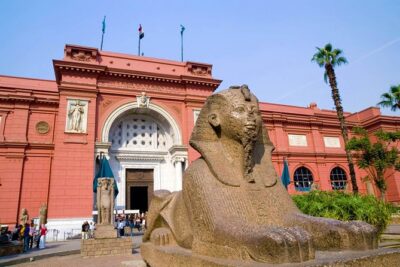
Tour to Giza Pyramids and The Egyptian Museum
Read our review →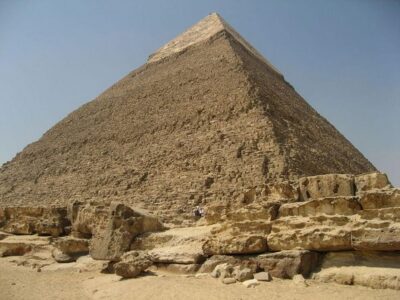
VIP All inclusive Best of the best Giza Pyramids,Sakkara,Memphis
Read our review →
Pyramids of Giza, Sphinx, Saqqara & Memphis Tour
Read our review →
Cairo 8 Hour Private Tour of Pyramids, Egyptian Museum and Bazaar
Read our review →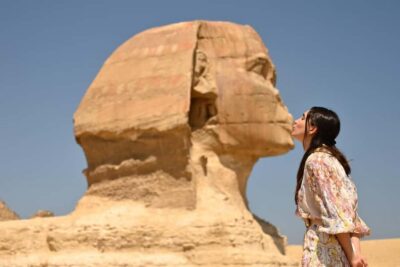
Half-Day Tour to Pyramids of Giza and the Sphinx
Read our review →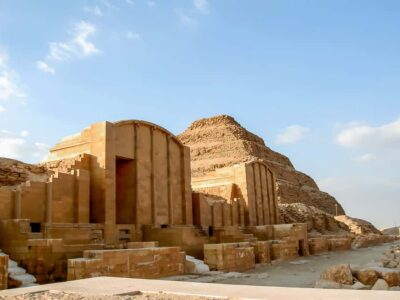
Private ViP all-inclusive Giza Pyramids,Sphinx,Inside Pyramid
Read our review →Browse the lists this tour appears in