
Reviewed · NILE CRUISES
Nile cruise 5 days Private full board accommodation transferred guided tours
A Nile cruise from Luxor to Aswan is interesting because it turns Egypt’s big-name sites into something you watch unfold at river pace. You’re not just rushing through ruins, you’re living on the Nile for days, with guided stops at Luxor Temple, Karnak, the Valley of the Kings, Edfu, Kom Ombo, and Aswan.
I especially like that this is a private experience with a licensed Egyptologist guide, so you can move through the temples with context instead of wandering. I also like that your ticket setup is designed for convenience, with entrance fees included and full-board meals during the 4-night cruise. One drawback to consider: this kind of trip can feel more like a solid 3-star floating hotel than a luxury resort, so it pays to manage expectations about cabin finish, AC, and water limits.
Key points before you go
- Private by design: Only your group participates, so you can ask questions and adjust pacing without fighting crowds.
- Licensed Egyptologist-led days: You get guided visits at major sites, with time built in for each stop rather than a drive-by tour.
- Full board for the cruise days: Breakfast is provided 5 times, with lunch and dinner included across the sailing portion (4 lunches, 4 dinners).
- Entrance tickets handled: Most key sites include admission in the package, which reduces day-of hassle.
- Long, hot, and active in spots: You should plan for sun, stairs, and walking, with a moderate fitness level requirement.
- Guide names come up often: People have praised guides such as Magic Maged Habib, Hany Refaat, Mohamed Basry, Mohammed Taha, Mustafa, and Muhammad Marghany for making sites more understandable.
Why a Luxor-to-Aswan Nile cruise is a smarter fit than day trips
Doing Egypt in chunks is how a lot of people burn out. The trick with this route is that you get the big sights without trying to cram every temple into one exhausting day. By the time you reach Aswan, the Nile starts to feel like the thread connecting it all, not just a scenic backdrop.
You also benefit from river rhythm. Mornings tend to be for the major temples, afternoons for sailing and recovery time, and evenings for food on board. Even when a stop is only planned for around two hours, that’s usually long enough to see the highlights and ask questions instead of just taking photos and sprinting onward.
A private setup matters here. If your group wants fewer photo stops, more time at one wall with inscriptions, or a slower pace at the Valley of the Kings, you have a better chance of getting it than on a bus tour.
More Nile Cruises in Luxor
- From Luxor: 3-Night Nile Cruise to Aswan and Hot Air Balloon
★ 3.7 · 297 reviews - 5 Days Private Guided Nile River Cruise Tour from Luxor to Aswan
★ 5.0 · 229 reviews - Historia Hotel Nile Cruise, Mon. from Luxor 4 nts inc. Excursions
★ 5.0 · 185 reviews
The comfort tradeoff: full board, but think 3-star floating hotel
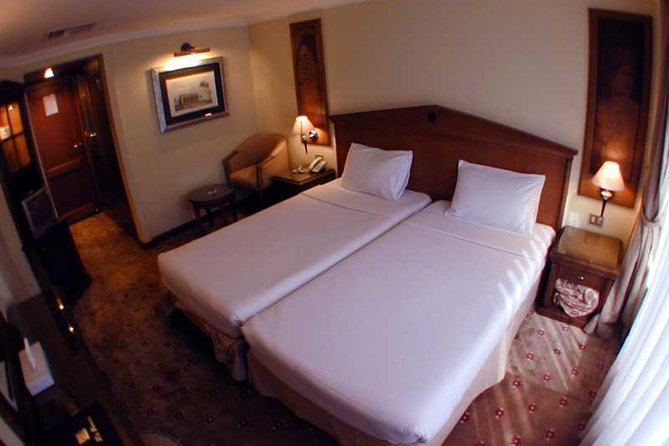
This cruise includes 4 nights of floating hotel accommodation with full board. In plain terms, you’re paying for a cabin, meals, and guided touring, not for a high-end resort feel.
From past experiences shared by people who booked Nile cruises, the comfort level can vary ship to ship. Some cabins are described as clean but dated, and there are occasional complaints about things like AC performance, room upkeep, and limited included water. That doesn’t mean every sailing is like that, but it does mean you should go in with realistic expectations.
Here’s how I’d approach the comfort side so it doesn’t sour your trip:
- When you check in, confirm your AC works properly and your bathroom is in working order right away.
- Ask (or check) what your package includes for bottled water. One common complaint is that included water can be limited, with extra water sold at meals.
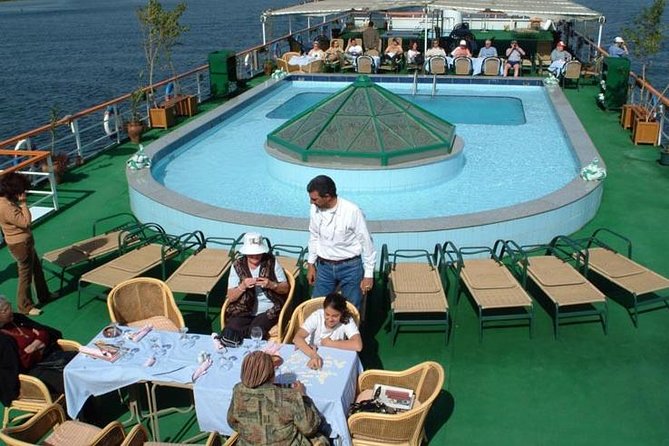
- If a small pool is available on your boat, treat it as a quick dip, not a full swim plan. Heat and time on shore will do most of the heavy lifting.
Food is generally a strong point on these cruises. Meals are included (breakfast 5 times, plus lunch and dinner during the sailing days), and people often describe the food as good or even exceptional for the price. If you want vegetarian food, this package says a vegetarian meal option is available, but I’d still ask early so it’s not a last-minute scramble.
Day-by-day temple time: how the route keeps you from feeling rushed
This isn’t a one-day whirlwind. The cruise is built around multiple temple stops, each typically set for about two hours, so you can slow down at the places that deserve your attention.
Also, you get the practical benefit of guided context. You’ll hear why Luxor Temple and Karnak fit together, what the Valley of the Kings was used for, and how Edfu and Kom Ombo relate to Egyptian belief systems. When the guide is strong, the sites click into place fast.
Luxor Temple on the East Bank
Luxor Temple is a major Ancient Egyptian temple complex on the east bank of the Nile in the modern city known as Luxor. It was constructed around 1400 BCE, and in Egyptian it’s tied to the idea of a southern sanctuary.
What I like about starting here is that it sets your mental stage. Even if you don’t read a single hieroglyph, you start noticing temple layout patterns: columns, pylons, and how sacred space is organized. The included admission makes this easy, and you get about two hours there to take it in without feeling trapped in a single photo spot.
More Nile cruises:
- From Luxor: 5-Day Nile Cruise to Aswan with Balloon Ride
★ 4.2 · 168 reviews - 4 Days Aswan and Luxor Nile cruise&Abu Simbel by plane from Cairo
★ 5.0 · 155 reviews - 4 Nights Luxor to Aswan Nile cruise with Abu Simbel&Air Balloon
★ 5.0 · 155 reviews - From Luxor: 3-Day Nile Cruise to Aswan with Private Guide
★ 4.2 · 147 reviews
Karnak Temple: the big one people can’t stop talking about
Karnak is the huge temple complex people mean when they say you’ll be overwhelmed in the best way. This stop is short on paper, but it matters because Karnak is the kind of place where a guide can point out what to look for first.
In a guided format, you can spend your time on the most meaningful sections instead of walking randomly and hoping it all makes sense. Plan for midday heat even on temple days. Hats, sunscreen, and a refill bottle help a lot.
West Bank essentials: Valley of the Kings and Hatshepsut at Deir el-Bahari
The west bank is where Egypt turns emotional. You’re looking at burial landscapes and mortuary temples, places built for eternity in a culture that took the afterlife seriously.
Valley of the Kings: where New Kingdom rulers planned eternity
The Valley of the Kings is the ancient burial ground of many New Kingdom rulers. It sits on Luxor’s west bank, part of the broader Thebes area. This is a long, narrow defile, and it’s exactly the kind of place where you feel how geography shaped religious practice.
You get about two hours here. That time matters because the Valley isn’t just one stop. It’s a whole system of tombs in a walled landscape. With a good guide, you understand why the Valley was chosen and how royal burial evolved.
The main drawback is simple: you’ll walk, climb, and stand in sun. If heat is your limit, go slow, sip water when you can, and keep a light pace.
Hatshepsut’s temple: the terraces under the cliffs
Deir el-Bahari is where you meet Hatshepsut, one of Egypt’s best-known queens and builders. Her mortuary temple is called the Djeser-Djeseru, often translated as the holy of holies. It’s built beneath cliffs, and it’s famous for its terrace design.
What I love about this stop is the way the temple reads like architecture with a message. The terraces guide your eyes, and the setting makes the scale feel impressive even when you’re not thinking about technical details.
You get about two hours at the temple complex, which is enough time to appreciate both the exterior layout and the significance behind it, especially with a guide trained in Egyptology.
Edfu and the Temple of Horus: a river town with a big spiritual center
Edfu is where you keep moving south, and the Temple of Horus gives your trip a different tone than the tomb-and-mortuary days. This temple stop is the Temple of Horus, associated with Horus, and the city is known historically as Apollonopolis Magna in later periods.
This stop is also set for about two hours. In this timeframe, a guide can help you notice the temple structure and how the religious worldview shows up in temple scenes and design.
If you’re starting to get temple fatigue, this is where pacing helps. The guided explanations keep the site from turning into repetition. You’re not just seeing “another big ruin.” You’re seeing how different Egyptian temple traditions connect.
Kom Ombo: why the double temple layout is worth your full attention
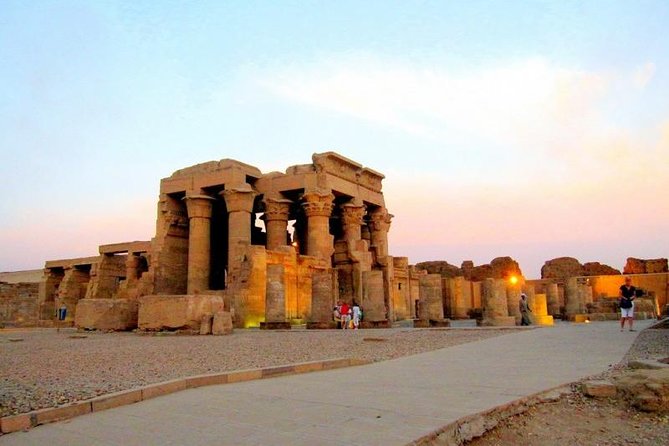
Kom Ombo is famous for its unusual double temple. It’s a rare case where you’re dealing with paired temple spaces rather than a single uniform complex. The temple was constructed during the Ptolemaic dynasty (180 to 47 BC), with later additions during the Roman period.
This stop usually gets around two hours. That time can be a gift if your guide is good at pointing out the logic of the two sides, because once you understand the layout, the temple stops feeling random.
This is one of those places where the guide can help you see Egypt’s layers across time. You’re watching Ptolemaic rule leave its stamp, then seeing Roman-era additions on top of that.
Aswan’s trio: High Dam, Unfinished Obelisk, and Philae
Aswan days often feel like a mix of old Egypt and modern change. That contrast is part of what makes the end of the cruise memorable.
Aswan High Dam
The Aswan High Dam is a major embankment dam across the Nile. Construction ran between 1960 and 1970, and it’s the landmark that eclipsed the older low dam that was completed in 1902. This isn’t just a stop for photos. It sets context for how the Nile’s flow has been managed in modern times.
You get about two hours here. If you’re interested in how civilizations adapt, it’s a useful reminder that history doesn’t stop at the temples.
Unfinished Obelisk
The unfinished obelisk is one of the biggest ancient obelisks known, located in the stone quarries of ancient Egypt in Aswan. It’s called unfinished for a reason, and that’s what makes it compelling. You’re seeing the process side of monumental building, not just the completed artifact.
Two hours is plenty to walk the area and absorb what it represents. This is also a nice break from relentless indoor temple settings, since it’s different visually and physically.
Philae: island temple in a preserved reservoir setting
Philae is an island in the reservoir downstream of the Aswan Low Dam and tied to the temple complex originally located near the First Cataract area. It’s also noted as free admission in the package.
This stop is around two hours and gives you that last strong sacred stop before the cruise ends. If you’re tired from the walking, you can still enjoy Philae by focusing on the main view lines your guide points out.
Price and value: what $750 per person really covers
At $750 per person, the value comes from three things: time, tickets, and guidance. You’re paying for a 5-day experience that includes 4 nights of accommodation and full board, plus licensed Egyptologist guided touring and entrance fees for the listed sites.
If you tried to assemble this yourself, you’d usually spend a lot of time coordinating transfers, buying site tickets, and lining up knowledgeable interpretation. Here, the package handles a big chunk of that.
That said, there are a couple of cost realities to watch:
- Tipping is not included. Plan for it, because you’ll have guide and driver services.
- Personal expenses are not included, so souvenirs, drinks outside package terms, and any upgrades are on you.
- Egypt entry visa is not included, so add that cost separately.
- Water and drink policies can be surprising on some cruises. One past complaint was that included water amounts were limited, with extra water charged at meals. Ask in advance or be ready for purchases.
On the value side, pickup is offered and transfers are in air-conditioned cars, which is a real comfort upgrade in Egyptian heat.
Also, this trip is often booked about 32 days in advance, so if you’re traveling in a busy period, earlier planning can help you secure the dates and guide preferences you want.
How to get the best day from your guide, including names people liked
The success of Egypt touring is often about translation plus pacing. A guide who can explain why a temple was built, what each part was used for, and how to read the space changes everything.
In past private-cruise experiences, people have praised guides including Magic Maged Habib, Hany Refaat, Mohamed Basry, Mohammed Taha, Mustafa, and Muhammad Marghany. The repeated theme is that they help you move through sites with confidence, not confusion, and they do a good job organizing the day around what matters.
If you can request a guide by name, it’s worth trying. When the guide is right, you spend less time asking yourself what you’re looking at, and more time enjoying the real wow moments.
Timing, heat, and practical tips that keep the trip comfortable
Let’s be honest about Egypt in general, and Luxor to Aswan in particular. It can get hot, and temples are often sun exposed. One past comment basically boiled down to this: if you don’t like heat, plan carefully.
Here’s how to plan smarter without turning the trip into misery:
- Start your day early when you can. The meeting window for the experience runs 7:00 AM to 8:00 AM.
- Wear a hat, use sunscreen, and bring sunglasses. You’ll be grateful at Karnak and in open areas around the Valley of the Kings.
- Use a small refill bottle so you’re not constantly hunting for drinks.
- Expect stairs and uneven surfaces on west bank sites. This tour asks for moderate physical fitness for a reason.
- Build in shade breaks mentally. Your guide can often pace the day based on your energy level, especially since this is private.
Also, since cancellation is non-refundable in this package, commit only if your plans are solid.
Should you book this Luxor to Aswan private Nile cruise?
I think you should book it if you want the big-name Egyptian sites in a calmer format, with licensed guidance, included entrance fees, and a floating base that covers accommodation and most meals. The route is strong: Luxor East Bank to Karnak, west bank tomb-and-temple staples, then Edfu and Kom Ombo, finishing in Aswan with the High Dam, Unfinished Obelisk, and Philae.
Don’t book it with the mindset that every cabin will feel brand-new or that included amenities will match a luxury hotel standard. Treat it as a functional, mid-range floating stay where the main value is the guided history on shore and the convenience of having tickets and transfers handled.
If you’re sensitive to heat, or you expect 5-star comfort without any hiccups, you might feel frustrated. If you’re flexible, curious, and ready for walking and sun, this is a very workable way to see Egypt’s core Nile story.
FAQ
What is the duration of the Nile cruise?
The experience is listed as 5 days (approx.), with 4 nights of floating hotel accommodation included.
What sights are included on the Luxor to Aswan route?
The included guided stops are Luxor Temple, Temple of Karnak, Valley of the Kings, Temple of Hatshepsut at Deir el-Bahari, Temple of Horus (Edfu), Temple of Kom Ombo, Aswan High Dam, Unfinished Obelisk, and Philae.
Are entrance fees included?
Yes. Admission tickets and entrance fees are included for the listed sites, and Philae is listed as free.
Is food included, and can I get vegetarian meals?
Yes. The package includes breakfast 5 times, lunch 4 times, and dinner 4 times. A vegetarian meal option is available.
Does the price include transfers?
Yes. The experience includes all transfers with air-conditioned cars, and pickup is offered.
Do I need an Egypt visa?
The Egypt entry visa is not included, so you’ll need to arrange it yourself.
Are tips included?
No. Tipping is not included.
Is this tour private or shared?
This is a private tour/activity, and only your group will participate.
What time does the meeting take place?
The listed meeting window is 7:00 AM to 8:00 AM, Monday through Sunday.
What happens if I need to cancel?
This experience is non-refundable and cannot be changed for any reason. If you cancel or ask for an amendment, the amount you paid will not be refunded.
Reviewed most recently around Luxor
- Private Full Day Tour of Luxor West and East Bank Tombs & Temples★ 5.0 · 45 reviews
- Luxor Private Transfer To Hurghada With visit Dendera Temple★ 4.5 · 45 reviews
- FULL Day Tour:Valley of the Kings &Queens &Hatshepsut Temple&more★ 5.0 · 46 reviews
- Private Sailing Traditional Egyptian Boat in Luxor★ 5.0 · 46 reviews
- Dendara and Abydos Temples Day Tour from Luxor★ 5.0 · 46 reviews
- Private Full-Day Luxor Tour to East and West Banks★ 5.0 · 47 reviews
- Private Full-Day Tour to West and East Banks of Luxor★ 5.0 · 48 reviews
- Private Tour: Luxor East and West Banks Full Day Tour★ 5.0 · 49 reviews
Nile Cruises, compared.
4-Days Nile Cruise From Aswan To Luxor including Abu Simbel and Hot Air Balloon
Read our review →
4-Day 3-Night Nile Cruise from Aswan to Luxor&Abu Simbel+Balloon
Read our review →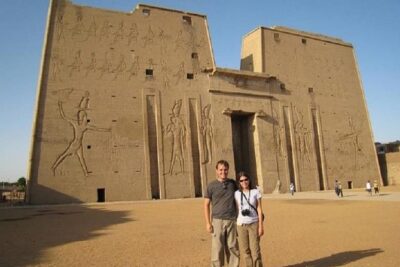
4-Day 3-Night Nile Cruise from Aswan to Luxor including Abu Simbel, Air Balloon
Read our review →
4-Day Nile Cruise from Aswan to Luxor with Guide
Read our review →4-Days Nile Cruise From Aswan To Luxor including Abu Simbel and Hot Air Balloon
Read our review →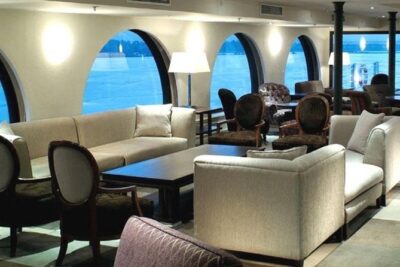
4-Day 3-Night Nile Cruise from Aswan to Luxor – Private Tour
Read our review →4 Days Nile Cruise from Aswan to Luxor including Abu Simbel and Hot Air Balloon
Read our review →
4-Day 3-Night Nile Cruise from Aswan to Luxor With Balloon and Abu Simbel
Read our review →Browse the lists this tour appears in