
Reviewed · PYRAMIDS OF GIZA
Top 6 Days Around Cairo,Giza Pyramids,Luxor , Aswan & Abu Simbel
This 6 day trip is interesting because you cover Cairo to Abu Simbel without domestic flights, using sleeper trains and tight organization. I love the personal Egyptologist approach, and I like that 4-star hotels and most meals are handled for you. The main drawback is pace, especially the very early Abu Simbel morning, plus the Pyramids of Giza entrance fee is not included.
From the moment you land in Cairo, you get meet-and-assist support and a plan that includes confirmed pickup times. You’ll spend time at the Egyptian Museum and then head into Khan Al-Khalili for a real slice of Cairo beyond ticket lines.
Later, the rhythm turns into ancient sites plus practical travel, with sleeper trains helping you save time between major cities. The sites are big and the days are full, so bring good walking shoes and a mindset of seeing a lot, not slowing down.
Key highlights to know before you go
- Sleeper trains instead of flights between Cairo, Luxor, and back to Cairo
- Personal Egyptologist guidance so you spend less time guessing and more time understanding
- Cairo in a single organized day with the museum and Khan Al-Khalili
- Luxor focus on the West Bank classics including Hatshepsut at Deir el Bahari and the Valley of the Kings
- Aswan by road plus iconic temples like Philae on Agilkia Island
- Abu Simbel early start with breakfast box timing and a return by overnight train
Cairo airport to first night hotel, you start with fewer headaches
The first thing you’ll notice is how much the trip aims to remove stress right away. Your tour manager meets you at Cairo International Airport and escorts you by air-conditioned vehicle to your hotel, then helps you check in smoothly. You also review your holiday itinerary right then, and you confirm pickup times for each day.
That matters more than it sounds. Cairo can feel chaotic if you’re trying to arrange taxis, ticket counters, and meeting points while you’re jet-lagged. Here, you step into the day already “mapped,” so you can focus on the sights.
It also helps that your guide isn’t just a driver with a calendar. In Cairo, people have specifically mentioned guides like Nevin helping them feel safe and oriented. Even if you don’t get the same guide name, the key idea is consistent: you get someone who can translate what you’re seeing into something you can actually remember.
One practical tip: keep your passport and any required booking details handy. This tour asks for passport name, number, expiry, and country at booking time, so it’s smart to have your documents ready without scrambling.
More ways to reach Abu Simbel:
- Egypt 8 nights:Cairo,Luxor,Aswan,Abu Simbel,Nile cruise,Balloon
★ 4.5 · 227 reviews - Our Exceptional 5 days Cairo, Luxor and Abu Simbel Tour Package
★ 5.0 · 212 reviews - From Cairo: 2-Day Abu Simbel & Luxor Tour
★ 3.9 · 136 reviews
Pyramids, Sphinx, Egyptian Museum, and Khan Al-Khalili in one powered day
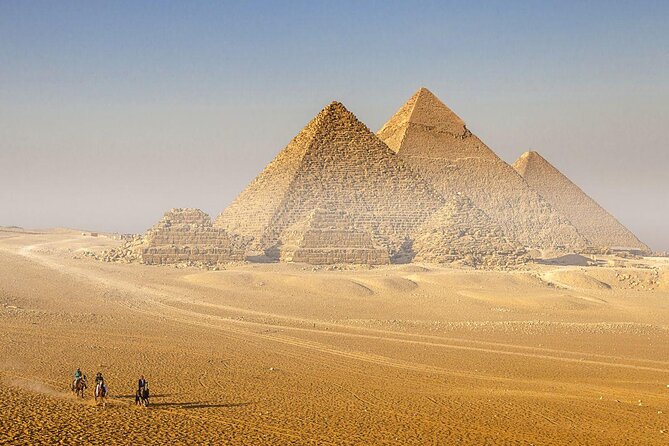
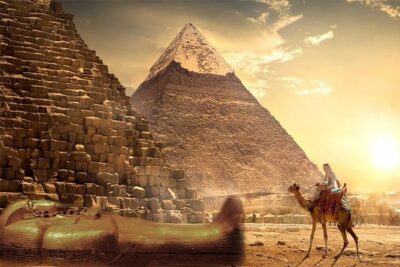
Cairo is where the trip puts the pedal down, in a good way. After breakfast, you head to the Giza Plateau with a personal guide for the Great Pyramids of Cheops, Chefren, and Mykerinus. You’ll also see the Sphinx area, including the Sphinx and the Valley Temple facing the Great statue.
Timing is a big deal here. The Pyramid visit is listed for about 2 hours, which usually means you’ll get a solid look at the monuments and key angles, but you won’t have a full slow afternoon. If you want long, lingering photography sessions or extra time at one specific pyramid, plan for the fact that this tour is designed to cover the big hits efficiently.
Also, pay attention to the one clear extra cost. The Pyramids of Giza entrance ticket is not included, while other Cairo entry tickets are. So budget for that in advance, or ask your operator what they expect you to pay on the day.
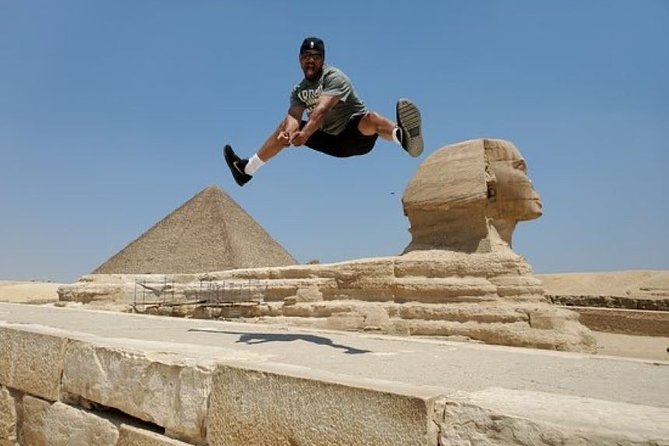
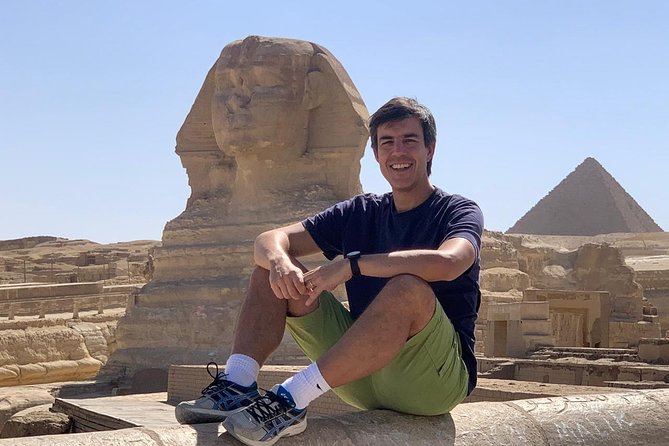
The Sphinx stop is shorter, around 30 minutes, but it’s a place worth compressing. It’s a limestone reclining sphinx, and the guide’s explanation helps you connect the statue to the mythology and the pharaoh association, often linked with Khafre. You’ll learn it was cut from bedrock and that restoration was done with block layers, which gives the face and body less “mystery” and more historical weight.
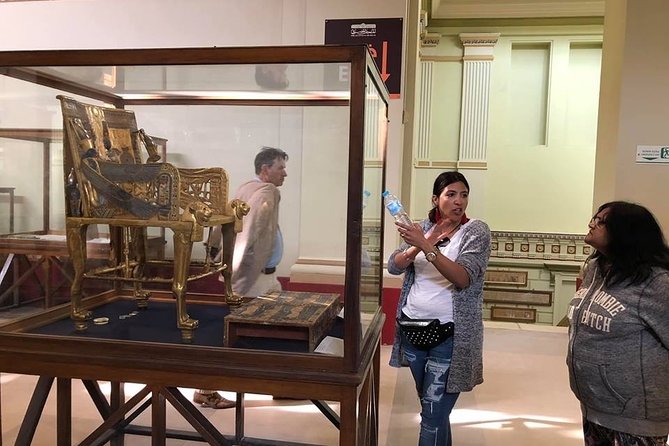
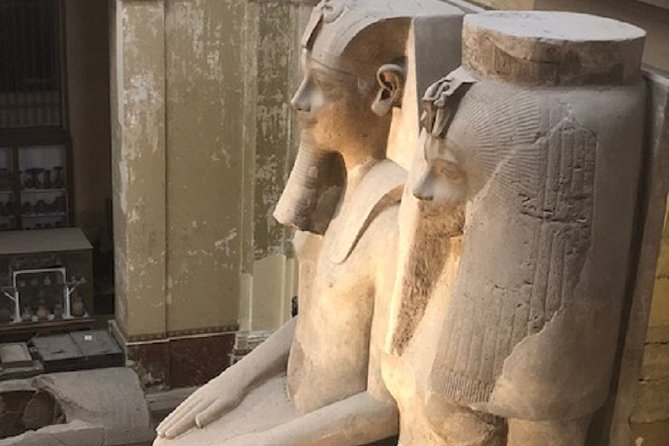
Then you pivot indoors for a change of pace at the Egyptian Museum. The museum stop is about 2 hours, and it’s described as holding 120,000 items, with a representative set on display and more stored away. It was built in 1901 and is known for a massive collection of pharaonic antiquities. Even if you’re not a museum person, this is a useful “context reset” after Giza.
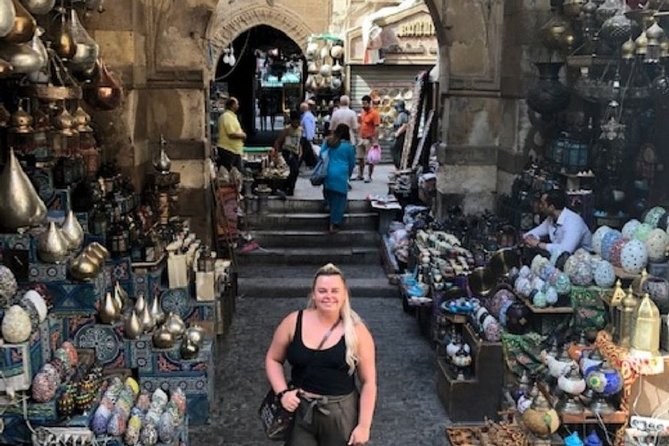
Finally, you end with Khan Al-Khalili, described as the biggest bazaar in Cairo and the Middle East. This is not just shopping time. It’s your chance to walk through older Cairo street life, see crafts, and get your bearings for how the city operates day to day.
My advice for this day: bring water, a hat, and plan for dust. Also, keep an eye on camera battery, because the Giza light can be dramatic fast and you’ll likely shoot more than you expect.
Luxor West Bank classics, plus Karnak, with a guide who makes it make sense
Once you’re in Luxor, the focus shifts to the West Bank, where you’ll see temples and tomb areas tied to pharaohs and the afterlife beliefs. Your first major stop is the Mortuary Temple of Hatshepsut at Deir el Bahari. It’s about 2 hours, and this temple is one of those sites where the architecture tells you something. It’s dedicated to Amon-Ra and designed with classical-style terraces and colonnaded views.
One detail I like here is how the explanation is tied to story. The reliefs you’ll be looking at include the divine birth of Hatshepsut and trade expeditions to the Land of Punt. If you’ve ever wondered why Egyptology guides can talk so long, it’s because these monuments are basically carved textbooks. With a good guide, it turns from “cool rocks” into “I get why they built this.”
Next comes the Valley of the Kings, around 2 hours. The tour frames it as a gorge that holds tombs of 63 pharaohs, used for burial from the 16th to the 11th century BC. You’ll also hear about the discovery of important tombs in the early 20th century, including Tutankhamun.
Here’s the practical drawback to consider: you’ll likely see parts of tombs based on opening arrangements and time. The Valley is large, so this kind of guided package typically emphasizes the most important tombs and highlights. If you’re the type who wants to read every inscription slowly, you might feel rushed. But if you want the biggest “wow” with clear context, the timing is strong.
Then you visit the Colossi of Memnon, about 30 minutes. These are the twin statues of Amenhotep III, around 60 feet tall, and their fame includes the story of mysterious sounds at sunrise. Even without chasing myth too hard, the scale and placement give you a real sense of how monumental the West Bank temples were.
After that, you head to Karnak Temple Complex, about 2 hours. Karnak is described as the heart of Egypt during the New Kingdom, and the key point is that it was the center of ancient faith and also functioned as a treasury. This stop works well after the tomb-focused West Bank. It gives you a full “religion and power” picture in one sweep.
People have mentioned Luxor guides like Abd El Hamid and Walid, plus helpful drivers during the long stretches. Even if your names differ, the advantage of this tour style is clear: you don’t waste time trying to match the site to a map in your head. You walk into the story and keep moving.
Aswan High Dam and Philae, a more grounded pace between big sights
Aswan is where the tour slows slightly, and that helps your brain absorb everything you’ve already seen. You’ll breakfast at your Luxor hotel, check out, then meet your driver and guide for the trip to Aswan, described as around 4 hours by road.
The first big stop is the Aswan High Dam. It’s listed at 30 minutes, which is short, but the stop is more about understanding the modern Egypt engineering story. Construction began in 1960, and it’s described as part of President Gamal Abdel Nasser’s effort to develop Egypt for all Egyptians. The dam is described as over 360 feet tall and about 12,500 feet across, so even in a quick visit, you can grasp the scale.
From there you go to the Temple of Philae, around 1 hour 30 minutes. This one is picturesque and also practical, because you need a water taxi to reach the temple on Agilkia Island. The tour also highlights why this temple matters historically: it was moved after the High Dam threatened to submerge it permanently. The reconstruction at the new location aimed to preserve the original appearance, layout, and even the island landscaping.
This combination of modern engineering and ancient preservation is one of the more meaningful pairings in the whole trip. You see how a dam project changed things, and you also see the effort made to save a major site. It’s a rare chance in Egypt to connect past and present in the same visit.
If you’re sensitive to heat, Aswan can still be intense. Wear breathable layers, and plan for sun protection. Short visits help, but you’re still outside a lot here.
More ways to see the pyramids:
- Cairo: Pyramids & Great Sphinx Private Tour with Camel Ride
★ 4.9 · 6,335 reviews - Tour to Giza Pyramids and The Egyptian Museum
★ 5.0 · 6,016 reviews - VIP All inclusive Best of the best Giza Pyramids,Sakkara,Memphis
★ 5.0 · 3,164 reviews - From Cairo: Pyramids of Giza, Sphinx, Saqqara & Memphis Tour
★ 4.7 · 3,110 reviews
Abu Simbel at 5:00 am, then the sleeper train back to Cairo
This is the big finale, and it starts early. You’ll get a breakfast box at 5:00 am, then meet your private guide in the hotel lobby in Aswan. The point of the early start is simple: Abu Simbel is far, and you’ll want cooler light and less of a crush later in the day.
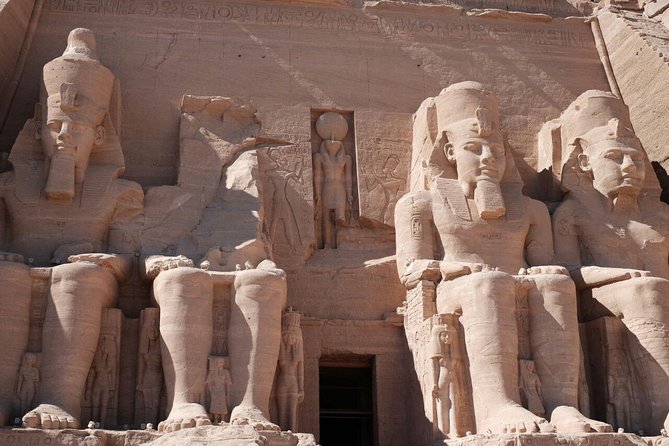
The trip takes you to the Abu Simbel Temple Complex, described as one of Egypt’s most famous sites after the Pyramids. These are rock-cut temples built by Ramesses II, meant to mark Egypt’s southern boundary with Nubia during the New Kingdom. The tour frames the temples as a message of power to anyone who could see them.
The admission is listed as included, and the guided visit is about 1 hour 30 minutes. That’s enough time to understand the main story and see the monumental rock facade and temple scale without turning your day into a full travel day.
After Abu Simbel, you transfer back to Aswan for your sleeper overnight train to Cairo. This is a key value driver. The tour emphasizes using sleeper rail instead of domestic flights, and for you as a visitor it means you lose less time and avoid airport hassle while still traveling long distance.
From a comfort perspective, sleeper trains are still a tradeoff. You might not get perfect sleep, depending on your carriage and your tolerance for movement. But the upside is that you protect daytime hours for sightseeing, and you remove one of the most tiring parts of Egypt travel, the repeated short hops by plane.
On the final day, you’re transferred from the Cairo railway station to your hotel and finish with accommodation in the capital.
Price, included value, and the one extra you should budget for
At $1,295 per person, the value depends on how much you’d pay if you planned this yourself. This package stacks a lot of moving parts into one price: 4-star accommodation, hotel pickup and drop-off, a qualified Egyptologist guide, most meals, and the sleeper trains that link the cities.
You also get several entry tickets listed as included. That includes sights like the Sphinx, the Egyptian Museum, Khan Al-Khalili, Hatshepsut at Deir el Bahari, the Valley of the Kings, Colossi of Memnon, Karnak, Aswan High Dam, Temple of Philae, and Abu Simbel Temple Complex. That reduces your budgeting work when you arrive.
The clear extra is the Pyramids of Giza entrance fee. Since that’s not included, don’t assume your total cost is all-inclusive. It’s the one line item that can surprise people who compare this to packages that bundle every major ticket.
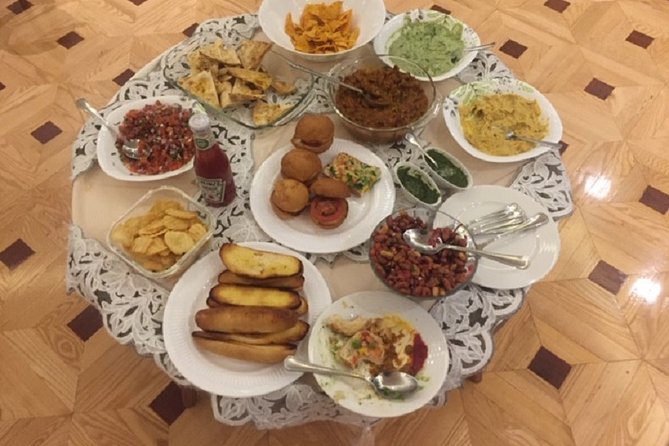
Meal coverage is meaningful too, with 5 breakfasts, 2 lunches, and 2 dinners included. That’s not every meal every day, but it does eliminate the biggest cost and planning friction, especially in remote areas where food options may be limited.
If you like clean logistics and a guide to do the heavy lifting, this price starts to make sense. If you’re the type who wants total freedom and long unstructured time, the set schedule might feel limiting. But if you’re trying to see Cairo, Luxor, Aswan, and Abu Simbel in only 6 days, this kind of bundled package usually ends up being good value because it compresses travel time and reduces decision fatigue.
Should you book this tour of Cairo, Luxor, Aswan and Abu Simbel?
Book it if you want a guided, high-impact route that keeps you moving but not confused. This tour design is best for first-timers who know they’ll enjoy Egypt more with explanations, and for people who want to avoid domestic flights. The combination of personal Egyptologist guidance and sleeper rail helps you cover the highlights without turning your trip into a logistics project.
I’d think twice if you need slow sightseeing or lots of spare time. The schedule is full, and the early 5:00 am Abu Simbel start is real. Also, plan for that Pyramids of Giza ticket being extra.
If you’re traveling as a group, this package can be especially appealing because it’s set up as a private experience, meaning you share time with your own group rather than mixing with strangers. And from the way guides were named in past experiences, this company seems to prioritize smooth service and clear communication, including support right after you land in Cairo.
FAQ
FAQ
How long is the tour, and which places does it cover?
It’s about 6 days, covering Cairo and Giza, plus Luxor, Aswan, and Abu Simbel.
Does the price include hotel pickup and drop-off?
Yes. The package includes hotel pickup and drop-off.
What does the tour price include for accommodations and meals?
It includes accommodation in 4-star hotels and most meals. Breakfast is included 5 times, lunch is included 2 times, and dinner is included 2 times.
Are entry fees included for all major sites?
Most major sites have admission listed as included, but the Pyramids of Giza entrance fee is specifically not included.
How do you travel between cities like Cairo, Luxor, and Aswan?
The tour includes sleeper train travel, including Cairo to Luxor and Aswan to Cairo. It also includes road transfer from Luxor to Aswan (about 4 hours driving).
What should I expect for Abu Simbel?
You start very early with a breakfast box at 5:00 am, then meet your private guide and visit the Abu Simbel Temple Complex. After the visit, you return to Aswan for your sleeper overnight train back to Cairo.
Can you accommodate vegetarian meals?
Yes. A vegetarian option is available if you advise at the time of booking.
Is free cancellation available?
Yes. You can cancel up to 24 hours in advance for a full refund.
Reviewed most recently around Cairo
- Giza pyramids, Saqqara and Dahshur day tour★ 5.0 · 20 reviews
- Cairo Stopover Tour with Giza Pyramids, Sphinx, Egyptian Museum, and Old Cairo★ 5.0 · 20 reviews
- Pyramids of Giza, Sphinx and Egyptian Museum Day Tour★ 5.0 · 20 reviews
- Private Experienced Tour for Camel ride during the sunset with Local Bedouin Dinner★ 4.0 · 20 reviews
- Discover Cairo by night★ 3.5 · 20 reviews
- Luxor East and West Bank: Valley of the kings, Habu Temple,Karnak&Luxor Temples★ 5.0 · 20 reviews
- Private Day Tour to Giza Pyramids, Sphinx, Coptic Cairo and Saint Simon Church in Cairo★ 4.5 · 20 reviews
- 10 Day Treasures of Egypt Tour Giza Pyramids & Cairo & Nile Cruise & Abu Simbel★ 5.0 · 20 reviews
Pyramids of Giza, compared.

Pyramids & Great Sphinx Private Tour with Camel Ride
Read our review →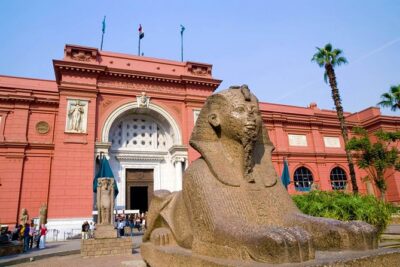
Tour to Giza Pyramids and The Egyptian Museum
Read our review →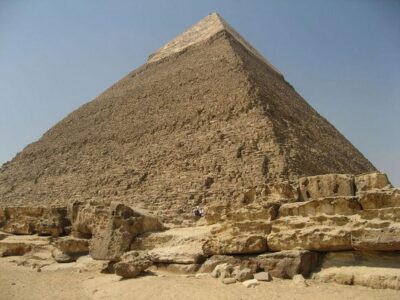
VIP All inclusive Best of the best Giza Pyramids,Sakkara,Memphis
Read our review →
Pyramids of Giza, Sphinx, Saqqara & Memphis Tour
Read our review →
Cairo 8 Hour Private Tour of Pyramids, Egyptian Museum and Bazaar
Read our review →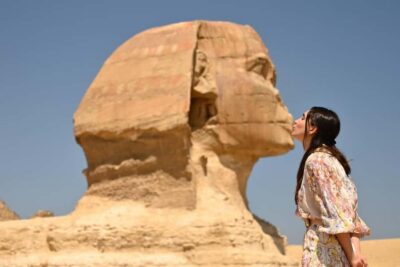
Half-Day Tour to Pyramids of Giza and the Sphinx
Read our review →
Private ViP all-inclusive Giza Pyramids,Sphinx,Inside Pyramid
Read our review →Browse the lists this tour appears in